

As Nigeria marks 66 years of independence, the country continues to grapple with insecurity, poverty, unemployment, inflation and a worsening cost-of-living crisis.
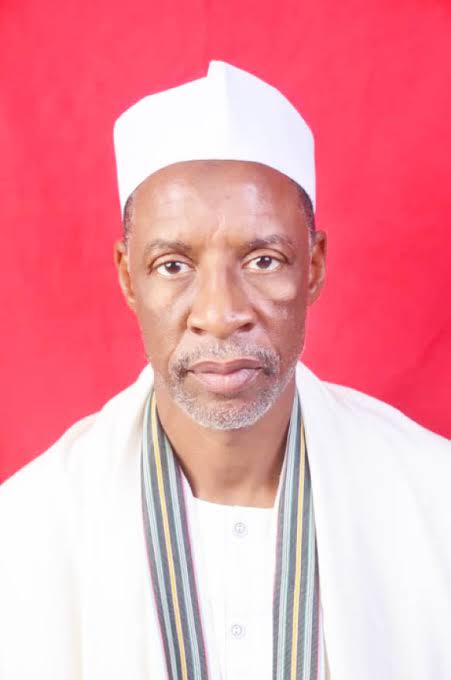
In this first part of an exclusive interview with Pinnacle Daily, Professor Kamilu Sani Fage, a professor of political science at Bayero University, Kano, reflects on Nigeria’s journey since independence, the state of the economy, insecurity, democracy and unemployment.
He also discusses what he believes the next administration should prioritise ahead of the 2027 general elections and advises Nigerians on the choices before them.
Data On Poverty, Insecurity and Unemployment
According to SBM Intelligence, 7,825 people were abducted in Nigeria between July 2025 and June 2026, representing a 66% increase from the previous year.
The same report recorded at least 1,142 deaths during the period and documented ₦7.78 billion ($5.79 million) in ransom payments. SBM described the figures as conservative because many ransom payments are not publicly disclosed.
A report released by the Kimpact Development Initiative (KDI), a non-governmental organisation, has revealed that at least 91,740 Nigerians lost their lives to insecurity between 2011 and 2024.
RELATED NEWS:
- 2027 Coalition Hurdles: Why a Unified Front Against APC Remains Elusive
- Atiku’s Subsidy Pledge: Relief for Nigerians or Return to Past Pitfalls?
- Beyond the Osun Election: Lessons for Opposition Parties Ahead of 2027
- Osun 2026: How Vote-Buying Could Shape the Governorship Election
- Nigeria @ 65: Why Citizens Are No Longer Interested in Elections, Crisis Bedevilling Democracy
- Nigeria at 66: CAPPA Demands Reforms That Ease Hardship
- Nigeria at 66: RMD, Others Urge Collective Action to Build Strong National Reputation
According to ACLED data, Nigeria logged 11,968 conflict-related deaths in 2025. Notably, this toll exceeded fatalities reported in several major global war zones, including Syria and Yemen combined.
In the ACLED Conflict Index, Nigeria ranks as the 5th most dangerous country globally, based on the frequency, deadliness, and diffusion of its armed violence.
In June 2026 alone, independent trackers recorded 882 security incidents resulting in 792 deaths nationwide.
The UN Office for the Coordination of Humanitarian Affairs (OCHA) says nearly 35 million Nigerians are projected to face acute food insecurity during the 2026 lean season, including about 5.8 million people in Borno State.
However, the latest publicly available national unemployment figure from the National Bureau of Statistics puts Nigeria’s unemployment rate at 4.3 per cent in the second quarter of 2024.
Pinnacle Daily: Nigeria gained independence 66 years ago. What were the core values and aspirations behind independence, and do they reflect Nigeria’s current reality?
Prof. Fage: At the eve of Nigerian independence, Nigerian nationalists were very hopeful that the country, after gaining independence, would make headway both domestically and internationally.
The 1960s was the era of independence across Africa. Countries were eager to gain independence after being under colonial rule for some time. Nigeria therefore started on a good footing.
In the first six years of independence, there was mutual rivalry among the regions. Each region was competing with the others in providing public services to its people.
Despite the cut-throat politics of that period, the regions were able to make some progress. Unfortunately, that progress was truncated six years later.
That setback put the country on a collision course and has been one of the major problems we have continued to grapple with since then.
When democratic rule returned in 1999, Nigerians were again very optimistic that the country would experience better days.
Unfortunately, the last few years appear to have dashed those hopes.
Nigeria is now faced with many challenges, including insecurity, poverty, hunger, inflation, unemployment and the general deterioration in the living standards of ordinary Nigerians.
I think the last few years have seriously dashed our hopes.
Pinnacle Daily: How have the rising costs of living and poverty affected Nigeria’s economic situation?
Prof. Fage: It has greatly affected us. Since we decided to take what I would describe as the IMF and World Bank prescription, which included conditions such as the devaluation of the naira, removal of subsidy, opening our markets to external competition and increased taxation, the situation has, instead of improving, worsened the economic condition of Nigerians.
To the extent that even conservative estimates suggest that between 60 and 80 per cent of Nigerians are facing multidimensional poverty.
The value of the naira has also become almost worthless, while the general economic outlook is very poor.
Many industries and businesses are struggling, while some foreign companies are relocating.
In a nutshell, I think this shows that the economy is in bad shape.
Pinnacle Daily: With the 2027 general elections approaching, can anything significant still be done to address insecurity, unemployment and poverty?
Prof. Fage: We are very hopeful, and we wish things could be done differently, but I think, short of a miracle, four months is too short for anything significant to happen.
For one thing, this crisis has been with us for a long time, and we have been unable to make sufficient headway.
Secondly, within these few months, the attention of Nigerian leaders will not be primarily on these issues; it will be on the election.
Anything they say or do will be influenced by the election. That is another reality.
The sad reality is that our economy is also in bad shape, so we cannot simply inject enough money into the system to tackle all these problems.
After all, in the last three years, we have not been able to adequately implement our budgets.
So, short of any miracle, I do not think these few months will fundamentally change the situation.
Pinnacle Daily: What is your assessment of insecurity in Nigeria today?
Prof. Fage: My assessment is that Nigeria has never been in such a bad situation as far as security is concerned.
This is the worst period in our history in terms of insecurity, for the simple reason that throughout our 66 years of history, we have never faced such multifaceted insecurity at the same time.
In the Northeast, there is the problem of Boko Haram. In the Northwest, there is banditry and kidnapping.
In the North-Central, there is banditry and the farmers-herders crisis.
When you move to the South-East, there is still the issue of Biafra-related separatist agitation. In the Niger Delta, although militancy has reduced to some extent, there are still security concerns.
In the Southwest, there are also farmers-herders disputes and other security challenges.
Above all, there is political insecurity, including killings and other forms of violence.
So, if you consider the cumulative effect of all these forms of insecurity occurring at the same time, I think this is the worst period we have experienced.
Pinnacle Daily: You have observed Nigerian democracy for many years. What is your assessment of the state of democracy today?
Prof. Fage: My assessment is that the current dispensation has dashed the hopes of Nigerians because the living conditions and standard of living have seriously deteriorated.
When Nigeria returned to democratic rule in 1999, people were very hopeful that democracy would guarantee peace, development, freedom of speech and the rights of citizens.
But if you look at the accountability of leadership to citizens and other democratic indicators, there has been a mirage over the last 27 years, particularly in the last three years.
There has been a gradual deterioration from 1999 to date, but we seem to have reached the peak of it in the last three years.
We can only hope that things will improve in the future.
Pinnacle Daily: How serious is unemployment, particularly among Nigerian youths?
Prof. Fage: Unemployment is also a very serious problem.
For decades, we have had restrictions on employment, but employment has continued at a level that has left many young Nigerians without jobs.
You have graduates roaming the streets unemployed. There are cases where somebody spends nine or 10 years after graduation looking for a job without finding one.
Meanwhile, people with connections to powerful individuals are sometimes employed in very lucrative positions.
You go to institutions such as the CBN, NNPC and other agencies and you see allegations that positions are influenced by the children or associates of powerful Nigerians, while ordinary Nigerians with better qualifications continue to roam the streets unemployed.
This is a keg of gunpowder.
When you have able-bodied young people who are unemployed and have nothing meaningful to do, they become vulnerable to recruitment by bad elements.
They have the energy and knowledge, but they are frustrated and unhappy. That is why some get involved in different forms of crime.
Some go into drugs, some women are pushed into prostitution, some are recruited by politicians as thugs, while others become involved in kidnapping, banditry and other crimes.
It is a very dangerous situation for a country like Nigeria to allow its young people to remain unemployed.
Even those who are employed are often underemployed.
You see a graduate working in a private school and earning perhaps N20,000 or N30,000.
That is also a dangerous trend for the country.
Pinnacle Daily: Ahead of the 2027 election, what should the next administration prioritise?
Prof. Fage: The root cause of our problem, in my view, is the issue of subsidy removal.
The government should listen to the people. Whoever comes into power should listen to the people.
It is not wise for a leader to have such a high percentage of his people falling into poverty. All over the world, governments seek to lift people out of poverty, not push them into poverty.
That is one of the issues the government should address.
Secondly, the government should seriously address education.
Govt. Should Ensure Access To Quality Education-Prof. Fage
From primary school to tertiary institutions, government should ensure that Nigerians have access to quality and affordable education.
We need an educational system that gives Nigerians the capacity to become self-reliant.
If you have quality education, you do not necessarily have to depend entirely on government employment.
Jobs, Currency Value and Economic Policy Reform
Thirdly, government must address unemployment and ensure that young people are gainfully employed, whether in the public sector, private sector or through opportunities that allow them to become self-employed.
The government must also address the value of the currency.
I believe Nigeria should reconsider its reliance on IMF and World Bank prescriptions.
No country gets out of its predicament simply by adopting IMF and World Bank prescriptions, and no country gets out of its economic problems by continuously taxing its population.
So, the issue of over-taxation, borrowing and policies that weaken the economy are matters that any government coming to power in 2027 should seriously examine.
Otherwise, Nigeria’s position as an African giant will continue to be questioned.
Pinnacle Daily: What is your advice to Nigerians ahead of the 2027 election?
Prof. Fage: My advice to Nigerians is that if we want to change our country and improve our position, we have to come out an masse and vote.
We should vote for people regardless of their political parties, religion or ethnicity. We should vote for credible people.
It is only when we put the right people in the right positions that we will be able to address our problems and challenges.

Rafiyat Sadiq is a political, justice, and human rights reporter with Pinnacle Daily, known for fearless reporting and impactful storytelling. At Pinnacle Daily, she brings clarity and depth to issues shaping governance, democracy, and the protection of citizens’ rights.