


With the election fever over in Osun State, tension is beginning to ease off as supporters, family members, and friends of Governor Ademola Adeleke continue to celebrate his victory.
Governor Adeleke has received greetings and congratulations from across the political spectrum, including top opposition leaders like Rabiu Kwankwaso, NDC vice presidential candidate, who viewed the victory as a beacon of hope for opposition politics.
President Bola Tinubu also acknowledged the election as a reaffirmation of the strength of democracy, despite the strong backing the ruling All Progressives Congress (APC) provided to his closest rival, Bola Oyebamiji. In response, Adeleke further strengthened his commitment to his re-election bid ahead of 2027.
Beyond the headlines and jubilation, Pinnacle Daily examines the key factors that shaped the election, the lessons learned, the impact of political violence, and what these dynamics mean for the 2027 general elections.
Official Results Breakdown

Pinnacle Daily reports that incumbent Governor Ademola Adeleke officially won the 2026 Osun State governorship election, securing a decisive victory with 511,067 votes.
He defeated his closest rival, Bola Oyebamiji of the APC, who polled 444,815 votes; Dr Najeem Salaam of the ADC trailed with 17,180 votes and 12 other governorship candidates.
With this mandate confirmed by the Independent National Electoral Commission (INEC), Adeleke continues his leadership for a second term as the state’s chief executive.
The breakdown across local governments shows that Adeleke won in 19 of the 30 local government areas in the state, while Oyebamiji secured victory in 11.
Osun had 2.34 million registered voters (100%), of whom 1.91 million (81.5%) collected their PVCs. However, only 1.01 million (43.2% of registered voters) were accredited, while 1.006 million (43.0%) cast their ballots. Of the votes cast, 985,079 (97.9%) were valid, while 20,721 (2.1%) were rejected.


Factors That Determined Osun Election and Adeleke’s Victory
Analysts observed that Adeleke’s victory was shaped by a combination of voter sentiment, opposition mistakes, campaign strategy, media leverage and grassroots mobilisation.
Economic hardship and the rising cost of living appeared to heavily influence voters, while controversial statements and actions by some opposition figures created additional sympathy for Adeleke.
The APC’s internal divisions and the perceived imposition of its candidate significantly weakened the party’s standing.

The heavy involvement of national leaders and governors from outside Osun was similarly portrayed as political interference, allowing Adeleke to present himself as the local candidate resisting an outside political establishment.
Adeleke’s personal popularity, distinctive campaign style, and signature dancing, combined with high-profile involvement from international music star Davido, strengthened his connection with voters.
Project commissioning, traditional rulers’ participation, campaign songs, and an active media team further increased his visibility throughout the state.
His stronger-than-expected performance at the gubernatorial debate organised by Arise News also helped challenge negative perceptions about his preparedness for governance.
Most importantly, voters remained determined to cast their ballots despite widespread reports of intimidation, political violence, and attempts to disrupt voting.
Overall, Adeleke benefited from public sentiment, opposition miscalculations, strong grassroots mobilisation, his personal appeal, and an electorate determined to make its own choice.
How Violence Shaped Osun Election
The Osun governorship election was preceded by widespread reports of political violence and vote buying, among other irregularities, with different sources recording varying casualty figures.
The Nigeria Police Force classified at least 30 killings as politically motivated during the build-up to the election.
Political parties presented differing fatality counts. The APC claimed that between 10 and 12 of its members were killed in targeted attacks, while the Accord Party alleged that eight of its supporters were killed. Governor Ademola Adeleke also stated that the PDP lost five members in attacks across Boripe, Ola Oluwa, and Ikire.
An independent assessment by the Centre for Journalism Innovation and Development (CJID) Conflict Tracker recorded 34 violent incidents and 18 deaths between May 2026 and the eve of the election. Its election-day tracker separately confirmed 11 fatalities and 11 injuries across seven local government areas, while another seven reported killings remained unconfirmed.
Violence was also reported on election day itself. ADC governorship candidate Dr Najeem Folasayo Salaam alleged that suspected thugs attacked him at his polling unit in the Ejigbo Local Government Area shortly after he cast his vote.
The incident reportedly disrupted voting, while some INEC election materials were destroyed.
Despite the deployment of 15,000 police personnel on election day, the conflicting casualty figures and reports of attacks highlighted the level of insecurity that surrounded the election and raised serious concerns about the safety and credibility of Nigeria’s future elections.
RELATED NEWS:
- Osun Decides: Davido and ‘Dancing Governor’ Adeleke Face Tough Re-Election Test
- Tinubu Congratulates Adeleke, Says Osun Election Affirms Democracy
- INEC Closes Osun Election Situation Room After Successful Poll
- Osun Election: Adeleke Wins, Returns for Second Term
- Osun Guber Poll: INEC Uploads 87% of Osun Election Results as Collation Continues Across 471 Polling Units
- Osun 2026: How Vote-Buying Could Shape the Governorship Election
- Osun Election: Peaceful, Orderly – EU Observation Hub
CSOs Raise the Alarm Over Vote-Buying in Osun
Civil society organisations warned that vote-buying remained a major threat to the credibility of the Osun governorship election.
CISLAC said economic hardship had made some voters vulnerable to financial inducement and called for allegations of electoral offences to be investigated and prosecuted.
Yiaga Africa also raised concerns over the alleged payment of ₦10,000 to voters for their personal data, describing it as a new form of voter inducement.
The Nigeria Civil Society Situation Room urged security agencies to properly document and investigate vote-buying and other electoral offences.
However, the EU Support for Democratic Governance in Nigeria Election Observation Hub described the Osun governorship election as generally peaceful, orderly and inclusive, with strong voter turnout recorded across polling units. The group deployed 823 accredited observers across all 30 local government areas to monitor the election.
Strategic Takeaways for Citizens and Opposition Strategy

Speaking with Pinnacle Daily, lawyer and public affairs analyst Waliu Taofik Esq., who is familiar with the political dynamics of the Osun election, said one of the major lessons from the governorship poll was that voters’ opinions still matter and that votes cannot necessarily be bought, despite allegations of vote-buying, violence and intimidation.
Taofik noted that some voters reportedly collected money offered by political parties but still went ahead to vote according to their conscience.
He cited alleged payments of about ₦20,000 to ₦30,000 by Accord and ₦30,000 to ₦50,000 by the APC, saying the development showed that monetary inducement did not always determine voters’ choices.
Democratic Resilience and the Power of Grassroots Structures

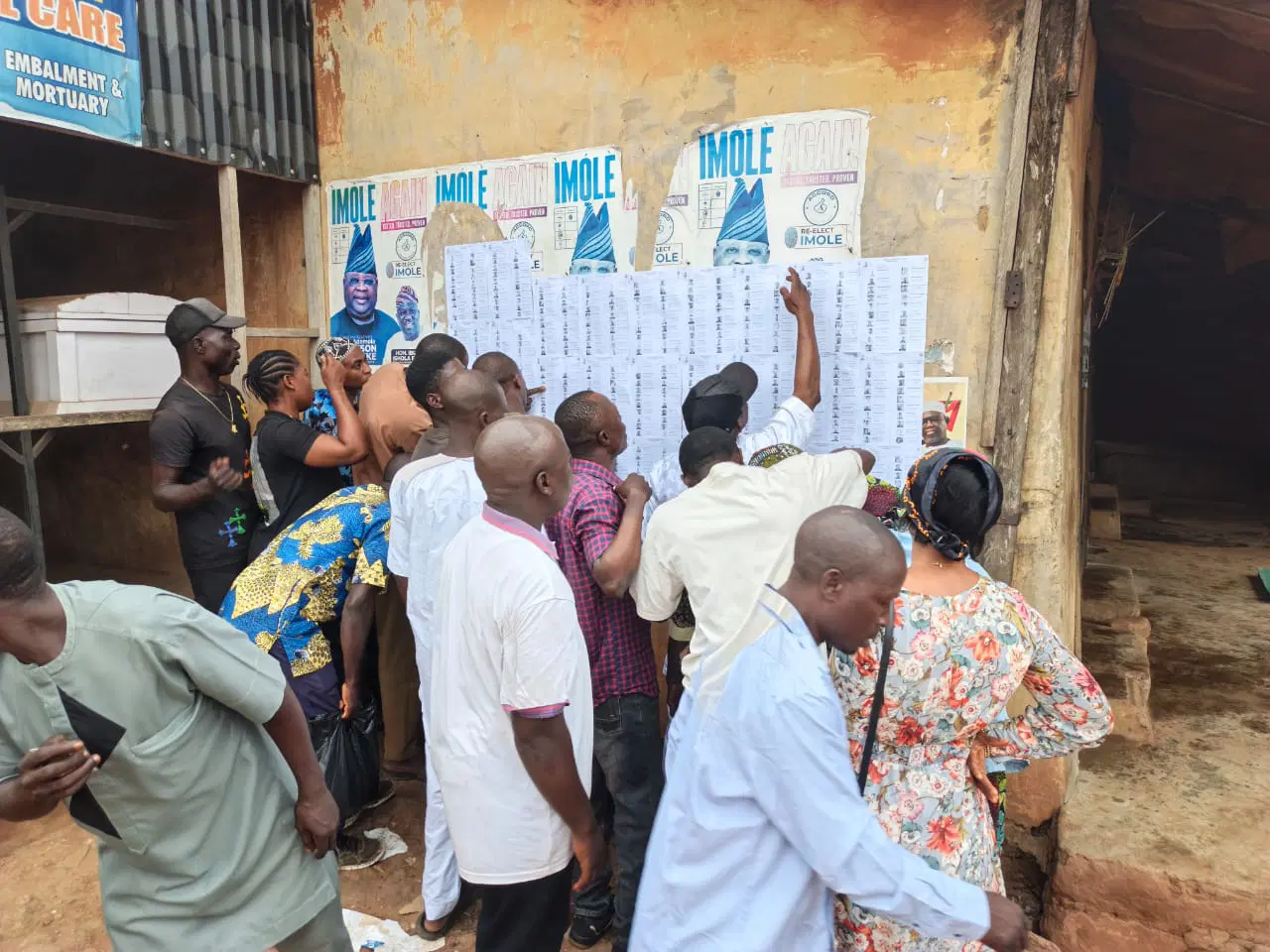
Taofik highlighted the increased voter turnout, describing it as the highest in recent times, with more than one million voters participating. He said the turnout, despite reports of violence, vote-buying, and other security challenges, could have a positive influence on the 2027 general elections.
According to him, the Osun election also demonstrated that an opposition party can win elections when it builds a strong grassroots structure. He said Accord’s presence across most of the polling units gave the party people who could protect and defend their votes.
Taofik said the development should serve as a lesson to opposition parties ahead of 2027, stressing the need for unity, stronger grassroots structures, and representation across the country’s local governments and wards.
He added that parties such as the ADC and NDC would need to build structures and present a united front if they hope to challenge the ruling party effectively in 2027.
What is Next After Adeleke’s Win, Post-Election Legal Challenges?
On the possibility of a legal challenge to the Osun result, Taofik said the election was not necessarily over with the declaration of results, as dissatisfied parties could approach the election petition tribunal and proceed through the courts.
He noted that the APC had indicated that its lawyers were reviewing the results across the local governments before deciding on its next move.
For Taofik, the final outcome of the legal process would determine whether Adeleke’s victory stands, but he emphasised that the Osun election had already provided important lessons for the opposition ahead of the 2027 general elections.
Arms Proliferation Raises Fears of Violent Political Culture Ahead of 2027
Abiola Adegboyega Kolawole, Esq., said the reported proliferation of arms surrounding the Osun governorship election was alarming and raised concerns about whether electoral violence was becoming a dangerous pattern ahead of the 2027 general elections.
He said the intensity and organisation of the violence recalled the history of “Operation Wetie”, suggesting that such incidents should not simply be dismissed as spontaneous disagreements among political supporters.
According to him, they could point to higher political interests with the resources and capacity to mobilise people and weapons.
Kolawole said allegations against the ruling party over the violence must be properly investigated rather than treated as established facts or dismissed outright. He noted that the political interests involved appeared to go beyond an ordinary local electoral dispute.
Preventing a Template for Future Elections
Beyond Osun, Kolawole warned that the greater danger was the emergence of a political culture in which arms, intimidation, and violence become accepted features of elections.
He said such a culture could encourage citizens and political actors to acquire weapons, organise private security structures, and prepare for confrontation ahead of every election.
For him, the real issue is not only who wins Osun, but also whether the violence witnessed during the election becomes a template for future polls. He warned that the 2027 elections could ultimately test whether Nigeria has learnt from the darkest chapters of its electoral history.
Historical Context and Off-Cycle Election Volatility
Speaking with Pinnacle Daily, Professor Kamilu Sani Fage, a professor of political science at Bayero University, Kano, said Nigeria’s off-cycle elections have historically been volatile because voters are often denied the opportunity to freely choose their leaders.
According to him, politicians from outside the state frequently attempt to influence such elections and ensure that their preferred candidates emerge “by hook or by crook”.
APC Control and 2027 Dynamics
Prof. Fage said the same pattern played out in Osun, alleging that the ruling All Progressives Congress (APC) was seeking to consolidate its political control in the state ahead of the 2027 general elections.
He noted that this explains the widespread use of intimidation, political money, and heavy involvement of outsiders coming into the state to participate during off-cycle governorship polls.
Lessons from the First and Second Republics
Professor Kamilu Sani Fage recalled the electoral crises of the First and Second Republics, particularly the crisis in the Western Region that contributed to the “Wild, Wild West” period. This instability was later among the primary factors cited by the military in justifying its intervention and the subsequent collapse of the First Republic.
He said similar political crises occurred during the Second Republic when ruling parties attempted to impose themselves in areas where opposition parties were strong.
According to him, the pattern has continued in off-cycle elections since 1999, with violence, money, and political influence raising continuous questions about electoral credibility and integrity.
Prof. Fage warned that unless political actors learn from the consequences of past electoral crises, Nigeria risks repeating the same mistakes.
Importance of Political Consciousness: Comparing 1960s Civic Awareness to Today
Professor Fage argued that Nigerians had a stronger level of political consciousness in the 1960s despite having lower levels of formal education compared with today.
According to him, the stronger political awareness and national consciousness among citizens and political leaders contributed significantly to the development recorded by regional and federal governments during the early years of independence.
Prof. Fage argued that despite 27 years of uninterrupted democratic rule since 1999, Nigeria has not achieved even a fraction of the development recorded during the first six years of independence.
For him, the primary lesson from Osun and Nigeria’s political history is that stronger political consciousness, responsible leadership, and genuinely credible elections are necessary to prevent the country from repeating the electoral crises of the past.
The Road Ahead
The Osun 2026 governorship election demonstrates that voter determination and strong grassroots political structures can withstand monetary inducement and political pressure. Despite allegations of vote-buying, intimidation and violence, voters turned out and exercised their franchise.
With the outcome now potentially subject to judicial scrutiny, attention shifts to the courts and the next stage of the electoral process.
However, experts who spoke for this report warned that the violence and reported proliferation of arms surrounding the election should not be overlooked. They said the developments serve as a serious warning ahead of 2027, stressing that unless Nigeria strengthens civic consciousness, improves electoral security and addresses the growing culture of political violence, the mistakes of the Osun election could become a template for future elections.

Rafiyat Sadiq is a political, justice, and human rights reporter with Pinnacle Daily, known for fearless reporting and impactful storytelling. At Pinnacle Daily, she brings clarity and depth to issues shaping governance, democracy, and the protection of citizens’ rights.