

Nigeria’s pension industry is seeking a greater role in financing the country’s ambition to build a $1 trillion economy, with operators identifying the sector’s N31.8 trillion in assets as a major source of long-term domestic capital for infrastructure, housing, energy and other productive investments.
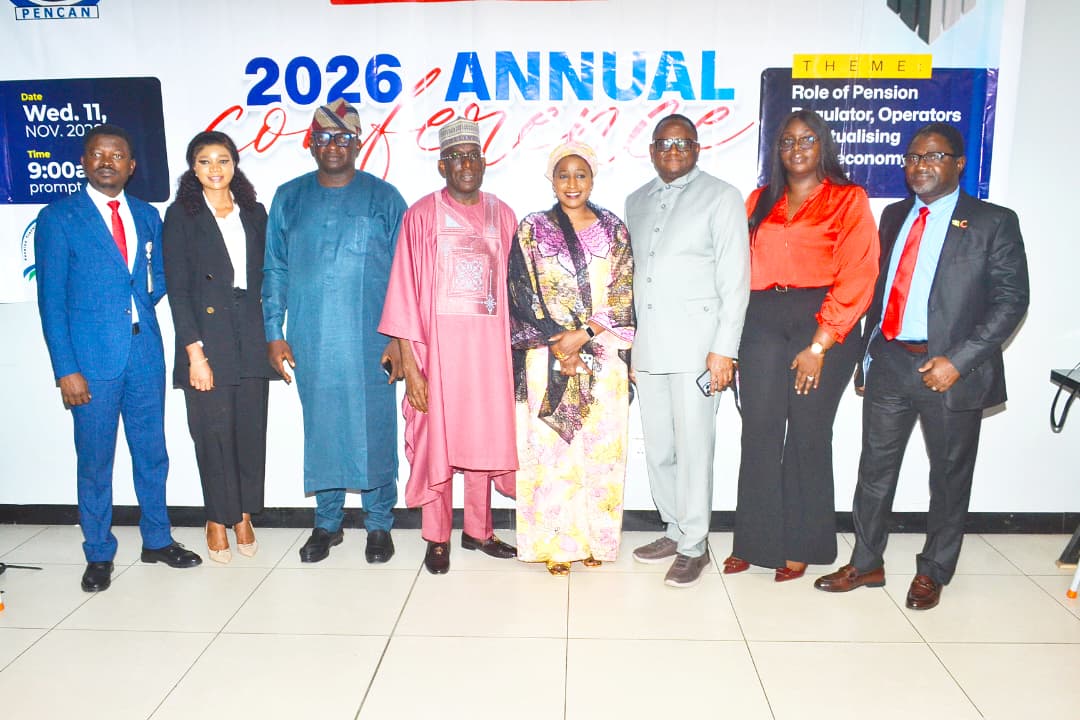
The industry’s regulator, operators and stakeholders made the commitment at the 2026 Pension Correspondents Association of Nigeria (PenCAN) conference in Abuja on Wednesday, where discussions centred on mobilising pension funds to support economic growth without compromising contributors’ retirement benefits.
The conference, themed “The Role of Regulator, Operators in Actualising Nigeria’s $1 Trillion Economy Target”, brought together pension industry leaders, regulators and journalists to examine how the sector could contribute more directly to national development.
Chief Executive Officer of the Pension Fund Operators Association of Nigeria (PenOp), Anthonia Ifeanyi-Okoro, represented by Olajumoke Akinwa, the association’s Head of Business Development, Media, Brands and Communications, said achieving the $1 trillion target would require deliberate capital formation, long-term investment and strong institutions working together.
She described the target as “not an abstract ambition”, arguing that pension funds represent one of Nigeria’s largest pools of long-term domestic capital that could be channelled into productive sectors.
According to her, the industry has an opportunity to finance economic expansion while preserving the security of contributors’ retirement savings.
She explained that the regulator provides the framework, oversight and confidence required to sustain the pension system, while operators are responsible for disciplined fund management and prudent investment decisions.
However, she stressed that achieving the ambition would require broader participation from government agencies, businesses and development partners.
The call for greater deployment of pension assets comes a day after the Pension Industry Leadership Council and UK-funded FSD Africa signed an agreement in Lagos towards establishing a proposed $750 million pension-backed infrastructure fund.
The proposed fund signals growing efforts to mobilise domestic institutional capital for infrastructure financing, an area where Nigeria continues to face significant funding requirements.
PenCom highlights faster payments and new pension safeguards.
Beyond investment mobilisation, the National Pension Commission (PenCom) highlighted improvements in pension administration and new measures aimed at strengthening retirement security.
Ibrahim Buwai, PenCom’s Head of Corporate Communications, who represented its Director-General, Omolola Oloworaran, said retirees under the Contributory Pension Scheme (CPS) now receive their retirement benefits within a maximum of 48 hours after retirement.
He also disclosed that the commission had launched the Presidential Pension Security Initiatives a day before the conference, covering pension care, recovery, health insurance and the minimum pension guarantee.
One of the initiatives, PenCare, is designed to provide sustained healthcare support for pensioners beyond changes in the commission’s leadership.
Read also:
PenCom: Retirees to Get Pension Benefits Within 48 Hours
Pension Assets Surge N10.78 Trn in Two Years – PenCom
NPF Pensions Eyes Dangote Refinery to Sustain Returns
Buwai said the programme would be managed by an independent board of trustees comprising representatives of relevant stakeholders and health experts, an arrangement intended to ensure its continuity.
On the minimum pension guarantee, he explained that although the provision was introduced in the Pension Reform Act 2004, its implementation had been delayed by funding constraints.
He confirmed that the new arrangement would automatically increase the pensions of eligible retirees receiving below the prescribed minimum, adding that payments had commenced.
Addressing concerns about whether pension reforms had eliminated certain retirement benefits, Buwai said the law had not abolished additional benefits that employers might choose to provide.
He said PenCom would continue to exercise caution in announcing policy developments, stressing the importance of confirming implementation before making public commitments.
“We must be sure that it is something that is actually happening,” he said.
PTAD takes pension services closer to retirees.
The Pension Transitional Arrangement Directorate (PTAD) also outlined measures to improve service delivery to pensioners under the Defined Benefits Scheme.
Olugbenga Ajayi, PTAD’s Head of Corporate Communications, who represented its Executive Secretary, Tolulope Odunaiya, said the agency had introduced three initiatives to improve access to pension services and strengthen retirees’ welfare.
Under its “Accreditation Without Borders” initiative, pensioners can complete enrolment on the payroll through an online platform without travelling to a physical office.
The arrangement is particularly beneficial to retirees living in rural communities and Nigerians residing outside the country who would otherwise face difficulties accessing physical verification centres.
PTAD has also formally launched a retiree health insurance platform designed to provide pensioners with free and accessible healthcare.
Another initiative involves the verification of deceased pensioners through periodic renewal of records, rather than relying solely on notifications from relatives or pensioners’ associations.
Ajayi said pension payments to the affected retirees were now up to date, adding that the agency would continue to introduce measures to improve pension administration and welfare.
The informal sector remains a major pension gap.
While the industry considers how to deploy existing pension assets to support economic expansion, stakeholders also identified the need to bring more informal sector workers into the pension system.
Tunji Andrews, Chief Executive Officer and co-founder of Awabah, said approximately 80 per cent of Nigerians, representing about 160 million people, work in the informal sector.
He noted that many of these workers earn less than $5 daily and remain exposed to financial vulnerabilities, including inadequate healthcare protection and the absence of structured retirement savings.
Andrews said Awabah, established in 2021, had provided more than 50,000 informal and semi-formal workers with access to financial wellness services.
He highlighted recent PenCom innovations that have reduced the information required to register contributors under the Personal Pension Plan from approximately 35 fields to four.
According to him, the simplified registration process has addressed much of the administrative difficulty associated with bringing informal workers into the pension system.
He, however, identified public awareness as the remaining challenge, urging the media to play a stronger role in educating Nigerians about the benefits of voluntary pension contributions.
Media urged to bridge pension information gap
President of PenCAN, Nana Musa, said the association recognised the media’s responsibility to inform, educate and hold pension industry stakeholders accountable through accurate, balanced and responsible reporting.
She commended PenCom for providing a platform to strengthen engagement between the pension industry and journalists covering the sector.
Musa urged pension correspondents to continue bridging the information gap between operators, regulators, contributors and retirees.
The conference ended with the presentation of awards to PenCom Director-General Omolola Oloworaran in recognition of her contributions to the pension industry.
The bigger economic picture
The discussions underscore the growing importance of pension assets in Nigeria’s efforts to mobilise domestic financing for long-term economic development.
With N31.8 trillion in pension assets, the industry represents a potentially significant source of patient capital for infrastructure, housing, energy and other sectors requiring long-term investment.
However, deploying more pension funds into productive investments will require balancing economic returns with the primary responsibility of protecting contributors’ retirement savings.
For millions of Nigerians already enrolled in the pension system, the success of the proposed investment drive will ultimately depend not only on the returns generated but also on the security and accessibility of their retirement benefits.
For the millions of informal sector workers still outside the system, simplified registration and greater public awareness could help expand pension coverage and deepen domestic savings.
The challenge for the industry, therefore, is twofold: mobilising existing pension capital to support economic growth while building a more inclusive system capable of providing retirement security for a larger share of Nigeria’s workforce.

Sunday Michael Ogwu is a Nigerian journalist and editor of Pinnacle Daily. He is known for his work in business and economic reporting. He has held editorial roles in prominent Nigerian media outlets, where he has focused on economic policy, financial markets, and developmental issues affecting Nigeria and Africa more broadly.