

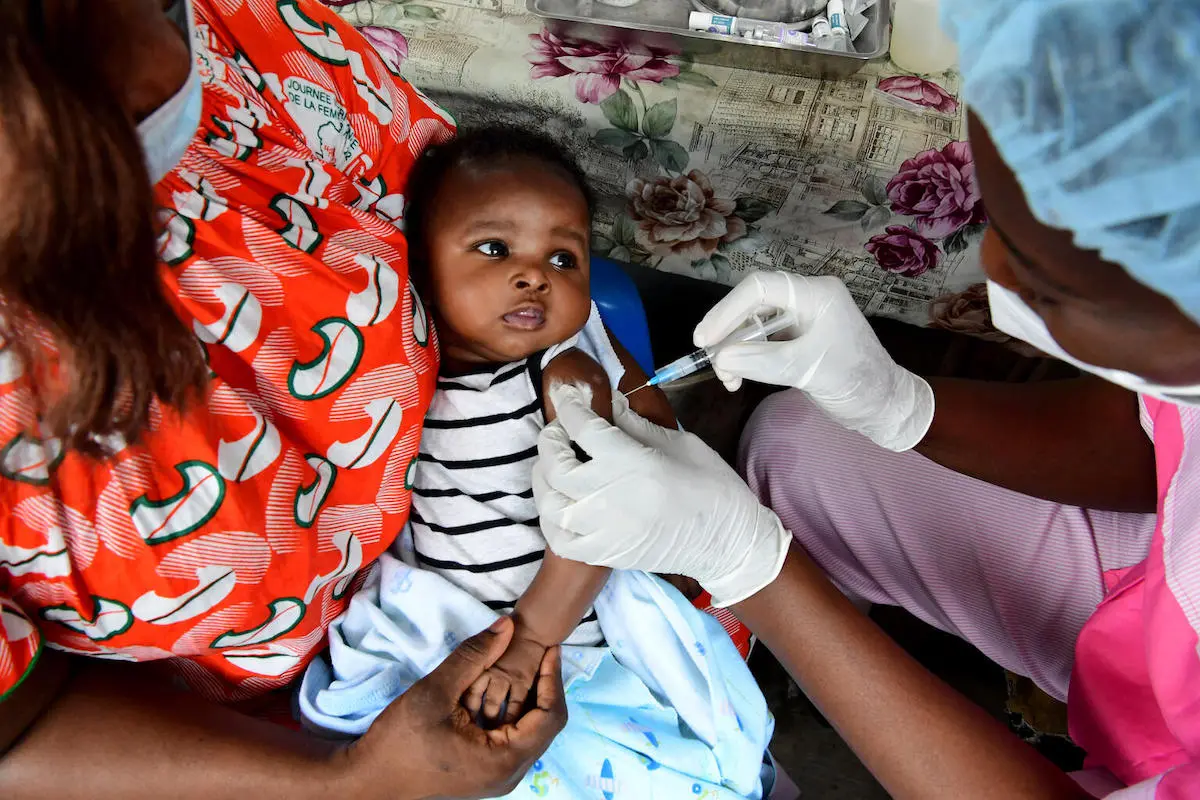
Fresh concerns as Nigeria battles widening immunisation gaps despite pockets of progress in Katsina
As the global community marks the World Immunisation Week 2026, Nigeria is once again at the centre of renewed concern over childhood vaccination coverage, with health experts warning that millions of children remain outside the protection of routine immunisation programmes.
At the heart of the crisis is a staggering estimate that 2.1 million Nigerian children have never received a single vaccine. These “zero-dose” children, largely unrecorded and unreached, represent one of the country’s most serious yet underreported public health challenges.
An additional 2.3 million children are only partially immunised, bringing the total number of vulnerable children to more than four million nationwide.
According to the Save the Children Nigeria group, Nigeria now ranks among countries with the highest burden of zero-dose children globally, placing it second worldwide in children who have never received any form of vaccination.
While vaccines remain one of the most effective and affordable public health interventions, saving millions of lives globally each year, Nigeria’s immunisation gaps continue to widen due to persistent structural and social barriers.
Health experts cite limited access to healthcare services in underserved urban and peri-urban communities, weak tracking systems for defaulters, and widespread misinformation as key drivers of the crisis.
READ ALSO:
- Why Nigeria Remains the Global Epicentre of Malaria Burden
- Nigeria Drops 5 Places in Digital Rights Ranking — Report
- Nigeria Risks Losing Cargo to Neighbouring Ports Over Maritime Inefficiencies – SEREC Warns
- How Middle East War is Deepening Nigeria’s Food Crisis
In many communities, vaccine decisions are also influenced by cultural beliefs, mistrust of health systems, and harmful social norms, leaving millions of children outside life-saving programmes.
Contrary to long-held assumptions, the crisis is no longer confined to rural areas. Densely populated states such as Lagos State and Kano State are emerging as critical hotspots for zero-dose children.
Rapid urbanisation, informal settlements, and population mobility have created “blind spots” where immunisation teams struggle to consistently reach children.
Experts also point to deeper systemic failures, weak follow-up mechanisms, underfunded primary healthcare systems, and inconsistent data collection that continue to undermine national coverage efforts.
“One Missed Child Can Sustain Polio” — HALG Warns
Amid these concerns, Dr Bartholomew Ochonye, Chief Executive Officer of Heartland Alliance Limited by Guarantee (HALG), an NGO, speaking exclusively to Pinnacle Daily, warned that Nigeria’s immunisation progress remains fragile and highly vulnerable to setbacks.
He cautioned that polio eradication and broader immunisation gains depend on total coverage without exceptions, stressing that even one missed child could allow the virus to persist.
“The poliovirus needs only one missed child to survive. That is why finding, counting, and planning for every child is not preparation for the real work; it is the real work,” he said.
Despite national challenges, HALG highlighted a significant achievement in Katsina State, where more than 2.9 million children were vaccinated against polio during the March campaign.
Dr Ochonye disclosed that 2,842,434 children were vaccinated out of a target of 2,944,391, representing about 99 per cent coverage across 19,000 settlements in 361 wards and 34 local government areas.
He also revealed that Katsina State has recorded 11 consecutive months without a new case of circulating vaccine-derived poliovirus type 2 (cVDPV2), describing it as a major public health milestone.
However, he warned that insecurity disrupted access to 54 settlements in Danmusa Local Government Area, affecting full campaign coverage.
Global Gaps Still Threaten Progress
Citing global data, Dr Ochonye referenced reports from the World Health Organisation indicating that nearly 20 million children missed at least one vaccine dose in 2024, while over 14 million received no vaccines at all.
He noted that a significant proportion of these unvaccinated children are concentrated in underserved communities, including parts of northern Nigeria.
Vaccine hesitancy, he added, reduced by 40 per cent through community engagement efforts, though resistance remains in some areas.
He also flagged weak cold chain infrastructure and the identification of over 50,000 zero-dose children in 17 local government areas as evidence of persistent gaps.
To address these challenges, Save the Children is implementing the Better Opportunities for Optimal Services and Targeted Immunisation (BOOST) Project.
The initiative focuses on improving access to vaccination services, strengthening data-driven planning, and ensuring that zero-dose and under-immunised children are identified and reached.
It also seeks to build stronger community trust, improve carer demand for vaccines, and support policies that prioritise equitable immunisation coverage.
Call for Sustained Investment and Trust Building
Dr Ochonye called on government, development partners, and the private sector to sustain investment in immunisation systems, particularly in enumeration, cold chain infrastructure, and community engagement.
He stressed that rebuilding public trust in vaccines is as critical as service delivery itself.
“The year’s theme, ‘For every generation, vaccines work,’ only holds if every child is reached,” he said.
Also speaking, HALG Technical Director Mr Paul Umoh emphasised the need for sustainability in vaccination programmes, noting that long-term success depends on strong partnerships with national health agencies.
Despite pockets of progress such as Katsina’s high coverage rates, Nigeria’s broader immunisation landscape remains deeply uneven.
Health experts warn that unless urgent action is taken to close the zero-dose gap, the country risks outbreaks of vaccine-preventable diseases such as measles, diphtheria, and polio potentially reversing years of public health gains.
At its core, the crisis is not just about numbers but about access, equity, and survival.
For millions of Nigerian children, the question remains stark: why is protection still determined by geography, income, and visibility in the health system?
Until that question is answered, experts warn, Nigeria’s immunisation story will remain one of both progress and painful absence.

Esther Ososanya is an investigative journalist with Pinnacle Daily, reporting across health, business, environment, metro, Fct and crime. Known for her bold, empathetic storytelling, she uncovers hidden truths, challenges broken systems, and gives voice to overlooked Nigerians. Her work drives national conversations and demands accountability one powerful story at a time.