


As conflict in the Middle East enters the second month, there are concerns about the ripple effects on developing economies that depend on imported energy, fertilisers and staple food commodities. For Nigeria, a country already grappling with inflation, currency volatility, and structural inefficiencies, the stakes are particularly high.
Rising Costs at the Markets
At the Mile 12 Market in Lagos, traders speak in worried tones. The price of staple foods such as rice, wheat, and cooking oil has surged steadily in recent months. “Every week, prices go up. We are worried about both the rising import costs and transport within the country because of high fuel prices,” said Sunday Eze, chairman of the Rice Sellers Association at Mile 12 Market, in a chat with Pinnacle Daily.
Nigeria’s Growing Import Dependency
Analysts observe that Nigeria remains significantly dependent on international markets to meet its domestic food and agricultural needs.
The country imports wheat, sugarcane, rice and fertiliser, among others. According to a National Bureau of Statistics (NBS) report, the country’s food import bill has seen a substantial growth in recent years, reaching ₦7.65 trillion in the fourth quarter of 2025 alone. This represents a year-on-year rise of ₦1.07 trillion or 16.34 per cent from ₦6.58 trillion in 2024.
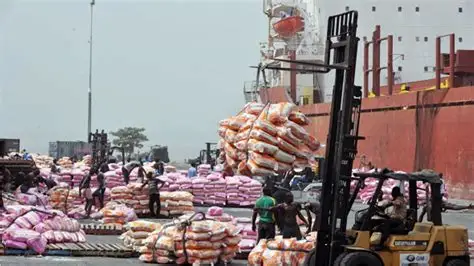
According to the NBS Foreign Trade in Goods Statistics report for Q4 2025, the major agricultural goods imported in the period included wheat, soybean oil, fish, and meat.
Nigeria relies heavily on the import of wheat, which is a key ingredient in the production of bread, noodles, and other staples. According to CBN data, the country’s current wheat demand stands between 5 and 6 million Metric Tonnes (MT), out of which only 1 per cent, or 63,000 MT is produced locally, resulting in the importation of over 5 million MT of wheat annually.
Supply Chain Disruptions and Global Prices
Much of the global wheat supply is influenced by production and trade routes connected to the Middle East and surrounding regions. The ongoing instability has disrupted supply chains, increased shipping risks, and driven up global commodity prices.
In an interview with Pinnacle Daily, an agro-entrepreneur and executive director of Greenport Nigeria, Mrs Edobong Akpabio affirmed that the impact of the conflict in the Middle East is currently being felt in the food system globally, and Nigeria is not an exception.
High Energy Prices impact food costs
The conflict has pushed up energy prices as crude oil has surged above $100 per barrel before dropping slightly to around $95, forcing refined fuel to rise by over 60 per cent. Higher fuel costs translate directly into more expensive transportation of goods within Nigeria, from farms to urban markets.
Farmers, already grappling with insecurity and climate challenges, now face steeper costs for fertilisers and logistics.
Apart from transport and logistics, Akpabio expressed concern that high energy costs also have a significant negative impact on irrigation for farming, processing, and storage.
A new SBM Intelligence report affirmed that Nigeria’s fragile economy has been further strained by the ripple effects of the Middle East conflict, which triggered a hike in fuel prices, transport costs and prices of commodities. A survey of 220 traders across nine cities found that 82.7 percent reported price increases directly linked to the war. While 70 per cent reported difficulties accessing fuel for generators and transport, 35 per cent reported difficulty with rice imports and 27 per cent with cooking oil.
“Two in three traders fear the war will harm their business in the next three months. Their main worry is not scarcity but that goods will become too expensive for anyone to buy,” the report stated.
The Logistics of Crisis: Shipping and Processing
In an interview with Pinnacle Daily, a development economist, Dr Ebikabowei Aduku stated that as an import-dependent nation, Nigeria imports several food items and is not immune to price shocks as a result of supply chain disruptions.
Dr Aduku, who is a lecturer at the University of Africa, Toru-Orua, in Bayelsa State, noted that with the increase in fuel prices, which has almost doubled, there is a consequential increase in the cost of shipping, processing and storage of food, which is passed on to consumers.
He said the disruption of the Strait of Hormuz, a key maritime route for global transport of goods, has significantly affected exports across the world.
Threats to Fertilizer Supply and Agricultural Output
Nigeria’s agricultural productivity is also vulnerable to disruptions in fertiliser supply. Many fertiliser components are sourced globally, and geopolitical instability can tighten supply and drive up costs.
Aduku observed that the development will have a grave impact on Nigerian farmers who depend on imported fertilisers for their farming activities as planting season sets in.
“With the closure of the Strait of Hormuz, fertiliser transport has reduced because many countries are exporting through that route,” Aduku stated.
He said this will lead to a supply shortage and inevitably increase the price of fertiliser, affecting the cost of production.
“The Middle East is known for the production of fertiliser inputs such as ammonia and urea. With this conflict, production has been reduced, which means supply has been disrupted and, of course, fertiliser prices will increase. We are now importing fertilisers at an increased price,” he stated.
Diminishing Purchasing Power and Food Insecurity
The economist and scholar emphasised that it will affect the purchasing power of farmers and reduce output in terms of food production, leading to an increase in the cost of food items and also forcing the nation to depend more on imports to meet domestic demands.
Already, African countries are experiencing fertiliser shortages. This is another area: the Middle East conflict will also affect Nigeria. In the short run, prices of bread, noodles, and cooking oil, among others, will be affected. In the middle term, there will be reduced availability of fertilisers,” Aduku added.
The timing is critical as Nigeria is already facing food insecurity driven by internal displacement, banditry, and erratic weather patterns. The added strain from international disruptions risks pushing vulnerable communities into crisis.
READ ALSO:
- Nigerians Mark 2026 Eid Celebration amid Food Price Surge
- World Bank Import Push Threatens Nigeria’s Gains – Centre
- FG Extends Ban on Raw Shea Nut Exports to February 2027
- Nigeria’s Inflation Eases To 15.06% In February – NBS
Akpabio also observed that the disruption of imports caused by the conflict will affect the cost of agricultural materials such as seed procurement and machinery, among other farming inputs.
“This conflict has dragged into the commencement of the farming season, when the majority of crop farmers in Nigeria depend on rain-fed irrigation for cultivation. So, the second effect will be the increase in the cost of agricultural materials, from seeds to fertilisers to machinery, etc., as a result of the supply disruption of imports and the cost of foreign exchange,” Akpabio, a former Chairperson of the Agriculture and Agro-allied Group of the Lagos Chamber of Commerce and Industry (LCCI), stated.
Geopolitical Shocks and Systemic Vulnerability
On his part, an agro-entrepreneur and public commentator, Chima Christian, said the war in Iran did not create Africa’s food crisis but revealed the vulnerability of the continent’s food security system.
He observed that over time, Africa’s food security systems have been “unduly exposed to geopolitical risks”.
Christian compared the impact of the war on Africa with the Russia–Ukraine conflict, which started in 2022, that disrupted the supply of critical goods such as grains and fertilizer supplied by the two countries.
He warned that with the sharp rise in essential farm inputs, many more African farmers may abandon their farmlands because of high production and logistics costs.
“Already, Red Sea freight costs have surged, and the impact is being felt in African homes. The compounding logic is hard to miss: the Russia-Ukraine war raised the price of what Africa eats. The Iran war is raising the cost of growing food, moving it, and storing it. These are sequential shocks hitting a food security architecture that was not designed to survive global disruptions,” Christian, the Co-founder and Chief Executive Officer of Teva Foods Limited, stated in a statement shared with Pinnacle Daily.
He expressed shock that, despite past experiences of global supply chain disruptions caused by geopolitical risks and pandemics, African nations have failed to take proactive steps towards building systems for resilience.
Why Africa Remains Vulnerable to Global Supply Shocks
According to the agro-entrepreneur, Africa’s vulnerability to global supply disruptions is due to “chronic underinvestment in domestic production and processing, optimisation for export, the near-total absence of strategic grain reserves, dependence on imported fertilisers for more than 90 per cent of sub-Saharan Africa’s input needs, and a deficient intra-African trade architecture.
“Moreover, governments and private sector players have consistently chosen short-term convenience and profits over long-term resilience. And we pay a compounding price for this choice with each geopolitical shock.”
Path to Avoiding Global Supply Shocks
The SBM Intelligence report warned that Nigeria will continue to be affected by global supply shocks caused by Middle East hostilities unless it diversifies import routes and builds strategic reserves.
“Until Nigeria builds strategic fuel reserves, diversifies imports away from Hormuz-dependent routes, and delivers real-time market intelligence to traders, every Middle East flare-up will arrive at Nigerian dinner tables within a week,” the report stated.
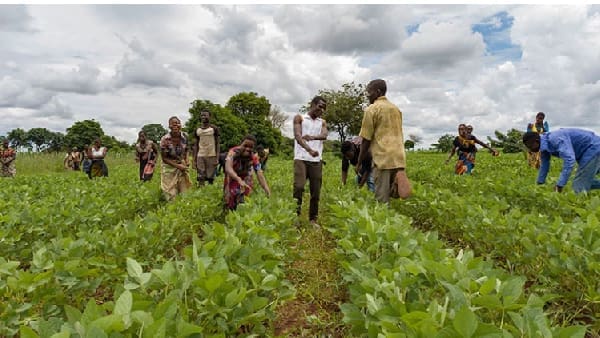
Christian called on the government and the private sector investors across Africa to step up and invest in building systems that ensure food sovereignty and hedge against shocks.
While highlighting the economic principle of “comparative advantage,” Christian called for a massive return to agriculture to boost food security, noting that Africa has about 60 per cent of the remaining world’s uncultivated arable land, good soil and climatic conditions that support plant and animal life.
A Call for Agricultural Revolution
As the 2026 planting season sets in, Christian calls for concerted efforts to provide farmers with the necessary inputs to surpass current production capacity.
He also called for massive investment in food processing and preservation infrastructure, noting that between 40 per cent and 60 per cent of primary produce is lost after post-harvest, while the country simultaneously engages in importing food that could have been preserved.
He said the geopolitical tension in the Middle East is a clear signal of the need for a revolution in African agriculture to boost domestic food production and also encourage value addition on products instead of engaging in cheap exports while spending heavily on importing the same products in finished form.

Victor Ezeja is a Nigerian journalist skilled in producing insightful news analyses, feature stories, and interviews that simplify complex issues and drive informed public discourse. His work combines rigorous research, balanced reporting, and compelling storytelling to highlight developments shaping industries and society. Victor, who holds a Master's Degree in Mass Communication, specializes in energy, aviation, business, and economic reporting. He can be reached via @VICTOREZEJA on X