

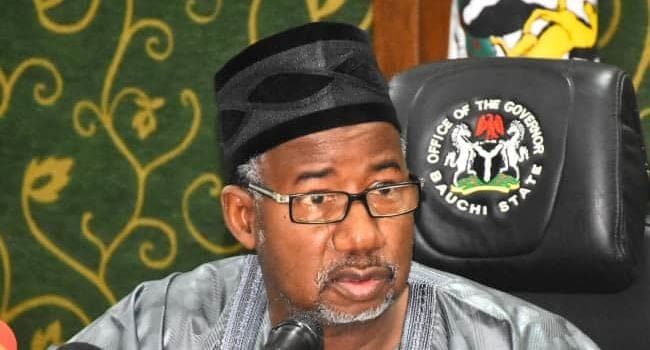
The Governor of Bauchi State, Senator Bala Abdulkadir Mohammed, on Tuesday signed into law two landmark bills that fundamentally reshape the state’s traditional governance architecture.
The action altered the Bauchi State Chieftaincy (Appointment and Deposition) Law and the Zaar Chiefdom Law, providing the legal framework for the creation of 13 additional Emirates and one Chiefdom. The governor described it as a deliberate effort to deepen grassroots governance and respond to decades of local agitation. The signing of the laws coincides with Bauchi State’s 50th anniversary celebration.
Governor Mohammed Warns Against Politicisation
Speaking during the signing ceremony at the Government House, Governor Mohammed cautioned that his administration would not tolerate any attempt to politicise or frustrate the implementation of the new laws.
“This administration will not tolerate any attempt to undermine, obstruct, or politicise the implementation of these laws,” he said.
“Any person or group found inciting division, spreading misinformation, or attempting to disrupt public peace will face the full consequences of the law.”
READ ALSO: Bauchi Varsity Expels 21, Suspends 4 Over Exam Malpractice, Misconduct
According to him, the decision followed “the most consultative and transparent process ever undertaken in the state”, involving committee reviews, public hearings, and legislative debates.
“This move is designed to improve grassroots governance and is a response to the long-standing agitations by our people for the creation of these institutions,” the governor noted.
Speaker Hails Milestone Reform
The Speaker of the Bauchi State House of Assembly, Rt. Hon. Abubakar Suleiman, described the passage of the bills as a milestone in modern governance, commending the foresight behind the initiative.
He said the laws would “stabilize and modernize the traditional system while preserving the cultural essence of Bauchi’s diverse communities.”
New Emirates and Chiefdoms Created
The newly created Emirates and Chiefdoms include:
1. Burra – Headquarters: Burra
2. Dambam – Headquarters: Dambam
3. Darazo – Headquarters: Darazo
4. Duguri – Headquarters: Yuli
5. Gamawa – Headquarters: Gamawa
6. Giade – Headquarters: Giade
7. Toro – Headquarters: Toro
8. Warji – Headquarters: Katangan Warji
READ ALSO: Bauchi Governor Dismisses Women Affairs Commissioner
9. Ari – Headquarters: Gadar Maiwa
10. Jama’a – Headquarters: Nabardo
11. Lame – Headquarters: Gumau
12. Bununu – Headquarters: Bununu
13. Lere – Headquarters: Lere
14. Zaar Chiefdom – Headquarters: Mhrim
Governor Mohammed directed the state’s Attorney General and Commissioner for Justice, alongside the Secretary to the State Government (SSG), to gazette, publish, and distribute the laws for immediate implementation.
He also signed two other bills into law — the Local Government Pension Contributory Scheme and the 2025 Appropriation Supplementary Act — to strengthen institutional governance and fiscal accountability.
Background: Bauchi’s Traditional Structure and Historical Roots
Bauchi’s traditional governance system dates back to pre-colonial times and is deeply woven into the state’s sociocultural fabric. The original emirates — Bauchi, Katagum, Misau, Jama’are, Ningi, and Dass — have long served as pillars of local administration, conflict resolution, and community mobilisation.
However, over the years, various communities, particularly in multi-ethnic areas such as Toro, Bogoro, and Tafawa Balewa, have persistently demanded recognition and autonomy. The Zaar (Sayawa) people’s decades-long quest for a chiefdom has been one of the most prominent examples.
The 2025 chieftaincy reforms, therefore, mark the most comprehensive reorganisation in nearly half a century, expanding the state’s traditional leadership map and redefining local administrative zones.
Expert and Analyst Reactions
Professor Ko Lamidi, in his study “Critical Analysis of the Contemporary Role of Traditional Institutions”, notes that “traditional institutions remain complementary to modern governance structures, especially in conflict resolution and legitimacy building.”
Similarly, Clara Neupert-Wentz and Carl Müller-Crepon, in their paper Traditional Institutions in Africa: Past and Present (Cambridge University Press), argue that institutional persistence often reflects historical continuity — cautioning that reform efforts must strike a delicate balance between innovation and respect for long-standing authority systems.
In Nigeria, opinion remains divided. A recent Daily Trust editorial urged restraint, warning that while creation of new emirates might promote inclusion, “fragmenting historic emirates without adequate consultation could trigger rivalry and erode cultural cohesion.”
READ ALSO: Nnamdi Kanu Insists Nigerian Court Lacks Jurisdiction as Govt Defends Trial
Reacting to the development, the Fulani community in Bauchi raised concerns that the reforms could alter traditional hierarchies. “Subjecting long-established emirates to new structures without proper consultation undermines the principle of consent,” a community statement read.
But the chairman of the vetting committee, Hon. Hamza Koshe Akuyam, defended the process, insisting that the committee received 196 memoranda from communities before making its recommendations. “Our approach prioritised fairness, social harmony and administrative viability,” he said.
Implications and Analysis
Political and Administrative Impact
The new emirates are likely to recalibrate political representation at the local level. With each emirate serving as a focal point for governance, the reform could decentralize influence and reduce over-centralization in traditional affairs. However, analysts caution that success will depend on transparent appointments and conflict-sensitive implementation.
Social and Cultural Dimensions
While many see the creation of new emirates as an avenue for long-denied recognition, others fear it may deepen identity-based competition. Maintaining balance between historic emirates and newly created ones will be crucial in preventing communal tension.
READ ALSO: Gates Foundation Deepens Health, Poverty Reform in Kano
Economic Considerations
The reform also carries fiscal implications. Establishing new emirate councils entails additional administrative overheads. Proponents, however, argue that decentralised structures could spur local economic participation, especially if coupled with infrastructural investment in newly designated headquarters.
