

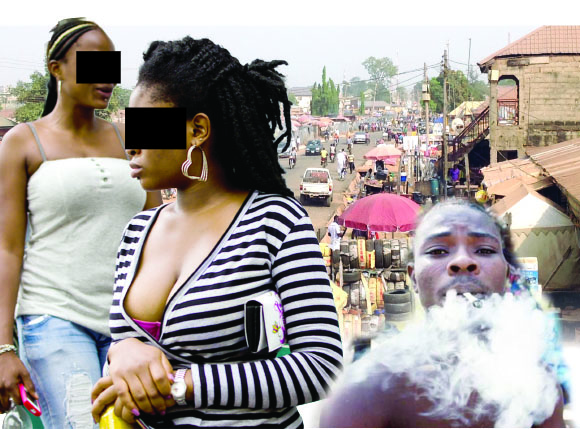
On the fringes of Nigeria’s administrative seat, Abuja, lie a businesses that thrives under the cover of darkness: brothels packed with young women, street-side drug stalls, and the unmistakable presence of settlement payments to law enforcement.
In multiple urban centres and suburbs of the Federal Capital Territory (FCT) — Wuse, Kabusa, Gudu, Utako, Jabi, Mararaba/Nyanya and Garki. Pinnacle Daily’s investigation reveals a booming sex-work and hard-drugs business operating with apparent complicity from those meant to uphold the law.
The price of entry is no longer only the physical act of sex or the small packet of cannabis or “loud,” it is also the weekly payment to police or local security to allow business to continue. When the payments fail, the state apparatus enters not as protectors but as extorters.
Mapping the Field: Brothels, Students, Drugs and Settlements
Kabusa / Gudu Corridor
At Jogodo Guest Inn, Kabusa, Pinnacle Daily identified three active brothels in which prostitution and active drugs selling are occurring. At one site, called Jogodo Guest Inn, about 46 girls between the ages of 17 and 38 were confirmed to reside in this brothel for sex-business. The facility is owned by a middle-aged man, locally known as “Our Oga” by the girls.
One of the girls, who introduced herself as Anabel, said she is a student of University of Abuja and commutes in every weekend from Gwagwalada
READ ALSO: FCT Police Cracks Down on Armed Robbers, Drug Traffickers, Vehicle Thieves
“I come in every weekend, I leave Monday morning for school. We pay for the room, and then also pay ₦1,500 for security, ₦1,500 for light and ₦2,000 for the police settlement every Monday morning.”
She alleged that their “Oga” settles the police to avoid being harassed during the week. But if the payment fails:
“They will come in for mass arrest… arrest all the girls and any customer found in the room… then you pay up to ₦50,000 per person for release.”
Bakassi Brothel, Kabusa Market/Motor-Park Area:
Another unnamed facility near the Kabusa market and motor-park is inhabited by women up to age 48. Melody, a divorcee from Benue State, shares her story:
“I left my two children in the village with my mother, then came to Abuja to hustle. My marriage ended since 2018, because of domestic violence. But gathering money here has been difficult because of frequent police harassment. Just last week, Sars from Abattoir/Area 1 road came here, they broke into the rooms, dragged naked customers and girls out for arrest. The Madam paid ₦50,000 per head for us to be released — and then we now have to work to repay that debt on top of our own bills.”
Happy Night Hotel, Kabusa:
This location features both sex workers and visible drug-vendors. Young men openly vend “loud”, “cana”, “SK” (street-slang for hard-drugs). The owner is alleged to be a law-enforcement personnel. One of the residing girls, Joy, says:
“Na personnel get this place o. Police no dey come here. They fit go other places, but here dey safe… police no dey come here at all.”
Chairman’s Palace Hotel, Kabusa (near Divisional Police HQ):
Despite being mere minutes from the Kabusa Divisional Police Headquarters, women skimpily dressed roam this area, and the business gets interesting with the loud music, open-air bars and street-side drug vending. Here, a well perforated pack of cannabis goes for ₦1,500. The check-points mounted in the dead of night appear to serve as theatre rather than deterrent.
Utako-Jabi-Garki Corridor
Along the Augustus Aikhomu Way, Jabi/Utako (near Eden Garden/Chida Hotel), sex‐work is increasingly digital: girls like Loveth say they “sell online” but shift to street pick‐ups when demand falls. Her testimony is chilling:
“We are always on the watch. Police come sometimes with Sienna or even small cars. If they arrest you and you no get money to pay — maybe you never work for that day, dem go order you to fuck them, or carry you go cell. Since na money you dey find, you no go get choice. If dem lock you up who go come bail you?”
In Utako village near Arab junction, another layer of the sex business booms, casually and normally, like a sane trend of life:
READ ALSO: FCT Resident Doctors Vow to Continue Strike Until All Demands Are Met
“I pay ₦400,000 for annual rent and we make weekly contributions for security and police settlement,” says Sekira, a resident sex-worker in the location.
Lugbe corridor:
At Lugbe, Pinnacle Daily located a spot called Davis Hotel, owned by a man known simply as ‘Davis.’ In this site and the adjacent sub-lets, the predominantly young girls (ages 17–32) are mostly from Akwa Ibom and Cross River. The daily operation here, sees this young women lodging and offering their bodies for money. The coordination of the place is done by a young bearded young man called manager. Here, business looked very coordinated and smooth, as one of the girls confirmed that Dermis enjoys a good cooperation from the police and other security operatives. One unique thing about Dermis is that, ‘Manager’ seemed not to permit the smoking of Indian hemp, and other hard drugs inside the bar of the brothel as observed by our correspondent.
Mararaba/Nyanya / Abacha Road Corridor
Nelseno Hotel, Abacha Road:
At this particular brothel, Pinnacle Daily found young girls, mostly claiming to be students from Federal University of Lafia, Nasarawa State University, UniAbuja and even as far as Kogi State University and Federal Polytechnic Wannune lodging during weekends to “hustle”. Rooms cost approximately ₦10,000 per night, with 4-6 of these young sharing a room. Boorish-looking young boys were also spotted lodging in rooms as guests, but actively vending drugs. Interestingly, where Nelseno is located, is just less than three minutes’ walk from the Abacha Road Divisional Police Headquarters.
Monaco Xtreme Bar & My Place Lounge, Abacha Road:
Outside these popular night spots, young women stand and roam the street corners and dark spots signaling passing drivers; and as commonly observed, young boys were selling drugs and freely roaming the vicinity.

However, our correspondent gathered that operatives of the NDLEA come around some nights to conduct a ‘stop and search’ raid around the area. One of the girls, who identified herself as Ify, said: “Police come around for raids. Once you’re arrested and you don’t have money for bail, dem ask you to have sex with them instead.”
READ ALSO: Why NCAA Must Scrap $11.50 Security Levy Imposed on Int’l Travellers – Experts
Other brothels in the Nyanya/Mararaba axis include Jagata Hotel (Mami Road) and Yellow Page (Mararaba), indicating the breadth of the network.
Garki (Lagos Street/Rita Lori Hotel)/ Wuse 2 (Aminu Kano Crescent)
Even in the prime office-district location near the offices of major bodies (e.g., National Open University of Nigeria, the famous GLO Office in Abuja and the National Headquarters of Voice of Nigeria (VON)) the dark trade of prostitution is also observed.
Pinnacle Daily counted more than 480 girls keeping vigil at the night hour on Aminu Kano Crescent, Wuse 2. Here the market price ranges from ₦80,000 to ₦200,000 for a “day-break”. A former boutique sales-girl, Linda, who chatted with Pinnacle Daily, affirmed: “I used to do a normal job as a sales girl in boutique, but the money no fit foot my bills in Abuja, where everything cost like this, it was not enough. Now, I sleep well in the day then come out at night to work. I make over ₦100,000 to #200,000 at night… which 9 to 5 work in this Abuja can pay me that?”

Yet alongside this, drug-vendors and young men signaling clients roam freely; police vans patrol but make no visible intervention.
The Legal & Regulatory Framework
Prostitution and Brothel-Keeping Under Nigerian Law
Human Right Lawyer, Anthony Ekong, told Pinnacle Daily that the legal position of prostitution in Nigeria is complex and ambiguous. While consensual adult sex work is not uniformly criminalized, many ancillary activities are. He explained that in the southern part of the country, the Criminal Code Section 225A makes it an offence for any male person who knowingly lives wholly or in part on the earnings of prostitution, or who directs or influences the movements of a prostitute.
READ ALSO: Beyond Infrastructure, Security Needs Urgent Attention in FCT
He went further to say: “Section 223 criminalizes procuration – the act of procuring a woman or girl to become a common prostitute, or moving a woman/girl so she may become an inmate of a brothel. Section 222A deals with seduction or encouraging prostitution of a girl under 16. Section 222B prohibits allowing a child under 16 to reside or frequent a brothel.”
In the FCT in 2025, a Federal High Court ruled that prostitution is illegal. The court found no law that shields sex-workers from arrest and stated that such work is “immoral… alien to cultural values of all the ethnic groups in the country”.

In Lagos for instance, under the 2011 Criminal Law, prostitutes are defined as “disorderly persons” and may be fined for loitering or soliciting.
Simply put, the sex-worker may not always be criminalized under all Nigerian statutes, but brothel-keeping, pimping, living off prostitution, and under-age involvement are clear offences.
Law in Practice: Enforcement, Extortion and Impunity
Despite robust laws on paper, Pinnacle Daily can authoritatively report that enforcement is widely inconsistent and vulnerable to corruption. A recent Pulse Nigeria article reported that in Lagos “some law-enforcement agents have extorted and even raped some of these ladies of the night” in the context of prostitution.
Considering the context of brothels operating openly near police stations, paying routine “settlements” to police and continuing with illicit trade suggests that enforcement is being replaced by regulation through payment. The law in this space is no longer acting as deterrent; in some cases, it is safe to say, that it becomes part of the profit model.
Voices from the Field
“I come every weekend… I leave Monday morning. I pay ₦1,500 for security, ₦1,500 for light and ₦2,000 for police settlement. If we don’t pay, police will come in for mass arrests.” — Anabel, student, Jogodo Guest Inn, Kabusa.
“Police no dey come here… na personnel get this place… police no dey come here at all.” — Joy, brothel resident, Happy Night Hotel, Kabusa.
“Police come… If them arrest you and you have no money… dem ask you to fuck them, or dem go carry you go cell.” — Loveth, sex-worker, Augustus Aikhomu Way, Utako.
“I pay ₦400,000 annual rent and weekly contributions for security and police settlement.” — Sekira, brothel occupant, Utako village.
“I make over ₦100,000 to #200,000 at night… from that I can renew my hotel bill, eat, buy clothes and still save something. Which 9 to 5 work in this Abuja can pay me that much?” — Linda, Aminu Kano Crescent zone.
These first-person affirmations gathered by Pinnacle Daily, corroborate the operating model: accommodation payments, security/settlement fees weekly, risk of arrest without payment, police as actors in the system. They also expose the economic drivers for young women and students who see the prostitution business as the most lucrative option.
Institutional Complicity & Governance Challenge:
Law Enforcement as Stakeholder
One of the most troubling findings is the involvement — direct or indirect — of law-enforcement personnel in the business model of brothels or “protected” zones. At the Happy Night Hotel, for instance, the owner is reportedly a security-personnel who affords protection from police raids. In other locations, brothel operators claim routine settlement payments to police.
READ ALSO: How Money Laundering Empires Feed Violence in Nigeria
Where law-enforcement becomes de facto business partner (or protection rent collector) rather than regulator, three fundamental consequences follow:
Erosion of rule-of-law: When the cost of business is a payment to officers, legal prohibitions become optional. Enforcement becomes selective, based on payment, not legality.
Entrenchment of impunity: Protected brothels and drug stalls continue undisturbed; the threat of arrest is replaced by the threat of refusal to pay.
Vulnerability of workers; Sex-workers and drug vendors operate in a shadow environment, with little legal recourse. They are dependent on “settlement” to avoid arrest rather than protected as citizens by the state.
Proximity to Power and Symbolism
It is telling that many of these hotspots exist in close proximity to police divisions or major transportation hubs: Kabusa, Abacha Road, Utako. The fact that open sex-work and drug vending operate mere minutes from police headquarters sends a stark message: the state presence does not equate to state control. Instead, it may become cover.
Governance and Oversight Failures
Public affairs analysts, point to systemic failures: weak internal disciplinary mechanisms, corruptible pay-offs, lack of transparency in intelligence and enforcement action. When street-level officers become entrepreneurs of extortion, the credibility of the entire criminal-justice system is undermined. In the words of a public-affairs analyst, Osai Ojigho:
“Abuja is the seat of national power; when the capital becomes a hub for both sex-work and hard-drugs with institutional complicity, the symbolic message is powerful: the rule of law is superficial.”
Why This Matters: Social Implications
Sex-workers in Nigeria have no legal status or protection. Therefore, prostitutes have no legal rights to enjoy under any known law or the Constitution of the Federal Republic of Nigeria. Without legal recognition, they are at the mercy of informal settlement systems, vulnerable to extortion, abuse, and violence by clients, brothel-owners and even police.
Young women, many of them students or from poor backgrounds, make the risky choice of weekend hustles in brothels. One human-rights lawyer, Barr. Bunmi Aina-Craig, commented:
“Prostitution has no legal backing in any Nigerian Law, and those who operate brothels can be interpreted as human-trafficking. Students who now actively indulge in this, shows a decay in our academic institutions, because most of them have already been exposed to sex-for-grades from school.”
READ ALSO: NiDCOM Raises the Alarm Over Sexual Abuse of Nigerians in India
Her perspective further emphasizes how the brothel-system, involving students and vulnerable girls and women, may cross into trafficking territory, even if individuals claim autonomy.
The revelations that students from major universities engage in weekend sex-work exposes the intersection of economic vulnerability and institutional decay. When a girl says “which work in Abuja can pay me that?” she, though not sufficiently justifiable, exposes how the conventional economy has failed some young women. The transformation of educational institutions into feeders for weekend sex-work speaks to broader social pathology.
Crime Nexus & Money Flows
The nexus between brothels and drug parlours, which is visible in several of the locations (e.g., Happy Night, Abacha Road), signals the existence of overlapping illicit economies. Drug proceeds may support the upkeep of brothels; brothels may act as consumption centres for drugs; settlement schemes feed law-enforcement personnel. The entire system becomes a semi-licit enterprise, blurring lines between crime and business.
Policy Imperatives & Recommendations
Ojigho proposed the establishment of independent anti-corruption units within the Nigeria Police Force and NDLEA, with the power to investigate officers who accept “protection” payments or own brothels. He also pointed out on the need to introduce a secure whistle-blower mechanism for officers and civilian staff to report colleague misconduct, with protected identity and reward systems.
A resident of Utako village, a family man with three young kids who spoke to Pinnacle Daily on condition of anonymity, complained bitterly about the difficulty of sharing neighborhood with prostitutes, the danger of having to raise kids around immodestly dressed women and girls moving around freely even at daytime, and the criminal elements they attract. He suggested that night-time audits of known hotspots (Utako, Kabusa, Abacha Road) by joint teams from FCT Administration, police oversight bodies and civil society, to identify breaches of law and protection-payments.
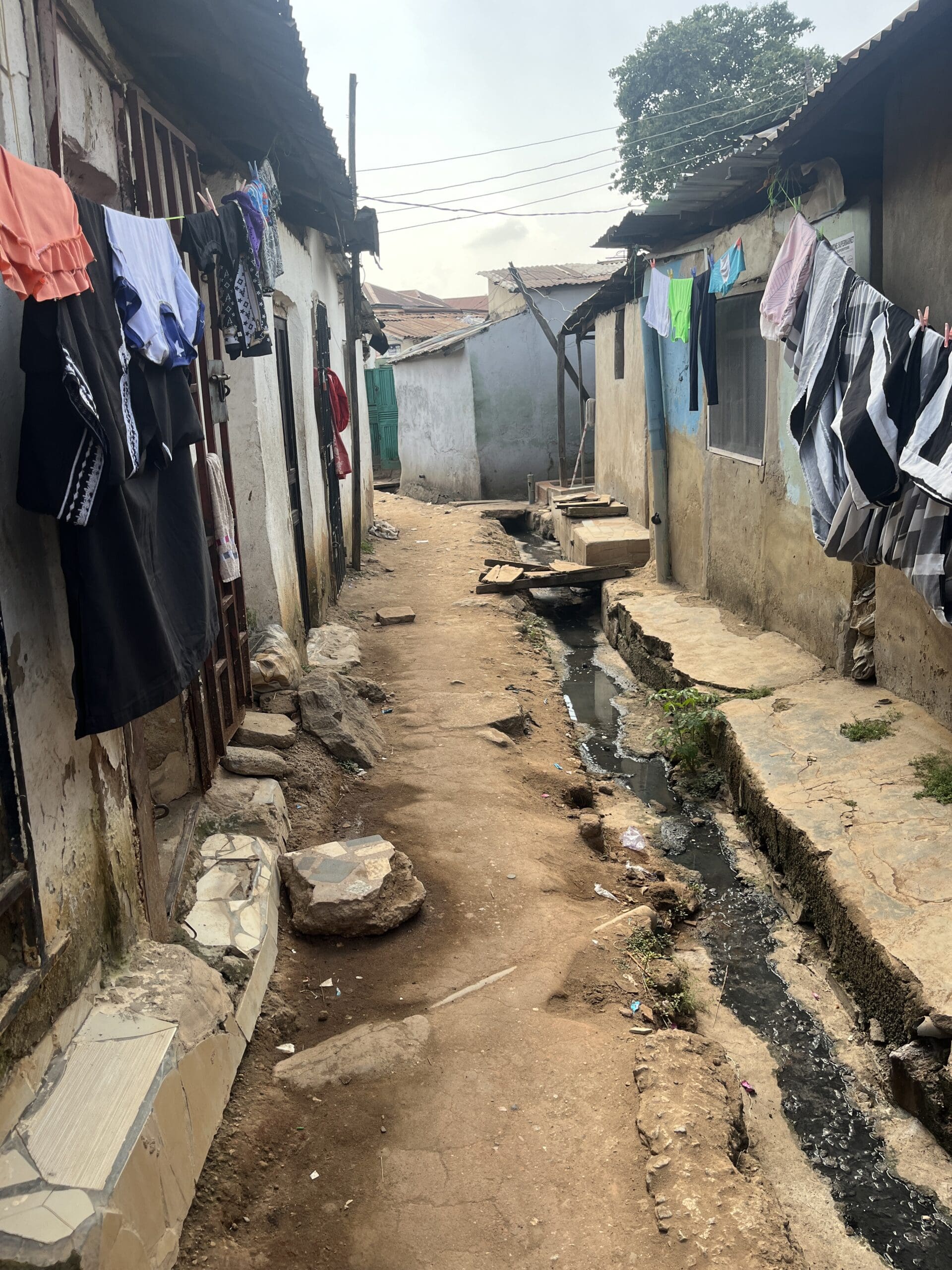
Further more, a development expert, Barr. Brain Essang, proposed a shift enforcement emphasis upstream. He explained that rather than arrest only sex-workers, focus should be on brothel-owners (including law-enforcement personnel) and drug-suppliers—use asset-forfeiture, financial investigation and disruption of networks. He encouraged the NDLEA to map sex-work/drug vending zones as part of their intelligence remit and coordinate with local police to ensure prosecutions follow seizures.
He called on the FCDA urban‐planning and licensing authorities to regulate guest-houses, bars and hotels in residential zones, carry out periodic inspections, licensing reviews and enforcement of anti-drug/pornography laws.
READ ALSO: Africa’s Next Billion-Dollar Entrepreneurs May Rise from Digital Infrastructure, Not Oil or Gold
Essang strongly emphasised that Police night-patrol strategies should shift from arbitrary raids to intelligence-led interventions, working with community liaison officers, local leaders and sex-worker outreach groups.
Another development expert, Ngozi Okoro, called for targeted campaigns in universities and educational institutions warning of risks of transactional sex, drug use and exploitation. She also suggested a developed alternative income/skills programmes for vulnerable young women and students, in order to reduce reliance on promiscuous weekend hustles.
Focal Point
Analysts said that if the state is to reclaim its moral, legal and public-health commitments, action must go beyond headline raids. It must penetrate the protection-net that settlement payments provide, dismantle the brothel/drug-vendor nexus, empower vulnerable workers with rights and health access, and reposition law-enforcement from gatekeeper of extortion to guarantor of citizen protection.
The night lines of Abuja are not just threads of darkness, they are lines of transactions, power, vulnerability and neglect. The question now is: will the institutions tasked with safeguarding the public step into the light?
