

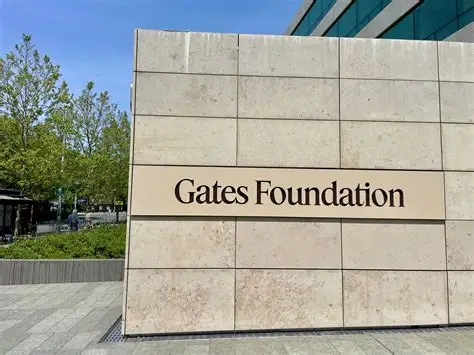
The Gates Foundation has reaffirmed its long-term commitment to supporting Kano State’s health system through targeted investments, data-driven reforms, and stronger collaboration aimed at reducing poverty and accelerating human development outcomes.
At the Kano State Stakeholders Workshop held in Abuja from October 21–22, the Foundation and government representatives reviewed the state’s 2025 health sector performance and set out strategic priorities for 2026 under the national Health Sector Renewal Initiative led by Nigeria’s Coordinating Minister of Health and Social Welfare, Professor Muhammad Ali Pate.
In an exclusive interview with Pinnacle Daily, Yusuf Yusufari, Deputy Director, Immunisation and Disease Control at the Gates Foundation, said the exercise was designed to evaluate current progress and ensure alignment between Kano’s local health strategies and federal goals for 2026.
“Kano is a priority state for us,” Yusufari said. “We work across multiple areas: maternal and child health, immunisation, nutrition, and financial inclusion. If Kano achieves significant progress, Nigeria’s national health indicators will shift positively.”
READ ALSO: Beyond Vaccines, Experts Push for Cleaner Environment as Key to Public Health
With a population of over 16 million, Kano remains central to Nigeria’s public health equation. According to the Federal Ministry of Health, the state contributes about 9 percent of the country’s malaria burden and nearly one-third of hospital admissions for severe malaria.
The Maternal Mortality Ratio (MMR) in Kano currently stands at 377.8 deaths per 100,000 live births, higher than the national SDG target of 288, while earlier reports have placed the figure above 1,000 per 100,000 in certain rural areas. These statistics underscore the state’s critical need for sustained intervention.
Yusufari noted that despite visible progress, challenges persist around funding delays, bureaucratic bottlenecks, and inconsistent implementation across health programmes.
“We’ve seen stronger leadership and better coordination, but there’s room for improvement,” he said. “Our role is to work with government and partners to streamline systems, address bottlenecks, and ensure faster results.”
He emphasised that the Foundation’s approach is not driven by politics but by measurable impact—especially in saving lives and reducing preventable deaths.
“Our work is about saving lives,” Yusufari explained. “When we strengthen maternal, newborn, and child health, we address roughly 70 percent of Nigeria’s health challenges. That’s the focus of our work in Kano and other partner states.”
Commending the Nigerian government’s renewed focus on primary healthcare and system reform, Yusufari outlined the Foundation’s three core priorities for Nigeria:
- Ensuring no mother or child dies from preventable causes.
- Eradicating infectious diseases.
- Promoting economic inclusion to lift families out of poverty.
“Health and poverty are deeply connected,” he added. “You cannot achieve one without tackling the other. Our vision is to help states like Kano build sustainable systems that protect both lives and livelihoods.”
READ ALSO: Immunisation Campaign: Gates Foundation, Others Target Two Million Unreached Nigerian Children
The workshop brought together senior officials from the Kano State Ministry of Health, development partners, and technical experts to harmonize goals and develop a unified strategy for 2026 implementation.
Yusufari said the Gates Foundation would continue to support Kano in achieving its long-term health and development ambitions through evidence-based planning, stronger data systems, and community-level interventions.
“Our partnership with Kano is not just about funding,” he concluded. “It’s about building resilient systems that continue to deliver results long after the support ends.”

Esther Ososanya is an investigative journalist with Pinnacle Daily, reporting across health, business, environment, metro, Fct and crime. Known for her bold, empathetic storytelling, she uncovers hidden truths, challenges broken systems, and gives voice to overlooked Nigerians. Her work drives national conversations and demands accountability one powerful story at a time.