

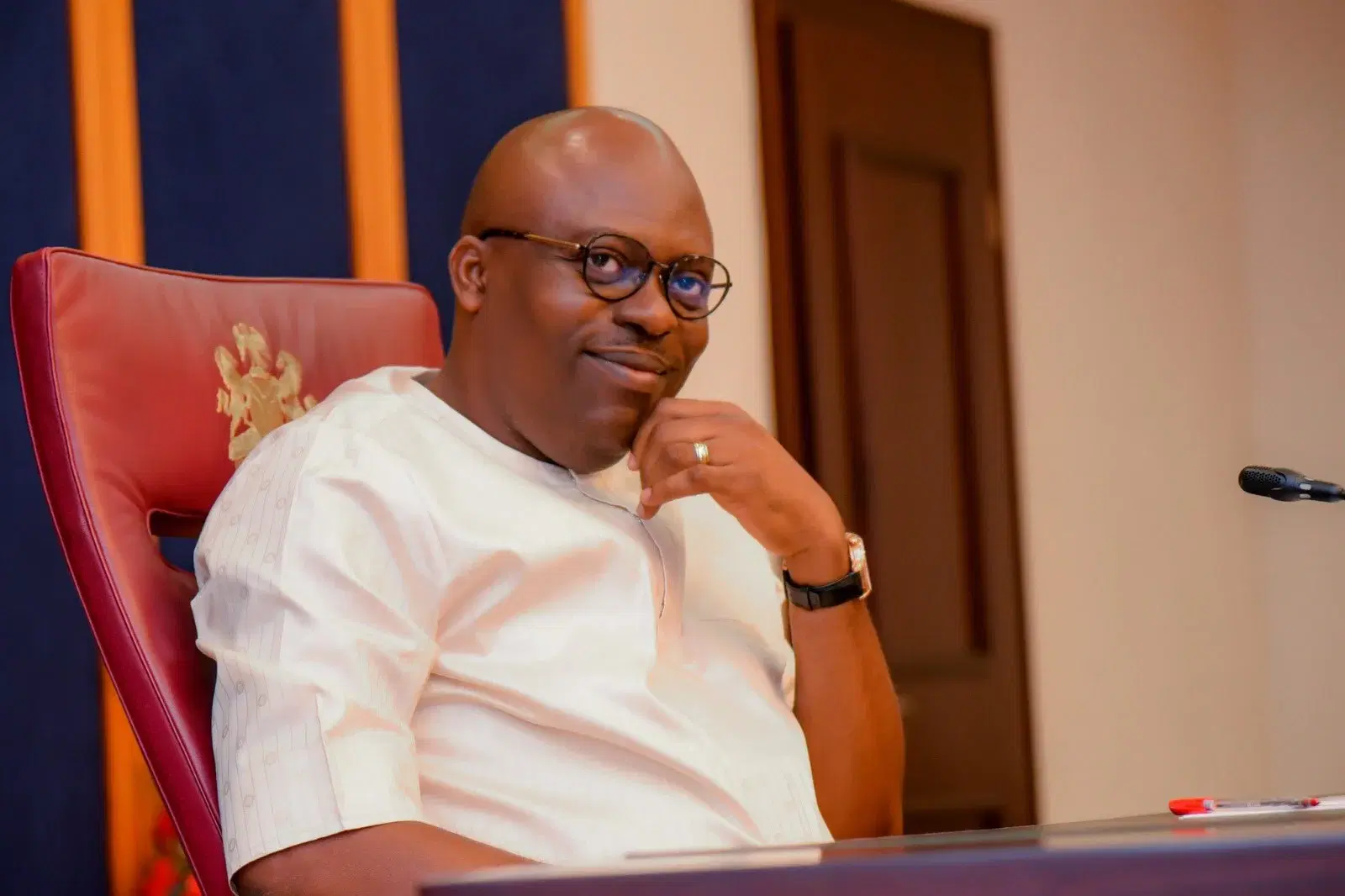
Rivers State will, on Thursday, September 18, return to democratic rule, six months after President Bola Tinubu suspended Governor Siminalayi Fubara, his deputy Ngozi Odu, and the state legislature under a state of emergency.
The end of emergency rule comes with heightened political manoeuvring as the Rivers State chapter of the All Progressives Congress (APC) has begun wooing Governor Fubara to defect to the APC.
Darlington Nwauju, the reinstated spokesman of Rivers APC, made the call on Channels Television’s The Morning Brief on Tuesday.
“If I were the governor of Rivers State, on my return on Thursday, I would announce my defection to the All Progressives Congress. I think the governor should join the APC, and we would gladly receive him into our party,” Nwauju said.
When asked if Fubara would automatically become APC leader in the state, Nwauju replied, “By the convention of our party, if he joins the All Progressives Congress, he becomes the leader of the party.”
Emergency Rule and Controversy
President Tinubu had declared a state of emergency in Rivers on March 18, citing the escalating feud between Fubara and his estranged political godfather, Minister of the Federal Capital Territory, Nyesom Wike.
He appointed retired Vice Admiral Ibok-Ete Ekwe Ibas as Sole Administrator to pilot the state’s affairs until September 18.
The move, defended under Section 305 of the Constitution, was denounced by the Nigerian Bar Association, civil society groups, and lawyers who described it as unconstitutional.
Victor Giwa, a lawyer, declared the exercise “illegal, unconstitutional, null and void”, stressing that only a duly elected governor and State House of Assembly can appoint a valid electoral commission under the 2018 RSIEC law.
Civil society groups, including ACCESS, also faulted the 21-day election notice, pointing out that it violated Section 150(3) of the Electoral Act, which requires at least 90 days’ notice.
Speaking to Pinnacle Daily, the group’s spokesperson, Engr. Kenneth Eze, who also heads Speak Out Africa Initiative, described the situation in the state as “a direct assault on Nigeria’s democratic structure”.
Ibas’ Six-Month Tenure
As Sole Administrator, Ibas swept away political appointees, appointed local government administrators, and presided over fresh LGA elections across the state. Wike’s allies won overwhelmingly, leaving Fubara’s camp completely shut out.
Last Sunday, an interdenominational thanksgiving service was held to mark the end of Ibas’ tenure.
In his exit remarks, the retired naval chief pointed to the “peaceful” conduct of the LGA polls, rehabilitation of the Diete-Spiff Secretariat, revival of the Songhai Farm, and N5 billion saved from civil service verification as key achievements. He described himself as the most “worker-friendly” leader civil servants had had in years.
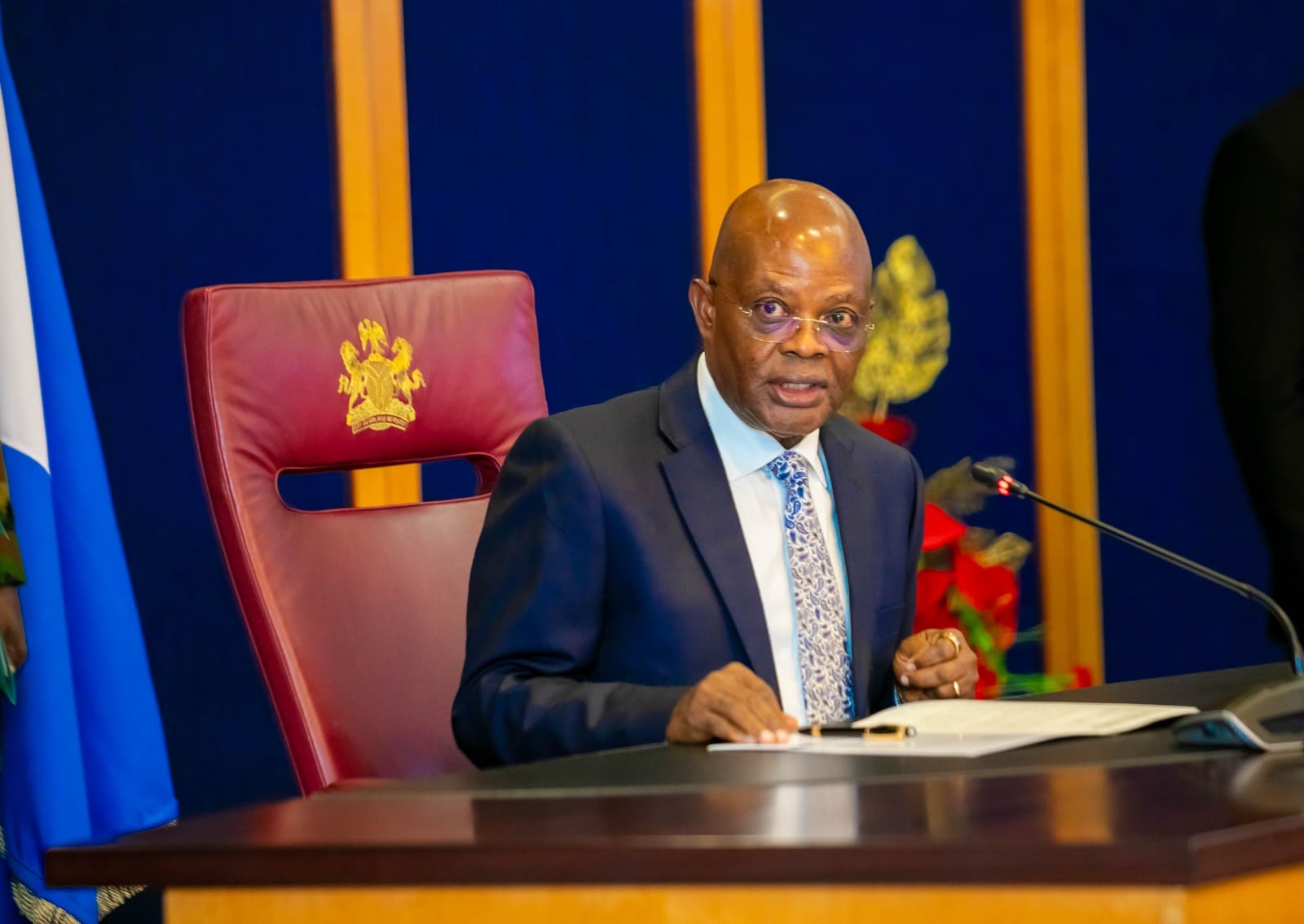
Commenting on the administration of Vice Admiral Ibok-Ete Ekwe Ibas, the reinstated Rivers APC spokesman, Nwauju said the Rivers APC has not demanded a probe of Ibas’ stewardship.
“APC has not officially demanded that Ibas give an account of his stewardship for the past six months. The budget approval he got was from the National Assembly of the Federal Republic of Nigeria.
“There is a committee from the House of Representatives overseeing the period of emergency.
“I expect the committee should do due diligence, come up with a report, and tell Nigerians what they found out. It is one of their core mandates in the business of legislation and lawmaking,” Nwauju stated.
Behind the Scenes: Conditions for Fubara’s Return
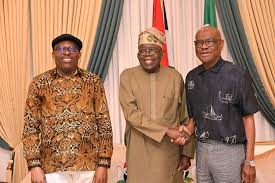
After President Tinubu settled Gov. Fubara and FCT Minister Wike, reports suggest that Governor Fubara’s reinstatement deal came with conditions: that he abandon his 2027 re-election bid, recognise Wike’s leadership, and allow him to nominate all local government chairmanship candidates.
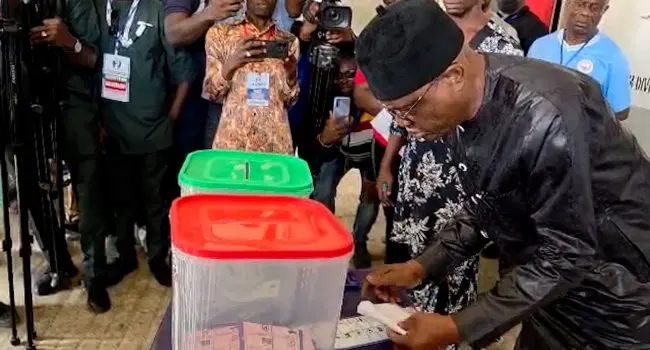
After the Rivers LG polls, Wike, despite being a PDP member, openly hailed the Rivers local government election, describing it as “peaceful” and crediting President Bola Tinubu for insisting that the polls be held.
He declared, “By September 18, the emergency will expire. The governor and the State Assembly will return to office, and we will now have a government functioning at both the state and grassroots levels.”
The sweeping of the councils by Wike’s loyalists appears to validate at least one of those claims.
RELATED STORIES:
- Court Dismisses Suit Challenging Rivers LG Election, Emergency Rule
- Rivers LG Election: Legality, Controversy and the Politics of Power
- Atiku Slams Rivers LG Polls, Urges Opposition to Reject Results
- Wike Says Rivers Ready as Emergency Rule Nears End
- Rivers LG Election a Mockery of Democracy – Peter Obi
The election did not go down well with opposition politicians like former Anambra State Governor and Labour Party’s 2023 presidential candidate, Peter Obi, who denounced the Rivers State local government election, calling it “a mockery of democracy”.
Also, former Vice President and PDP presidential candidate Atiku Abubakar condemned the exercise as “an awful absurdity” and “a travesty to the very notion of elective democracy”.
Public affairs analyst Hon. Nonso Okeke, who also contested as vice chairmanship candidate for the Zenith Labour Party (AMAC), told Pinnacle Daily that the Rivers council election was not just a routine exercise but a fierce struggle for control of state resources and grassroots power.
He noted that Governor Fubara faces an uphill task since many of the chairmanship candidates are seen as loyal to Wike, raising questions about their commitment to the sitting governor.
Legal Battles Against Emergency Rule and Council Polls
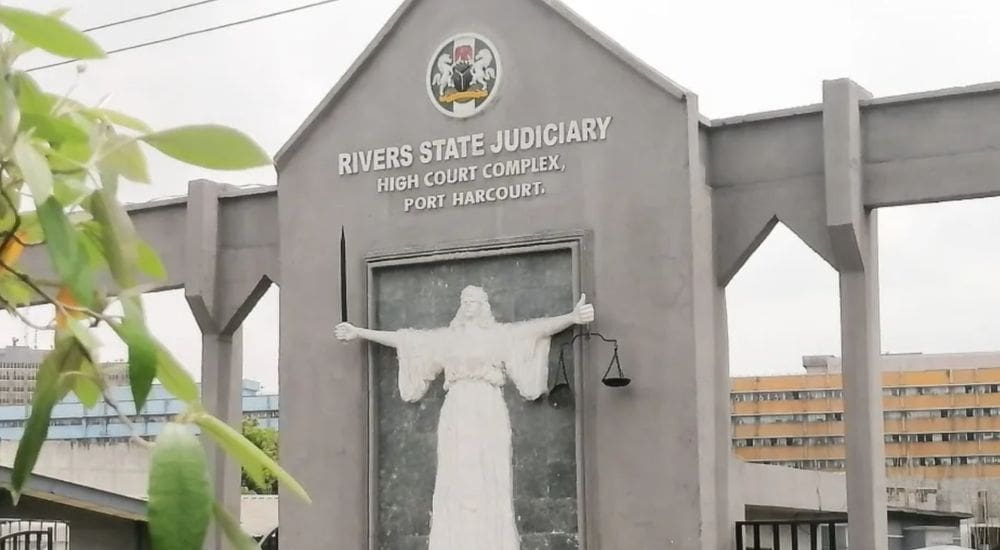
Following the Rivers local government election, the first legal bid to nullify the exercise collapsed after a Port Harcourt High Court dismissed a suit filed by lawyer Williams Abayomi Stanley.
The suit challenged both the legality of the election and the emergency rule.
Delivering judgement, Justice Stephen Jumbo ruled that the High Court lacked jurisdiction, stressing that under the Constitution, only the Supreme Court holds exclusive authority to determine suits arising from a state of emergency.
He further noted that the interest Stanley sought to protect belonged solely to the Rivers State Governor.
However, during his suspension, Governor Fubara himself did not institute any legal action to reclaim his office. Instead, others stepped in: PDP-led states filed a case at the Supreme Court challenging the emergency rule, while the Socio-Economic Rights and Accountability Project (SERAP) lodged a separate suit contesting the suspension of elected officials.
Fubara’s Isolation And Resumption
Governor Fubara and his allies were conspicuously absent during the LGA polls. He even lost his home local government area, Opobo, to the APC. Key figures in his camp, including Edison Ehie, Chief of Staff to the Government House; Secretary to the State Government, Dr Tammy Danagogo; and members of the Simplified Movement, also shunned the exercise, highlighting his political isolation.
Observers note that even if Fubara returns to office on Thursday, he will contend with a legislature that once sought his impeachment and a local government system dominated by Wike’s loyalists.
President Tinubu and Governor Fubara are expected back in Nigeria on Tuesday; Tinubu from France, where he cut short his vacation, and Fubara from London just as preparations intensify for Thursday’s handover.

Rafiyat Sadiq is a political, justice, and human rights reporter with Pinnacle Daily, known for fearless reporting and impactful storytelling. At Pinnacle Daily, she brings clarity and depth to issues shaping governance, democracy, and the protection of citizens’ rights.