

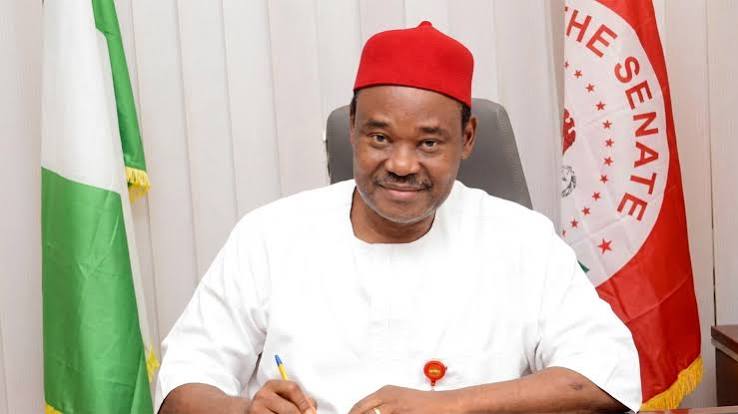
Nigeria’s Permanent Representative to the United Nations, Jimoh Ibrahim, has defended President Bola Tinubu’s decision not to attend the 81st session of the United Nations General Assembly (UNGA) in New York.
Ibrahim said it would serve little purpose for the President to travel to the United States merely to deliver a 15-minute speech at the high-level gathering.
He made the remarks on Thursday while appearing on Beyond The Headline, a Television Continental programme.
Tinubu’s absence had earlier drawn criticism from former Vice-President Atiku Abubakar, the African Democratic Congress presidential candidate, who questioned the President’s decision to miss the UNGA general debate for the third consecutive year.
RELATED NEWS:
- UNGA 81: Shettima, African Leaders Demand Debt Relief, Reforms
- UNGA: Sowore Questions Tinubu’s Absence, Alleges France Medical Trip
- 8 Demands Nigeria Pushes at UNGA 81
The criticism came after Minister of Information and National Orientation, Mohammed Idris, explained that Tinubu was on annual leave and had assigned Vice-President Kashim Shettima to lead Nigeria’s delegation to the high-level meeting.
Ibrahim: Shettima’s Engagement is Better
Defending the President’s absence, Ibrahim said the UNGA schedule did not justify Tinubu travelling to New York for a brief speaking slot.
He asked what the President would gain from attending if his participation was limited to a 15-minute address.
“The presidents are allowed in the UN under UNGA for 15 minutes. Is that the reason why he should board the flight and be here for 15 minutes?”
Ibrahim said Shettima had instead participated in high-level meetings and engaged Nigerians in the diaspora, describing such activities as more useful than travelling solely for the general debate.
“This is the kind of engagement we want, not that the president will just be inside the plane and be coming to UNGA for a 15-minute speech. What is the meaning of that? We don’t want that.”
‘60% of Speakers are Ministers, Vice-presidents’
Ibrahim, who was appointed chairman of the budget and administration committee of the UNGA Fifth Committee in June, said the composition of the speakers’ list also influenced his position.
According to him, about 60 per cent of those scheduled to speak were foreign affairs ministers and vice-presidents representing their countries.
He said he would not recommend that Tinubu travel to New York simply to participate in a session where many countries were being represented by officials below the presidential level.
“As permanent representative of Nigeria to the United Nations, if I’m to do a memo to the president at the last minute of boarding the plane to go to UNGA, do you think I will recommend the president to be on his way when 60 percent of the speaking list of 193 countries are ministers and vice-presidents representing their countries?”
Ibrahim added that the situation could be different if the speaking list was dominated by presidents.
“There are exigencies. If the speaking list is 90 presidents, maybe of course, the president can come. I don’t think the president should come and be where his equivalent is a minister of foreign affairs of another country.”
Ibrahim: Nigeria Has Prominent Position at UNGA
The Nigerian envoy also argued that the country maintained a prominent position at the UNGA despite Tinubu’s absence.
He said Nigeria occupied the eighth position in the seating arrangement, while the United States was positioned behind Nigeria.
“I promise that Nigeria will be on the front-row seat at UNGA. Are we not in the front row? Nigeria is sitting in the eighth seat in the UN under UNGA, and America is at the 26th seat at the back of Nigeria’s seat.”
He cited US President Donald Trump’s participation as another example, saying Trump attended the UNGA to deliver his address before leaving rather than remaining for the proceedings.
Ibrahim questioned whether Nigeria needed the President to be physically present before the country could make an impact at the gathering.
“Are you saying that Nigeria is making the impact it is supposed to make globally? Must we have President Tinubu here before we can make the impact?”
UN Plans Resource Allocation Reforms
Ibrahim also spoke about proposed reforms within the United Nations, saying measures were being prepared to increase the organisation’s impact on member states.
He said the reforms were expected to take effect from October 1.
According to him, about 90 per cent of UN resources were currently spent at its headquarters, while only 10 per cent went to member states.
“So legitimacy is reduced because member states are not seeing impacts of the United Nations. We are going to reverse that.”
The debate over Tinubu’s absence followed earlier criticism from Atiku, who questioned why the President had again stayed away from the UNGA general debate. Atiku also raised questions about reports that arrangements had been made for Tinubu to sit near US President Donald Trump during the gathering.

Rafiyat Sadiq is a political, justice, and human rights reporter with Pinnacle Daily, known for fearless reporting and impactful storytelling. At Pinnacle Daily, she brings clarity and depth to issues shaping governance, democracy, and the protection of citizens’ rights.