

African leaders attending the 81st United Nations General Assembly (UNGA) in New York have used the global gathering to raise concerns over Africa’s debt burden, access to critical minerals, international law, reparations for the transatlantic slave trade and reforms to global institutions.
The 2026 UN General Assembly is being held under the theme, “Restoring trust, managing transformation: A United Nations that delivers for all.”
Several African heads of state and government officials are attending the assembly and holding bilateral meetings on the sidelines.
Nigeria is being represented by Vice-President Kashim Shettima, who is leading the country’s delegation and is scheduled to deliver Nigeria’s national statement on Thursday, September 24. This is the third consecutive UN General Assembly at which Shettima has represented President Bola Tinubu.
Shettima seeks diaspora support for Tinubu administration.
Ahead of his UNGA address, Shettima called on Nigerians living abroad, particularly those in the United States, to support the Tinubu administration’s efforts to transform the country’s economy.
The Vice-President made the appeal on Wednesday at Nigeria House in New York during an interactive session with members of the Nigerian diaspora community.
According to a statement issued by his spokesperson, Stanley Nkwocha, Shettima said the administration was working to reposition the economy, particularly in education, healthcare, science and technology and agriculture.
He described the Nigerian diaspora’s expertise as “the greatest resource of the future” and said the country had the human capacity to harness its potential.
“Citizens of our country have the capacity and intellect to harness our nation’s potential and take it to greater heights,” Shettima said.
He also defended the economic reforms introduced by the Tinubu administration, saying the President had taken “bold decisions” since assuming office.
“When President Tinubu assumed office, he did not resort to trading blame and accusing his predecessor for the state of affairs of our nation. Rather, he took decisions that only a leader of courage and conviction would take,” he said.
Shettima said the government’s reforms had produced what he described as tangible gains, including an increase in foreign reserves from $3.9 billion to more than $55 billion and economic growth of 4.45 per cent in the last quarter.
READ ALSO:
- Nigeria’s School Feeding Chief Honoured with Global Peace Award At UNGA 81
- Nigeria to De-Risk Mining Investments with Global Asset Protection Framework – Alake
- Nigeria Exceeds OPEC Quota Again as Crude Output Hits 6-year High
- My People Told Tinubu I Wanted to Kill Him and Become President — Shettima
He said improvements in the exchange rate and foreign reserves would help protect diaspora remittances, promote exchange-rate stability and support investments by Nigerians living abroad.
“We are working day and night to reposition the Nigerian nation as investment confidence is returning to Nigeria, and the Dangote Refinery success story is a true manifestation in recent times,” Shettima said.
“Be rest assured that beyond the negative stories that you hear and see on social media, Nigeria is open for business. We have crossed the Rubicon, and we are on the path of sustained growth.”
The Vice-President also highlighted the Nigeria Education Loan Fund, saying more than 1.29 million students in tertiary institutions had accessed N125 billion since the programme began.
On security, Shettima acknowledged the challenges facing the country and said the government was deploying available resources to address emerging threats.
He also called for national unity, saying, “Whatever binds us together supersedes whatever divides us as a people.”
Shettima’s diaspora engagement came as he prepared to represent Nigeria at the UNGA, where he is expected to outline the country’s position on international institutions, sustainable development, peace and security, climate action and the global economic order.
Shettima pushes African value addition for critical minerals
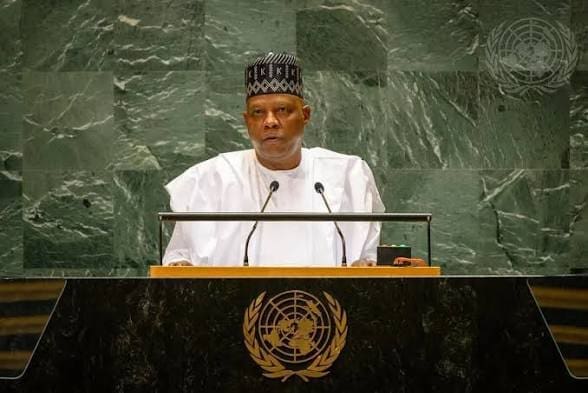
On the sidelines of the UNGA, Shettima also participated in the third High-Level Roundtable of the Africa Minerals Strategy Group.
He called for an end to Africa’s dependence on exporting raw minerals, urging countries on the continent to develop processing, manufacturing and value-addition industries around critical mineral resources.
“Africa’s mineral wealth must translate into jobs, industrial growth and improved living standards for Africans,” Shettima said.
He also urged African countries to cooperate rather than compete in ways that could reduce the value derived from their natural resources.
Ruto pushes cleaner energy, debt reforms
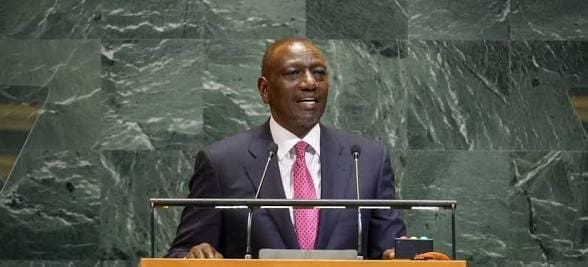
Kenyan President William Ruto has used several meetings on the sidelines of the UNGA to highlight clean cooking energy, debt financing, artificial intelligence and the need for greater value addition to Africa’s mineral resources.
Speaking about clean cooking, Ruto said access to cleaner energy was essential to public health, economic opportunities and Africa’s green transition.
“Achieving universal access will require investment. We must mobilise capital through local-currency financing, guarantees and other instruments that will turn demand into viable projects,” he said.
Kenya and Norway are co-hosting the first high-level event on clean cooking for Africa during the UNGA, with a second summit scheduled to take place in Nairobi in January 2027.
Ruto also called for urgent reforms to the global financial system, citing the high debt burden faced by many African countries.
“High debt costs are squeezing national budgets and limiting investment in jobs, education, health and infrastructure,” he said at a UNICEF meeting on the sidelines of the assembly.
He said rising debt-servicing costs were also affecting African children, as interest payments reduced the resources available for classrooms, healthcare, nutrition and social protection.
Ruto further called for stronger safeguards to protect children as artificial intelligence becomes increasingly integrated into education.
“No child should have to choose between being connected and being safe. As AI transforms how children learn, create and connect, safety must be built into technology from the beginning,” he said.
He also argued that Africa should benefit more from its critical mineral resources, which are increasingly important to the global energy transition.
“Processing at source, fair value chains, technology transfer and local industry will turn natural wealth into skilled work, stronger economies and hope for our young people,” Ruto said.
Bio calls for respect for international law
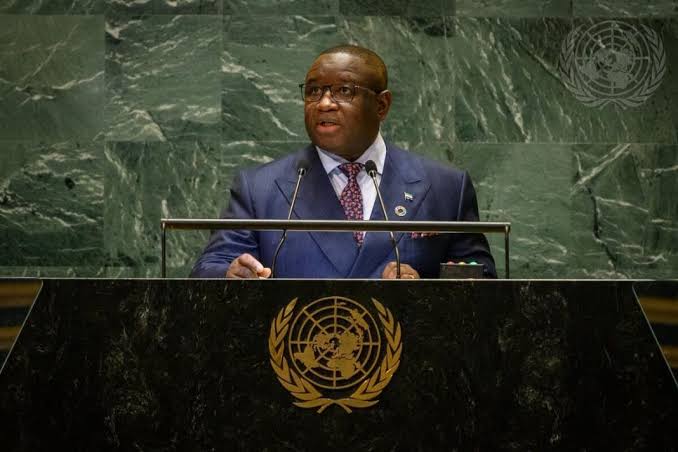
Sierra Leonean President Julius Maada Bio used his address to the General Assembly on Tuesday to call for equal respect for international law, regardless of a country’s strength or political influence.
“Trust is the currency of multilateralism. You gain trust when the law protects the vulnerable as firmly as it restrains the powerful. International law should not change with geography or bend according to the identity of the accused,” Bio said.
His remarks came against the backdrop of conflicts in the Middle East, with the Sierra Leonean leader stressing the importance of the UN Charter and international law.
Bio also renewed calls for reform of the UN Security Council, including two permanent seats for Africa with the rights and privileges of permanent membership, alongside five non-permanent seats.
He also made a case for what he described as “reparative justice” for crimes against humanity committed against Africans during the transatlantic slave trade.
Bio welcomed the UN declaration in March recognising the slave trade as a crime against humanity but said further action was required.
“Reparative justice, therefore, is not a plea for charity; it is a call for acknowledgement, formal apology, the return of cultural heritage, fair redress and a guarantee of non-repetition,” he said.
Mahama advances Africa’s reparations campaign
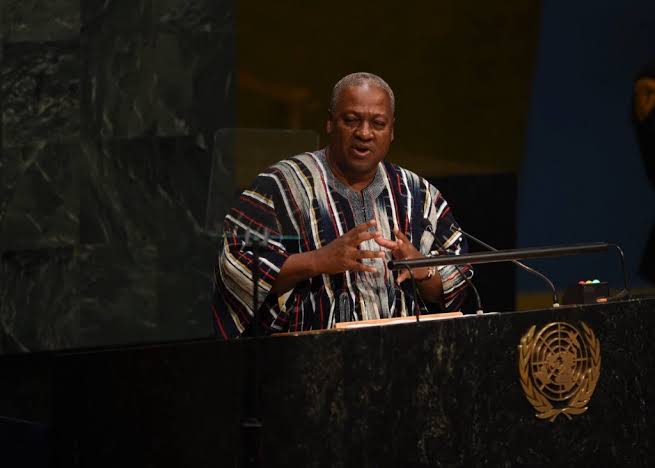
Ghanaian President John Mahama is also scheduled to address the General Assembly on Thursday.
Mahama hosted a high-level meeting on Monday focused on his “Accra Reset” initiative, which seeks to encourage countries to take greater ownership of their health and development priorities rather than relying heavily on external financing and aid.
The meeting was held under the theme, “Full Circle: Making Global Development Work Again.”
Mahama is also expected to participate in discussions on reparations for Africa over crimes against humanity committed during the transatlantic slave trade.
He is expected to address a meeting under the theme, “From Commitments to Action on Reparatory Justice: Advancing International Cooperation for the Return and Restitution of Cultural Properties and Heritage.”
The discussions reflect some of the major issues African leaders are placing before the international community during the 2026 UN General Assembly, including economic reform, debt financing, resource ownership, international justice and greater African representation in global institutions.

Rafiyat Sadiq is a political, justice, and human rights reporter with Pinnacle Daily, known for fearless reporting and impactful storytelling. At Pinnacle Daily, she brings clarity and depth to issues shaping governance, democracy, and the protection of citizens’ rights.