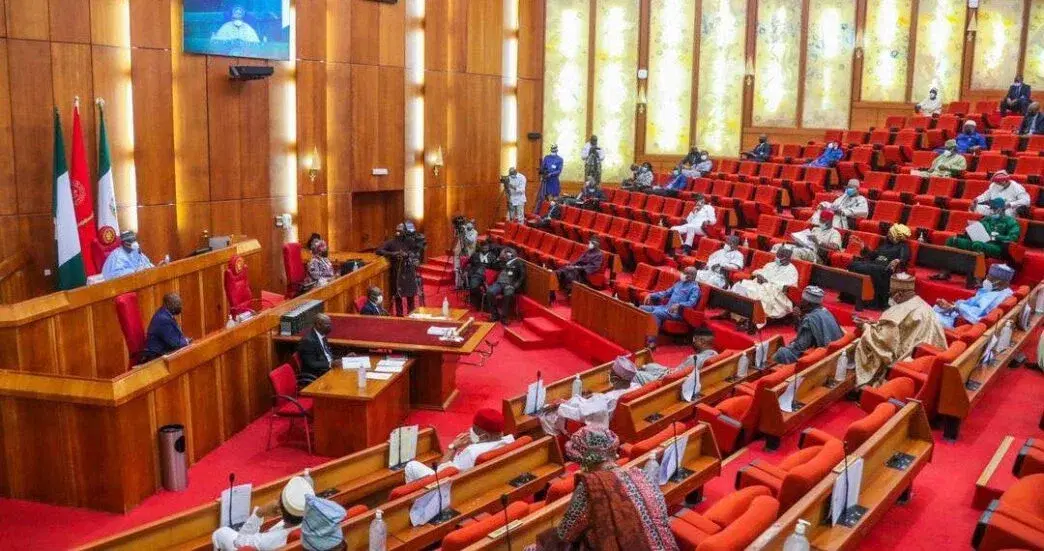
As Nigeria marks her 65th Independence Anniversary, the fireworks and fanfare once again attempt to showcase a nation’s resilience. But behind the celebrations lies a sobering truth, the forgotten architects of Nigeria’s future: the Teachers! Once revered as the nation’s backbone, teachers today struggle to survive in conditions that have stripped their profession of dignity …
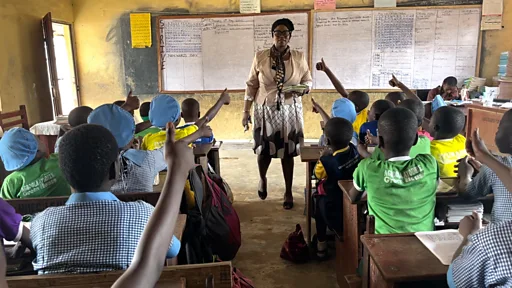
As Nigeria marks her 65th Independence Anniversary, the fireworks and fanfare once again attempt to showcase a nation’s resilience. But behind the celebrations lies a sobering truth, the forgotten architects of Nigeria’s future: the Teachers!
Once revered as the nation’s backbone, teachers today struggle to survive in conditions that have stripped their profession of dignity and made it unattractive to future generations.
A Profession in Decline
In developed countries, teachers are comfortably ranked among the middle class. In Nigeria, they often struggle below the poverty line. Salaries arrive late when they are paid at all, and for many, the monthly pay packet cannot cover even the basics of food, transport, or rent.
READ ALSO: Nigeria May Exit Anti-money Laundering Watchlist in October
This results in Brain drain. From secondary schools to universities, thousands of qualified teachers migrate abroad each year, leaving behind overcrowded classrooms, empty laboratories, and discouraged colleagues.
“Poor remuneration, delayed salaries, and inadequate infrastructure have left many teachers struggling to make ends meet,” said Dr. Peter Omaku, a lecturer at Nassarawa State Polytechnic. “This has made the profession less attractive, leading to a significant brain drain.”
The Forgotten Foot Soldiers
At the primary level, the very foundation of Nigeria’s education system, teachers battle with humiliating conditions. Classes often hold more than 80 pupils for a single teacher. In some rural schools, pupils sit on bare floors, libraries are non-existent, and teaching aids are limited to chalk and blackboards.
“It’s very undervalued and neglected,” said Stella Nwaedozie, a primary school teacher in Anambra. “Adequate and qualified people no longer teach, so anybody can be a teacher, and that produces half-baked knowledge for students.”
Secondary school teachers tell a similar story. Obsolete curricula, outdated textbooks, and a lack of training opportunities push many into petty trading and farming to supplement their incomes. “There should be better pay, improved working conditions, and stronger recognition of teachers’ contributions,” pleaded Agnes Igba, a secondary school teacher in Abuja.
At the university level, frustration is palpable. Only days ago, the Academic Staff Union of Universities (ASUU) issued a 14-day ultimatum to the Federal Government over what it called “neglect of the university system.” For lecturers, repeated strikes have become the only language government listens to.

Rising Anger, Public Protest
This year has seen more visible pushback. In Abuja, teachers and nurses recently marched through the streets carrying placards that demanded implementation of the ₦70,000 minimum wage and payment of allowances long overdue.
On university campuses, ASUU leaders have staged demonstrations, warning that “government’s neglect is pushing lecturers to the edge.”
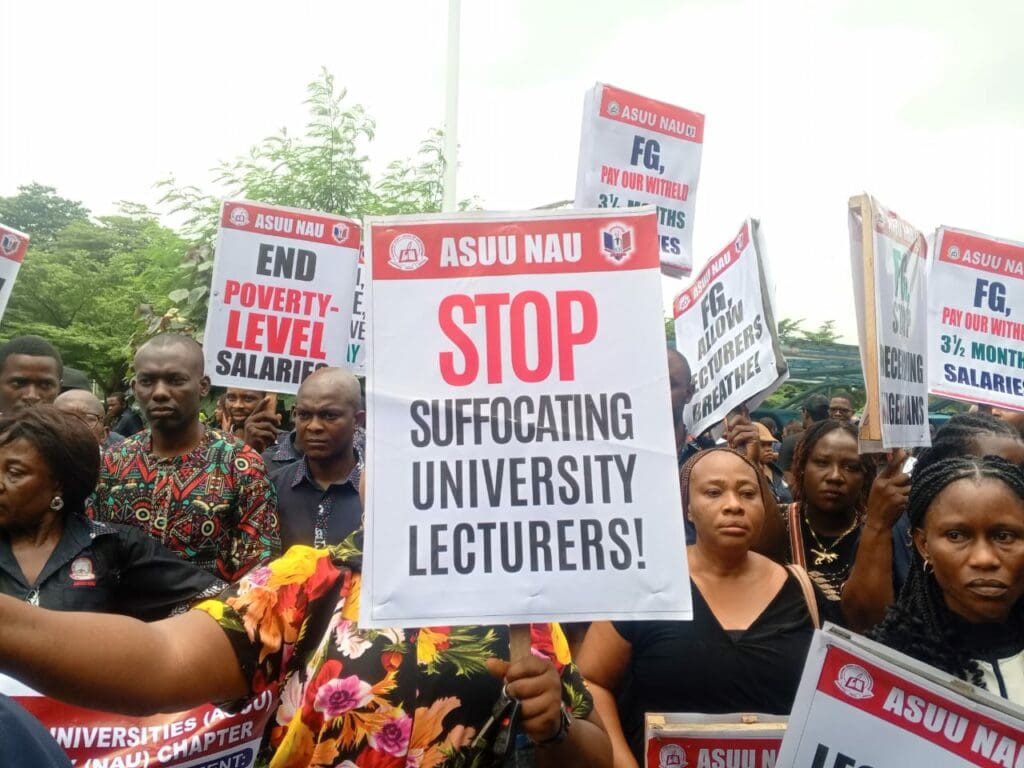
Investigative reports confirm what unions have long decried: huge gaps in salary funding and underpayment across board.
Yet behind the protests lie weary voices. “Low remuneration and lack of appreciation for educators remain major challenges,” said Joy Ocheni, a secondary school teacher in Abuja. “Teachers must adapt, but the government must also act, overhaul the curriculum and improve salaries significantly.”
The Rise of Private Alternatives
Public neglect has fueled the rise of private schools. Across Nigeria, parents now willingly pay exorbitant fees to secure quality education, a complete reversal from practices in developed nations where public schools are benchmarks of excellence.
The effect is widening inequality. Children of the wealthy find refuge in private schools with smaller class sizes and better facilities. Children of the poor remain trapped in dilapidated public classrooms, and by implication, have their futures tethered to a broken system.
The Human Cost
Behind every underpaid teacher is a broken dream. Many retire into poverty, their pensions unpaid. Others die waiting for arrears. Some sacrifice their children’s futures because they cannot afford to send them to better schools.
The emotional toll is just as devastating. Once torchbearers of knowledge, teachers now stand demoralized. Passion is replaced by survival instincts, leaving students under-prepared for a competitive, knowledge-driven world.
READ ALSO: ASUU Threatens Strike, Hands FG 14-day Ultimatum
Restoring Dignity
If Nigeria is serious about celebrating 65 years of independence, it must confront this crisis head-on. Education experts and teachers alike insist on a clear path forward:
Commit 20% of the national budget to education, in line with UNESCO’s standard.
Guarantee timely and fair salaries with housing schemes and retirement security.
Invest in training and retraining, equipping teachers for modern, student-centered classrooms.
Upgrade infrastructure, from digital libraries to functional laboratories.
Restore respect for teachers, recognizing them as national assets rather than expendable labour.
A Call Beyond Independence Day
Sixty-five years after independence, Nigeria cannot boast of true freedom while its teachers remain shackled in poverty and neglect. Every doctor, engineer, lawyer, or politician first passed through the hands of a teacher.
The celebration of independence must therefore ring louder as a call to action: that the Nigerian teacher who are forgotten, battered, but unbroken, needs to rise again, if education is to be taken seriously in this country.