

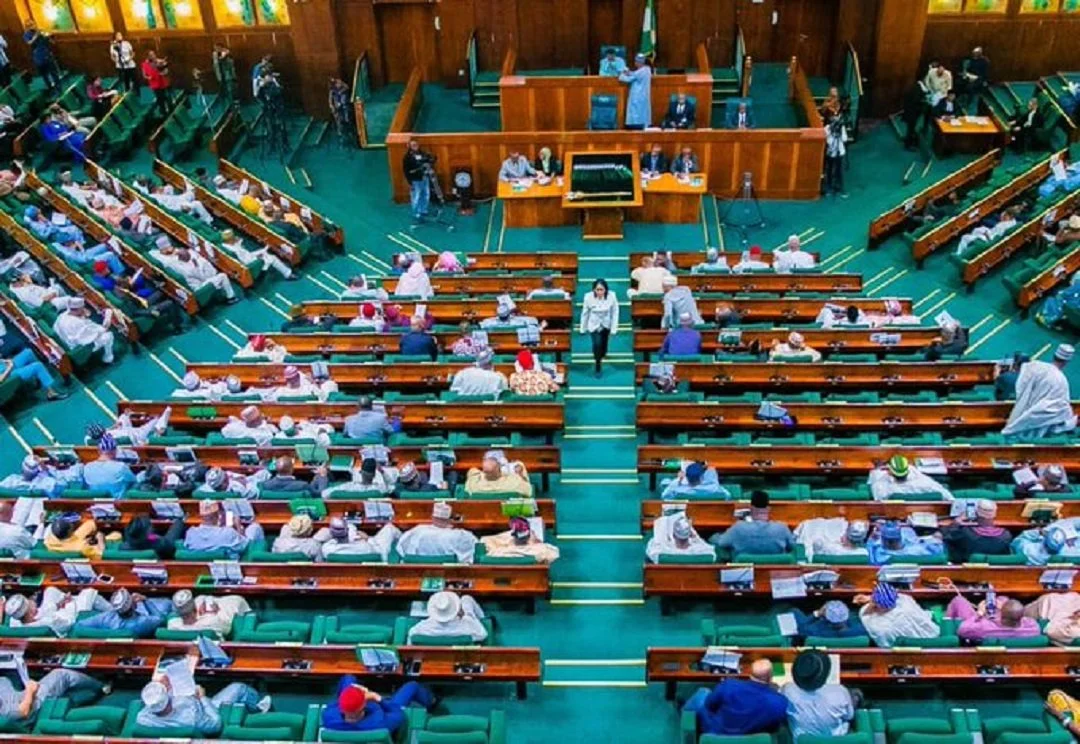
The House of Representatives has firmly rejected the United States Senate’s description of Nigeria’s security situation as a “genocide against Christians” or a form of state-sponsored persecution.
During plenary on Wednesday, lawmakers also moved to counter a proposed US Senate bill seeking to designate Nigeria as a Country of Particular Concern (CPC) and impose sanctions on Nigerian officials under the Global Magnitsky Act and related authorities.
US Senate Bill Sparks Diplomatic Pushback
The contentious legislation, titled the Nigeria Religious Freedom Accountability Act of 2025 (S.2747), was introduced in the US Senate on 9 September 2025.
READ ALSO: US Congressman Urges Redesignation of Nigeria as ‘Country of Particular Concern’
Reacting swiftly, the Nigerian House mandated its relevant committees to coordinate with the Federal Ministry of Foreign Affairs and the Nigerian Embassy in Washington, D.C., to lodge a formal diplomatic demarche to the bill’s sponsors and relevant US committees within 21 days.
The communication is expected to include empirical data and Nigeria’s official position on religious freedom and security governance.
Joint Fact-Finding Proposal
The committees were also instructed to invite the US Mission in Nigeria and interested US legislators to propose a Nigeria–US Joint Fact-Finding and Dialogue Mechanism on Freedom of Religion or Belief (FoRB).
The proposed dialogue will involve faith leaders, independent experts, and representatives of the US Commission on International Religious Freedom (USCIRF), which will be invited to a House hearing to review its sources, methodology, and conclusions.
The resolutions followed the adoption of a motion of urgent national importance sponsored by Deputy Speaker Benjamin Kalu and several lawmakers. The motion was titled “Urgent Need for a Coordinated Diplomatic and Domestic Response to the Proposed Nigeria Religious Freedom Accountability Act of 2025 (U.S. Senate Bill S.2747) and to Mischaracterisations of Nigeria’s Security and Religious-Freedom Landscape.”
Nigeria’s Position: Security Crisis Not Religious
In leading the debate, Kalu noted that the USCIRF has repeatedly recommended Nigeria for CPC designation, alleging violations of religious freedom and government failures to protect citizens from extremist violence.
READ ALSO: UN Warns of Rising Deaths as Siege Pushes Darfur City Toward Famine
However, he stressed that Nigeria’s Constitution guarantees freedom of thought, conscience, and religion while explicitly prohibiting any state religion. He also cited the US Department of State’s 2023 report on Nigeria, which acknowledged efforts by successive administrations, security agencies, and civil society to safeguard all worshippers and prosecute offenders.
Kalu described Nigeria’s insecurity as “complex and multi-causal”, driven by terrorism, banditry, farmer–herder clashes, separatist agitations, and communal conflicts—affecting citizens across all religious divides.
He warned that “external legislative actions based on incomplete or decontextualised assessments” could distort facts, undermine Nigeria’s sovereignty, and strain diplomatic relations.
House Reaffirms Religious Freedom
The House condemned all forms of violence and persecution on religious grounds and reaffirmed Nigeria’s constitutional protection for freedom of religion and belief.
Lawmakers further rejected narratives that frame the country’s insecurity as a religious war or as state-backed persecution. They expressed concern that such external labelling could embolden violent actors and misrepresent Nigeria’s efforts to combat terrorism and communal strife.
READ ALSO: Ronaldo Becomes First Billionaire Footballer
The House also commended the longstanding Nigeria–US partnership in counterterrorism, democracy, human rights, and interfaith dialogue.
Resolutions and Next Steps
The House directed its Committee on Legislative Compliance to ensure full implementation of the resolutions and report back within 28 days.
Copies of the resolution are to be transmitted to the Presidency, the Federal Ministry of Foreign Affairs, heads of security agencies, the United States Congress (Senate Foreign Relations and House Foreign Affairs Committees), the US Department of State and USCIRF, and the African Union (AU), ECOWAS Commission, and the United Nations (UN).
