


Olu Olanrewaju, Director of Altair International, in this interview with FRIDAY EHIME ALEX, argues that Nigeria’s housing crisis will not be solved by simply building more estates, but by creating a functioning housing market that treats housing as a productive economic sector rather than a construction-driven welfare programme. Drawing on more than 30 years of experience in the housing industry, Olanrewaju explains why Nigeria’s housing challenge is systemic rather than technical, stressing that meaningful progress depends on fixing the entire housing value chain, from land reform and infrastructure to innovative financing models. He warns that until these structural issues are addressed, new housing projects will continue to fall short of meeting the needs of most Nigerians.
Pinnacle Daily: Nigeria’s housing deficit remains high despite various government efforts. In your opinion, what key policy errors have hindered the country’s ability to provide affordable and sustainable housing on a large scale, and what changes are needed now?
Olanrewaju: The real failure is systemic, not technical. Nigeria does not merely have a housing shortage; it has a housing system that is not yet designed to deliver affordable homes at scale. For too long, housing policy has been treated as a matter of construction: announce a number of units, commission a site, cut a ribbon and move on. But housing is not simply about putting blocks on land. It is a value chain shaped by land, infrastructure, finance, planning, household income and long-term management. Until Nigeria treats it that way, new estates will continue to sit empty, abandoned or unfinished.
The first mistake has been to see housing mainly as a welfare programme rather than as a productive economic sector. Federal and state governments repeatedly announce headline targets, but the delivery model has changed little in four decades. Government builds and allocates homes; many remain unaffordable, poorly located or disconnected from jobs, transport and services. Meanwhile, implementation is fragmented across states, the Federal Mortgage Bank of Nigeria and hundreds of undercapitalised primary mortgage institutions.
This is not just a policy failure; it is a failure of political will, leadership and institutional discipline. Too many programmes begin without a clear definition of the households they are meant to serve. Too many subsidies are poorly targeted. Too many schemes assume ownership is the only respectable housing outcome, even though millions of urban Nigerians depend on private rental housing that is often expensive, insecure and weakly regulated.
The starting point must be a coordinated national housing framework that defines income groups clearly, designs interventions across the full housing ecosystem, aligns subsidies with affordability, supports both rental and ownership options, strengthens existing institutions and holds agencies accountable for measurable delivery outcomes.
Pinnacle Daily: Many Nigerians cannot afford homeownership due to high construction costs, high mortgage costs, and low incomes. What practical financing options or reforms could make affordable housing available to low- and middle-income groups without reducing quality?
Olanrewaju: Finance must fit Nigerian realities. The second mistake is expecting conventional mortgages to solve a market where many households earn irregular incomes and build incrementally. Traditional mortgage products can help some formal-sector workers, but they will not reach the majority of Nigerians, particularly those in the informal economy. Nigeria needs a broader housing finance toolkit: longer-term mortgages, rent-to-own schemes, housing cooperatives, incremental housing finance, employer-supported housing, housing microfinance and credit guarantees for households without conventional payslips.
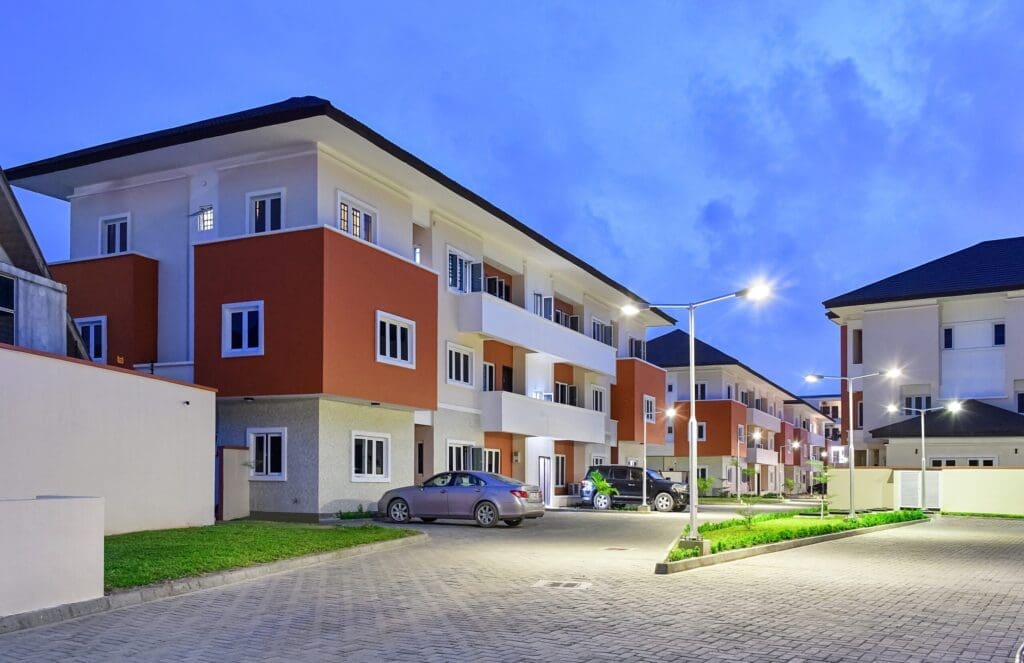
Government subsidies should lower the cost of land, infrastructure and finance, not prop up poorly targeted housing units. Pension funds, insurers and capital markets can provide long-term funding if projects are properly structured and risks are transparently managed. These institutions should also help build a social and affordable rental sector for people for whom homeownership is not realistic. Nigeria’s cities need decent rental homes just as much as they need owner-occupied units.
Reducing construction costs must also be part of the financing reform agenda. That means strengthening local supply chains, promoting local materials such as clay bricks, and adopting building technologies that can support mass housing delivery without compromising quality.
Pinnacle Daily: Land issues, such as difficulty with acquisition, titles, and approvals, are a major barrier to housing development. What reforms in land management and regulation would most effectively lower housing costs and spur private investment?
Olanrewaju: Land reform is the foundation of housing reform. No housing reform will work without land reform. The most urgent task is to simplify, digitise and decentralise land registration, title issuance and development approvals. States should create serviced land banks, publish planning requirements, set clear approval timelines and reduce overlapping charges. Land allocation should be tied to real development obligations, with undeveloped land reclaimed where necessary.
READ ALSO:
- Oye Proposes ‘Catalyst Model’ to Unlock Nigeria’s $74bn Livestock Frontier
- Mortgage, Banking Stocks Power NGX Rally as Market Nears ₦157trn
- Why Nigerian Capital Is Choosing Property Over Productive Investment
- Energy Sufficiency: Can Solar Solve Nigeria’s Decades-long Power Crisis?
- FG Sets Up Committee to Draft New VAT Order
Nigeria also needs reliable property records and titles that lenders can trust. Customary land rights should be recognised within a modern legal framework so that more land becomes bankable. Certainty over ownership reduces financing risk, lowers development costs and attracts private investment.
Pinnacle Daily: From your decades of experience in affordable housing, what lessons has Nigeria overlooked from successful housing programmes, and which international models could be realistically adapted to our local context?
Olanrewaju: Nigeria has studied successful models but failed to build one of its own. After three decades of working on and advising on housing in the UK, Europe, Africa and emerging markets in Asia and Latin America, one lesson is unmistakable: successful countries build systems, not slogans. Singapore built a public housing system through political will, long-term planning, subsidised land, disciplined execution and mandatory savings. Malaysia strengthened housing delivery through a secondary mortgage market and industrialised construction. The UK achieved scale through housing associations able to access low-cost bond finance ring-fenced for housing.
- Chile shows how demand-side subsidies can support households when rules are predictable, and delivery is disciplined.
- Brazil demonstrates the scale that can be achieved when public finance, state banking capacity and social housing objectives are aligned.
- Mexico illustrates how payroll-linked housing finance can deepen a national mortgage market.
- Colombia shows that modest subsidies can still make a major difference when they are targeted and consistent.
Scandinavian examples are equally instructive.
- Sweden delivered homes at scale by setting a binding national target and mobilising municipal housing companies as bulk developers.
- Denmark shows the value of non-profit housing, tenant democracy, ring-fenced debt and municipal allocation powers for vulnerable households.
Nigeria has admired these models in policy papers but has replicated none of their institutional logic. It has not embedded housing supply into the pension system, created a viable secondary mortgage market or professionalised state housing corporations, the Federal Housing Authority and local planning authorities around predictable, transparent processes. Too many programmes still assume limited government capital rather than using public policy to attract private, cooperative and institutional investment.
The lesson is clear. Successful housing programmes are not built on promises, isolated estates or weak delivery plans. They combine income-based interventions, serviced land, affordable finance, public and private delivery, transparent subsidies, strong local institutions and long-term facilities management.
Nigeria can learn from Singapore’s institutional planning, Austria’s cost-rental model, Egypt’s subsidy framework and incentives for banks, Morocco’s public-private delivery and slum regeneration model, and rent-to-own and cooperative housing models in Europe and Latin America. But Nigeria should not copy any model wholesale. The answer must reflect local realities: informal incomes, extended family structures, religious institutions, state housing corporations, Family Homes Funds, incremental self-build housing and major regional differences.
Pinnacle Daily: Concerns are growing that many housing projects emphasise building more homes but neglect creating sustainable communities with proper infrastructure, transport, schools, and employment opportunities. What does sustainable housing truly mean for Nigeria? What should governments and developers do differently?
Olanrewaju: Sustainable housing must mean liveable communities. Sustainable housing is not merely a well-built house. It is a home people can afford to acquire, occupy and maintain while still being able to reach work, transport and essential services without excessive cost or travel time.
Homes must be connected to jobs, public transport, schools, healthcare, water, energy, drainage and waste management. They must also be resilient to flooding, heat and other climate risks. That means governments must plan housing and infrastructure together. Developers should be judged not only by the number of units delivered, but by affordability, connectivity, environmental performance and the long-term quality of the community. Recent flooding in Lagos is a reminder that climate-adapted housing is no longer optional.
Pinnacle Daily: If you could recommend three key actions for the Federal Government, state governments, and the private sector to overhaul Nigeria’s housing sector for the next decade, what would they be, and why are these actions most urgent?
Olanrewaju: Three urgent priorities for the next decade. First, Nigeria must create a credible national housing delivery system backed by reliable data, clear institutional responsibilities and measurable targets for different income groups.
Second, it must reform land and infrastructure delivery by establishing serviced land programmes, digitising titles and approvals, and directing public investment towards transport-connected growth areas.
Third, it must mobilise large-scale, long-term finance through mortgage refinancing, pension and insurance funds, guarantees, rent-to-own structures, cooperatives and targeted subsidies that create real housing demand and reduce financing costs for local developers.
The choice is stark. Nigeria can continue to announce housing schemes that produce scattered estates, unaffordable units and abandoned sites. Or it can build a housing system that works continuously, finances itself responsibly and delivers decent homes at scale. The crisis will not be solved by counting the houses the government promises to build. It will be solved when housing becomes a functioning market, a social priority and a disciplined national development strategy.
Olanrewaju brings decades of leadership and international experience to the discussion. He has served as chair, chief executive officer, and executive director for major affordable housing developers and managers in the United Kingdom. At Altair International, he leads the firm’s international business, developing tailored solutions to housing and placemaking challenges around the world. He is also a co-founder and investor in The African Housing Company (TAHCO), a green affordable housing developer focused on sub-Saharan Africa, while also serving on the boards of both profit and not-for-profit organisations. Beyond housing, he is the co-founder and chair of Leadership2025 and chairs Business Launchpad, a London-based charity that equips young people with entrepreneurial skills.

Alex is a business journalist cum data enthusiast with the Pinnacle Daily. He can be reached via ealex@thepinnacleng.com, @ehime_alex on X