

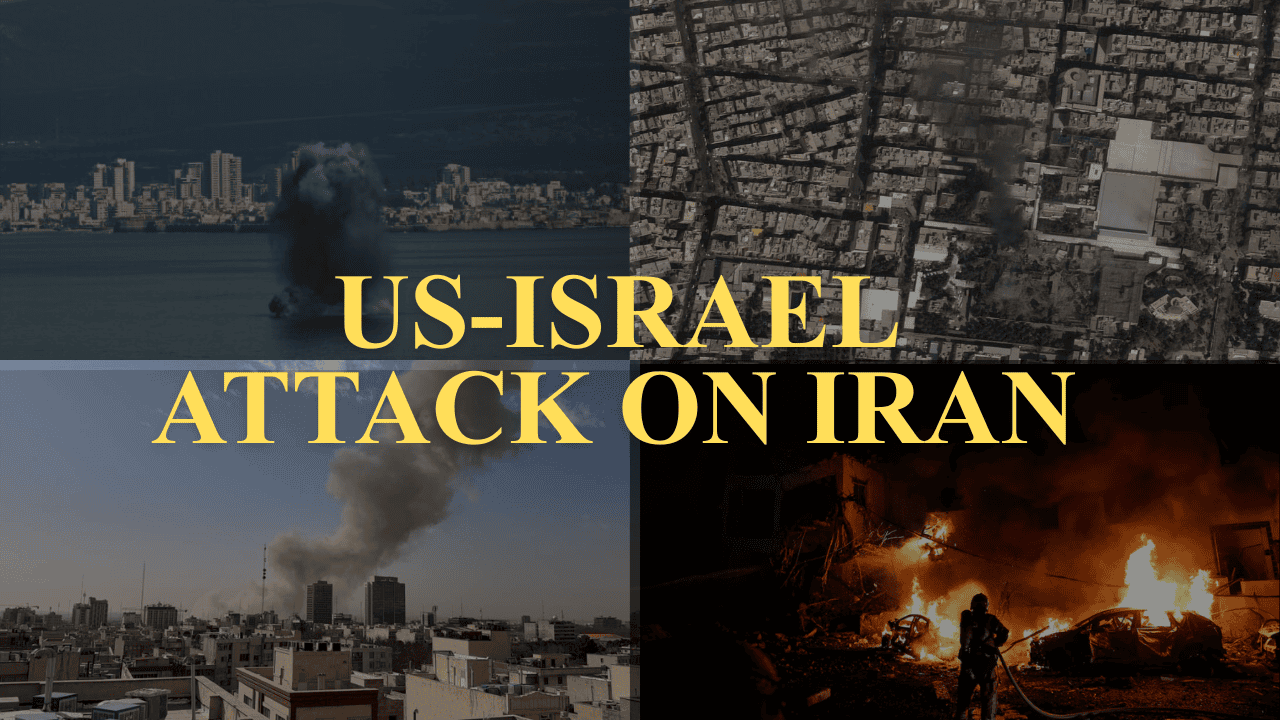
The Centre for the Promotion of Private Enterprise (CPPE) has warned that while the escalating conflict involving Iran, the United States and Israel could boost Nigeria’s oil revenues, it also poses serious inflation, exchange rate and capital flow risks for the economy.
In a policy brief released on Sunday, March 1, the CPPE Chief Executive Officer, Dr Muda Yusuf, said the geopolitical tensions have introduced fresh uncertainty into global energy markets, with direct implications for oil-dependent economies like Nigeria.
The think tank group noted that the Strait of Hormuz, which handles about 20 per cent of global crude oil supply, remains a critical flashpoint.
It said any disruption could immediately push up global oil prices, shipping costs and insurance premiums.
For Nigeria, where crude oil accounts for more than 85 per cent of export earnings and about half of government revenue, higher oil prices could increase export receipts, strengthen foreign exchange inflows and raise allocations to the Federation Account.
CPPE, however, cautioned that revenue gains would depend on Nigeria’s production levels, which currently hover between 1.4 and 1.6 million barrels per day, below installed capacity due to oil theft, pipeline vandalism and underinvestment.
READ ALSO:
- NGX Group Posts Modest Rise in Profit to N10.48bn
- U.S.-Israeli Attack on Iran: FAAN Issues Travel Advisory as Flight Disruptions Rock the Middle East
- CPPE Calls for Targeted Approach to Enforcing New Tax Laws
- All Eyes on CBN as Fed, Other Central Banks Cut Rates
- Naira Rebound Faces Fiscal Test, Group Says
It also warned that if the conflict slows global economic growth, oil demand could weaken, leading to price corrections and eroding expected gains.
On the exchange rate, the group said higher oil prices could improve foreign exchange liquidity and ease pressure on the naira.
But it added that geopolitical instability often triggers capital flight to safe-haven assets such as U.S. Treasury securities and gold, which could lead to portfolio outflows from emerging markets like Nigeria.
The CPPE expressed strong worries that the most immediate concern is inflation.
Pinnacle Daily had earlier reported that the US and Israel launched a joint military operation on Saturday, firing a series of missiles into Iran that led to the death of Iran’s Supreme Leader Ayatollah Ali Khamenei and top security officials.
The CPPE noted that Nigeria operates a deregulated downstream petroleum market, meaning higher global crude prices would directly translate into higher petrol, diesel and aviation fuel costs.
It said, this, in turn, would raise transportation, food distribution and manufacturing costs.
“Energy costs have a strong multiplier effect in Nigeria’s inflation dynamics,” the organisation said, warning that higher fuel prices could worsen cost-of-living pressures and deepen poverty, even if government revenues rise.
It added that the situation presents “a divergence between fiscal gains and social outcomes,” where public finances improve, but household welfare deteriorates.
The group also projected mixed outcomes for the capital market.
It believes that oil and gas stocks may benefit from stronger earnings expectations, while manufacturing, aviation, logistics and consumer goods firms could face profit pressures due to higher input costs.
It warned that short-term volatility in equities and fixed income markets is likely to increase.
On fiscal management, CPPE urged the government to avoid past mistakes where oil windfalls led to excessive spending during boom periods, followed by fiscal stress when prices fell.
It described the current situation as an opportunity for disciplined fiscal consolidation through saving part of any oil windfall, reducing deficits, moderating public debt and prioritising capital expenditure.
“The ultimate impact will depend less on external events and more on domestic policy discipline,” the CPPE said.
It recommended strengthening oil production capacity, building fiscal buffers, accelerating domestic refining, sustaining foreign exchange market reforms, deploying targeted social protection for vulnerable households and fast-tracking economic diversification.
“The Iran–U.S.–Israel conflict represents a classic double-edged shock for Nigeria,” the group said. “Higher oil prices may strengthen fiscal and external balances in the short term. However, inflationary pressures, welfare deterioration, capital flow volatility, and global growth risks pose significant countervailing threats.”
It added that strategic savings, production efficiency and structural reforms would determine whether Nigeria turns geopolitical uncertainty into economic resilience.

Alex is a business journalist cum data enthusiast with the Pinnacle Daily. He can be reached via ealex@thepinnacleng.com, @ehime_alex on X