

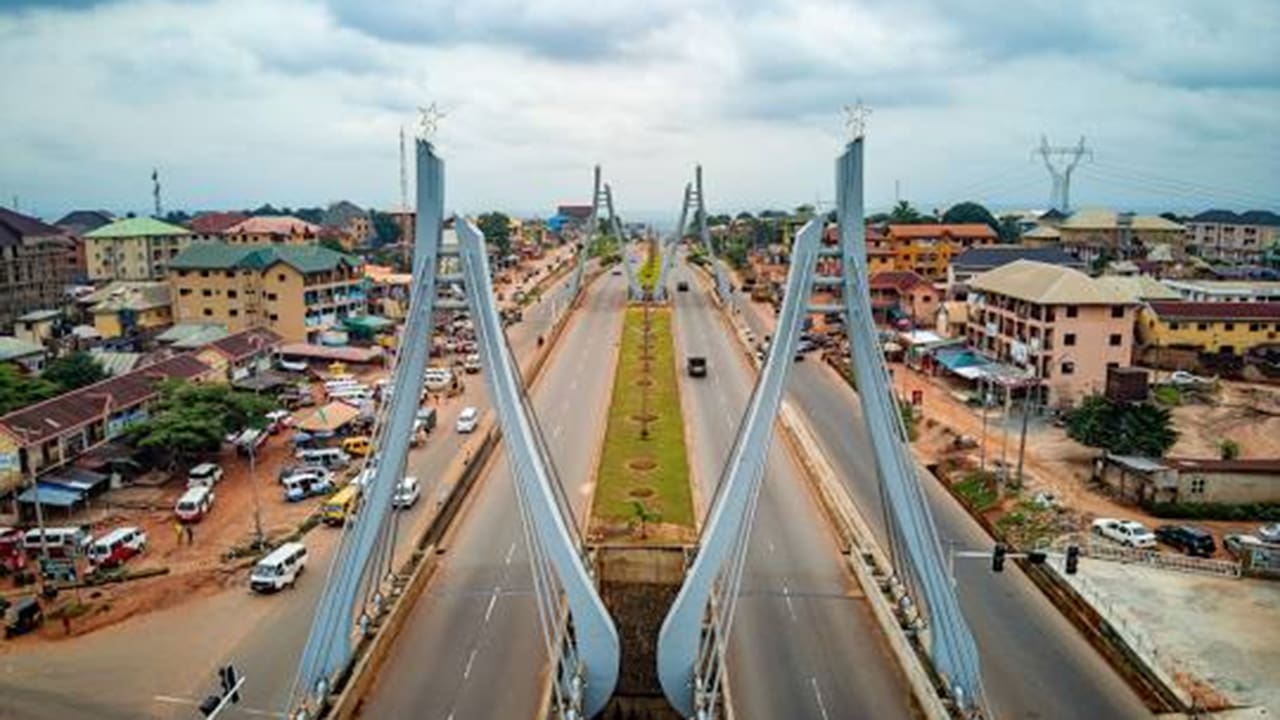
Anambra has emerged as the best-performing state in the federation, surpassing Lagos and 33 other states, according to BudgIT’s 2025 fiscal performance ranking.
The ranking is contained in BudgIT’s 2025 edition of the State of States Report, released on Tuesday, October 28.
The flagship report, themed, ‘A Decade of Subnational Fiscal Analysis: Growth, Decline and Middling Performance,’ marks BudgIT’s ten years of consistent subnational fiscal assessment.
According to BudgIT, Nigeria’s leading civic-tech organisation promoting fiscal transparency and accountability, this year’s report evaluates and ranks the fiscal performance of 35 Nigerian states—from most to least sustainable—offering insights into revenue generation, expenditure patterns, debt sustainability, and sectoral investments in education and health.
It noted that the change in state rankings was one notable aspect of this year’s subnational fiscal performance.
It said Rivers State, which has consistently featured in the top five over the past five years, was conspicuously absent from the 2025 edition.
This followed President Bola Tinubu’s declaration of a state of emergency earlier this year in Rivers which made the state’s data inaccessible.
As a result, BudgIT said the 2025 report introduces new entrants to the top five, with Anambra, Lagos, Kwara, Abia, and Edo ranked in descending order.
“Anambra State rose from second to first position, securing the title of the best-performing state in the federation, while Lagos maintained its second place for the second consecutive year.
“Kwara climbed from fourth to third, Edo entered the top five after consistently ranking within the top ten over the last four editions, and Abia, which had never previously featured in the top ten, now ranks fourth,” BudgIT stated.
Other notable movements include Akwa Ibom, which surged 17 places from 27th to 10th, and Zamfara, which moved up nine places from 26th to 17th.
READ ALSO: Anambra Guber: Orumba North, South Donate ₦225m for Soludo’s Re-election Campaign
At the lower end of the rankings, Imo, Kogi, Jigawa, Benue, and Yobe occupy the bottom positions, with Cross River experiencing the steepest decline, falling from fifth in 2024 to 30th in 2025.
“For the 2025 edition, we retained the five key metrics used to rank all 35 states,” BudgIT declared.
Key metrics adopted
It explained that Index A examines a state’s ability to meet operating expenses (recurrent expenditure) using only its Internally Generated Revenue (IGR) while Index A1 assesses the year-on-year growth of each state’s IGR.
Index B evaluates a state’s capacity to cover all operating expenses and loan repayment obligations using total revenue — comprising IGR, statutory transfers, and grants—without borrowing.
BudgIT said Index C measures debt sustainability using four major indicators: foreign debt as a percentage of total debt, total debt as a percentage of revenue, debt service as a percentage of revenue, and personnel cost as a percentage of revenue.
It added that Index D assesses the extent to which a state prioritises capital expenditure over recurrent expenditure, it stated.
Notable shift in IGR performance
In terms of Internally Generated Revenue (IGR) performance, the 2025 edition presents notable shifts from the 2024 report.
READ ALSO: Anambra Inside Anambra’s Million-naira Endorsement Wave for Soludo’s Re-Election
BudgIT noted that while Rivers posted 121.26 per cent and Lagos 118.39 per cent as the only two states with sufficient IGR to cover their operating expenses in 2024, the absence of Rivers from this year’s analysis has reshaped this dynamic.
It stated that Lagos remains a returning champion with 120.87 per cent, while Enugu now leads with an impressive 146.68 per cent IGR-to-operating expense ratio.
It said, unlike the previous year, when six states generated enough IGR to cover at least 50 per cent of their operating expenses, only five states achieved this in 2025 and these were Abia, Anambra, Kwara, Ogun, and Edo.
Consequently, 28 states still relied heavily on federal transfers and other sources to meet their recurrent expenditures.
Challenges in IGR growth
For perspective, BudgIT explained that in 2024, six states needed more than five times their IGR to cover operating costs.
It said that, in 2025, this number more than doubled to 14, underscoring challenges in IGR growth for several states.
It noted that as in the previous year, all states were able to cover their total recurrent expenditures—comprising IGR, federal allocations, aid, and grants—without resorting to borrowing.
“Turning to capital expenditure, the 2025 period reflects a marked shift compared to 2024, when only Rivers State allocated more than 70% of its total expenditure to capital outlays.
“With Rivers’ absence, Abia now tops the ranking, dedicating approximately 77.05% of its total expenditure to capital projects,” BudgIT stated.
Other states following closely include Anambra, Enugu, Ebonyi, and Taraba, each allocating over 70 per cent of its budget to capital expenditure.
Ot said, overall, 24 states spent at least half of their total expenditure on capital items, whereas Bauchi, Ekiti, Delta, Benue, Oyo, and Ogun devoted more than 60 per cent of their budgets to personnel and overhead costs, highlighting persisting disparities in expenditure priorities.
Improved revenue performance
According to the report, in examining the broader revenue performance, total recurrent revenue for the 35 subnationals expanded significantly, rising from ₦6.6 trillion in 2022 to ₦8.66 trillion in 2023 and further to ₦14.4 trillion in 2024—a growth of 66.28 per cent, far surpassing the 28.95 per cent increase between 2022 and 2023.
It showed that Lagos maintained the largest share of total recurrent revenue, though it was slightly reduced to 13.42 per cent, approximately ₦1.93 trillion, from 14.32% in 2023.
The report showed that gross FAAC transfers also recorded substantial growth over the decade.
Oyo recorded 785.79 per cent, Delta 708.36 per cent, Niger 683.61 per cent, Ekiti 680.22 per cent, Gombe 643.23 per cent, and Anambra 640.98 per cent experienced more than 600 per cent growth in FAAC between 2015 and 2024.
But Adamawa recorded 230.98 per cent, Imo 225.25 per cent, Ogun 223.87 per cent, Ebonyi 205.31 per cent, Kogi 186.32 per cent and Kebbi 178.03 per cent growth below 300 per cent over the same period.
READ ALSO: FG’s $1bn Lagos Port Upgrade Sparks Fresh Call for Seaport Decentralisation
Total Gross FAAC for the 35 states reached ₦11.38 trillion in 2024, representing a 110.74 per cent increase over ₦5.4 trillion in 2023, it stated
“Despite these gains, reliance on federal allocations remains high: 28 states relied on FAAC for at least 55% of their total revenue, while 21 relied on it for over 70%.
“Internally Generated Revenue, however, remains within the control of the states and displays considerable variability,” BudgIT revealed.
Over ten years, Lagos averaged ₦541.35 billion, Ogun ₦92.76 billion, Delta ₦74.45 billion, and Kaduna ₦44.82 billion.
By contrast, the states with the lowest averages were Adamawa ₦9.92 billion, Gombe ₦9.54 billion, Taraba ₦7.83 billion, Kebbi ₦7.48 billion, and Yobe ₦6.67 billion, which barely matched Kaduna’s average.
“In terms of immediate growth between 2023 and 2024, Enugu (381.44%), Bayelsa (173.69%), Abia (129.37%), Osun (98.37%), and Kano (85.90%) led the pack.
“Moreover, unlike 2023—when seven states recorded negative IGR growth—only two states experienced declines in 2024, reflecting overall improvement. Nevertheless, the proportion of IGR within total recurrent revenue declined slightly from 25.27% in 2023 to 20.27% in 2024, indicating continued dependence on federal transfers,” BudgIT stated.
Expenditure patterns mirror the trend
BudgIT also revealed that expenditure patterns further illuminate these trends.
It stated that total state expenditure rose to ₦15.63 trillion in 2024, a 64.69 per cent increase from ₦9.49 trillion in 2023.
Lagos accounted for ₦2.37 trillion or 14.95 per cent of total subnational spending.
It said personnel expenditures increased from an average of ₦53.11 billion in 2023 to ₦65.17 billion in 2024, a 23.24 per cent rise, while overhead costs grew 62.66 per cent from ₦1.5 trillion to ₦2.44 trillion.
The report indicated that capital expenditure exhibited even more significant growth as only one state recorded a decline, while the remaining states collectively spent ₦7.63 trillion in 2024—an 87.93 per cent increase over ₦4.06 trillion in 2023—and surpassed recurrent expenditure by approximately ₦1 trillion.
“This shift reflects a stronger focus on subnational infrastructure and development projects, emphasising the critical role of states in federalism,” BudgIT explained.
Social sector performances
In social sectors, the report showed that implementation remained uneven.
It stated that the state’s education budget was ₦2.41 trillion, but they spent only ₦1.61 trillion, achieving 66.9 per cent implementation.
It added that nine states—Edo, Delta, Katsina, Rivers, Yobe, Ekiti, Bayelsa, Bauchi, and Osun—exceeded 80 per cent of their budgeted allocations, with Edo, Delta, and Katsina surpassing 100 per cent.
Low per capita spending
According to BudgIT, average per capita spending remained low at ₦6,981, with no state exceeding ₦20,000 per capita and only eight states above ₦10,000.
In health, the state budgeted ₦1.32 trillion but expended ₦816.64 billion, achieving 61.9 per cent implementation.
“Seven states—Yobe, Gombe, Ekiti, Lagos, Edo, Delta, and Bauchi—spent over 80% of their health budgets, with Yobe leading at 98.2%, though total expenditures remained modest.
“Average per capita spending was ₦3,483, with only a few states exceeding ₦5,000, highlighting significant gaps in service delivery relative to education,” BudgIT added.

Alex is a business journalist cum data enthusiast with the Pinnacle Daily. He can be reached via ealex@thepinnacleng.com, @ehime_alex on X