

In a bold move aimed at reforming Nigeria’s mining sector, the Nigerian Mining Cadastre Office (MCO) has revoked over 4,700 mining licences that were hoarded by speculators and inactive holders.
This action, taken in the past year, seeks to create a transparent, competitive, and investor-friendly environment that can attract serious players and boost Nigeria’s position in the global minerals market.
The MCO’s Director-General, Engr. Obadiah Nkom, disclosed during a live conversation on X (formerly Twitter) that the revocation targets hoarded, speculative licenses that were clogging the sector.
Nkom revealed that the 4,709 revoked licenses included 1,400 expired titles, 2,338 refused applications, and 971 instances where applicants failed to pay required fees.
According to Nkom, the action is part of a broader initiative under the Tinubu administration to cleanse the sector of inefficiencies and illegal mining activities and to restore investor confidence.
For years, Nigeria’s mining sector has struggled under the weight of speculation and unproductive licenses. The MCO’s intervention is seen as an important step to pave the way for genuine investors interested in tapping into the nation’s rich mineral resources, such as gold, tin, limestone, and coal.
The Plague of Illegal Mining in Nigeria
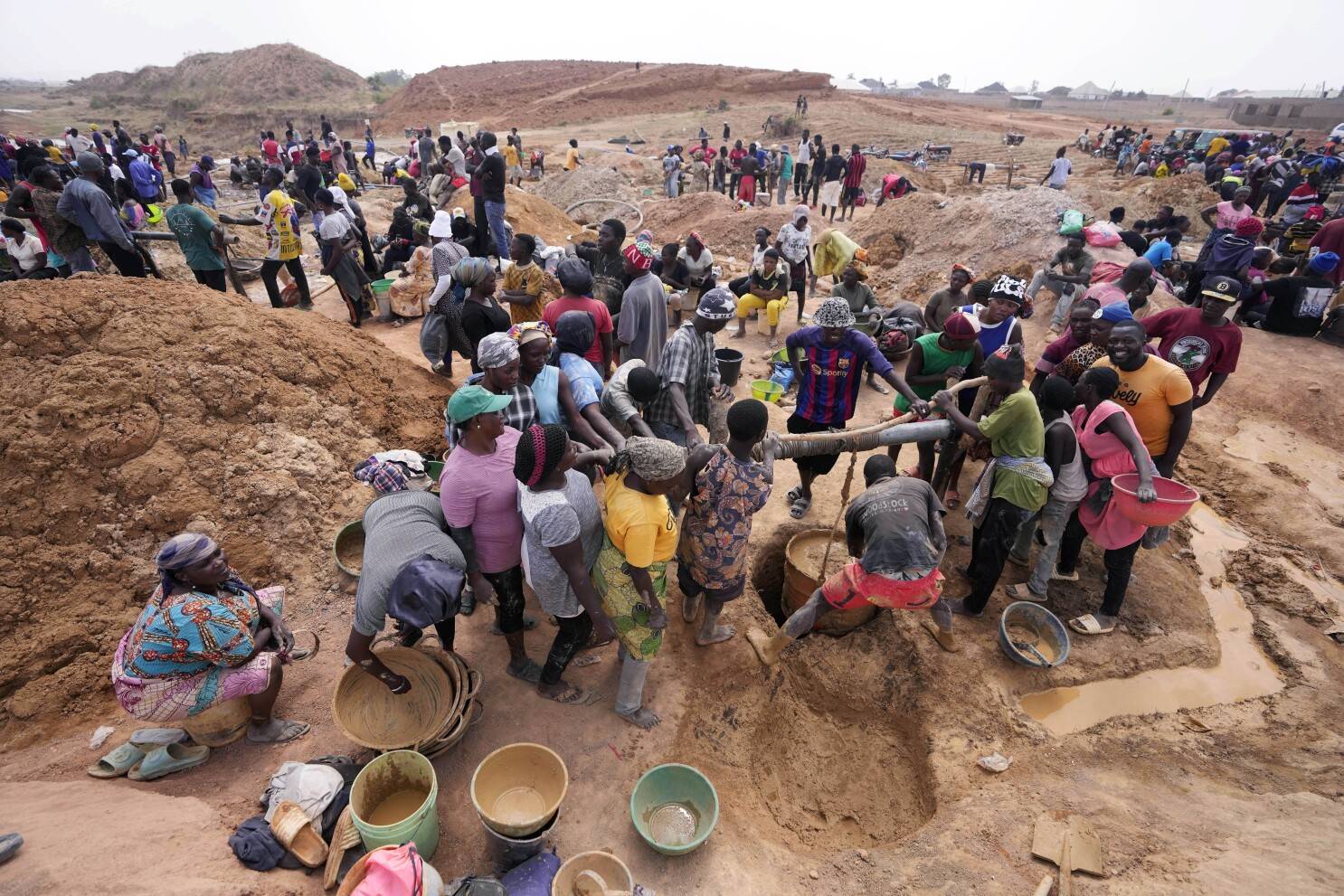
Over the past few years, illegal mining has become one of the biggest threats to Nigeria’s mining industry, with an estimated 2 million Nigerians involved in illegal mining activities.
These informal miners often operate without the necessary licences, bypassing environmental regulations and contributing to the degradation of the environment.
READ ALSO: 5% Fuel Tax Could Derail Economy, ActionAid Warns
In 2020 alone, Nigeria was reported to lose approximately ₦41.1 billion annually to illegal mining activities.
Illegal gold mining, in particular, has become a major source of concern. The federal government estimates that Nigeria loses around $9 billion every year due to gold smuggling and the unregulated gold mining operations taking place in the country’s northwestern states, particularly in Zamfara.
This illegal mining is often linked to banditry, with insurgent groups financing their activities through the proceeds of illegal mining. The situation has resulted in widespread environmental damage, including water contamination from the use of toxic chemicals like mercury and cyanide.
In 2010, Nigeria witnessed one of the deadliest lead poisoning outbreaks, attributed to illegal gold mining activities in Zamfara. The poisoning affected hundreds of children, causing numerous fatalities and highlighting the severe public health consequences of illegal mining.
Government Reforms to Tackle Illegal Mining
The revocation of over 4,700 mining licences by the MCO signals a new era for Nigeria’s mining sector, with the government taking serious steps to root out illegal activities.
In addition to the licence revocations, the MCO has partnered with the Corporate Affairs Commission (CAC) to implement a real-time verification system.
READ ALSO: Banks’ Recapitalisation in Good Progress Says Cardoso
This system ensures that only legally registered companies can obtain mining titles, preventing fraudulent operators from exploiting the system.
MCO Director-General Nkom warned that impersonators claiming to be MCO staff will face severe legal action.
“We are going to bite, and bite hard,” Nkom stated, referring to the crackdown on individuals who deceive investors by posing as MCO staff and collecting fees illegally. The Nigerian government has enlisted the support of the Department of State Services (DSS) and the Economic and Financial Crimes Commission (EFCC) to identify and prosecute these criminals.
| Year | State | Mineral Type(s) | Estimated Quantity Seized | No. of Suspects | Remarks |
|---|---|---|---|---|---|
| 2018 | Zamfara | Gold | Not specified | 15 | Linked to bandit financing. |
| 2019 | Osun | Gold | Not specified | 27 | Included 17 Chinese nationals and a local traditional ruler. |
| 2020 | Niger | Tin | Not specified | 12 | Equipment confiscated. |
| 2021 | Ebonyi | Lead | Not specified | 6 | Local youth involvement. |
| 2022 | Kaduna | Gold | Not specified | 10 | Involvement of illegal foreign syndicates. |
| 2023 | Ogun | Limestone | Not specified | 5 | Allegations of government connivance. |
| 2023 | Kogi | Various | 50 trucks impounded | 10 | State-led crackdown on illegal mining activities. |
| 2023 | Benue | Fluorite, Iron Ore | Multiple trucks impounded | 18 | EFCC operation in Katsina-Ala; mining sites in Logo LGA; state loses royalties. |
| 2024 | Kwara & Oyo | Lithium, Marble, lepidolite, and others | 12 trucks impounded | 41 | Massive mineral smuggling network disrupted. |
| 2024 | Akwa Ibom | Ilmenite | Not specified | 5 | Chinese nationals involved. |
| 2024 | Ondo | Not specified | Not specified | 3 | NSCDC operation targeting illegal mining and cable theft. |
| 2024 | Nasarawa | Barite | 210 tons | 22 | NSCDC-led operation. |
A Competitive, Transparent Sector
While the revocation of licences and the fight against illegal mining might seem harsh, it is clear that the government is taking a hard stance to ensure a competitive, transparent, and sustainable mining sector.
According to Nkom, the move to clean up the system will create space for legitimate investors who are interested in contributing to the sector’s growth.
“We are committed to creating a system that is free from bottlenecks caused by hoarders and speculators who are not contributing to the growth of the industry,” Nkom explained.
The goal, he stressed, is to foster an environment where only companies that add value to the sector through exploration and value addition are allowed to operate.
These reforms come at a critical time as the government seeks to diversify Nigeria’s economy beyond oil. With an estimated $3 trillion worth of untapped mineral wealth, the mining sector holds the key to Nigeria’s economic transformation.
The Road Ahead
While the challenges posed by illegal mining and speculative activities are substantial, the Nigerian government’s commitment to transparency, the rule of law, and a sustainable mining ecosystem is to be encouraged.
The MCO’s efforts to cleanse the sector will not only disrupt illegal activities but also restore investor confidence.
As Nkom aptly put it, “It’s about creating opportunities for responsible, value-driven investments that will contribute to the country’s economic development.”

The clean-up of Nigeria’s mining sector is attracting inter-agency collaboration, as it is seen as just the beginning of what promises to be a prosperous and sustainable future for the country’s solid minerals industry.
The EFCC Chairman, Ola Olukoyede recently said Illegal mining is not only a threat to our local and national economy, but also constitutes grave danger to the lives of the people
READ ALSO: Naira Rises to Six-Month High Amid FX Reserves Surge
He further noted, “The EFCC is undeterred by the antics of corrupt individuals who are benefiting from the illegal mining operations and will ensure that extant laws against illegal miners are enforced.”
The UNODC Country Representative, Cheikh Ousmane Touré also recently pledged support to enhance regional cooperation and intelligence-sharing mechanisms in the fight against illegal mining and other economic crimes
He said, “We see an opportunity to work with EFCC on cybercrime, given that Nigeria is the only African country aligned with the Budapest Convention. We also want to help close the gaps in local enforcement so that EFCC operatives can be more effective at the state and community levels.”

Sunday Michael Ogwu is a Nigerian journalist and editor of Pinnacle Daily. He is known for his work in business and economic reporting. He has held editorial roles in prominent Nigerian media outlets, where he has focused on economic policy, financial markets, and developmental issues affecting Nigeria and Africa more broadly.