

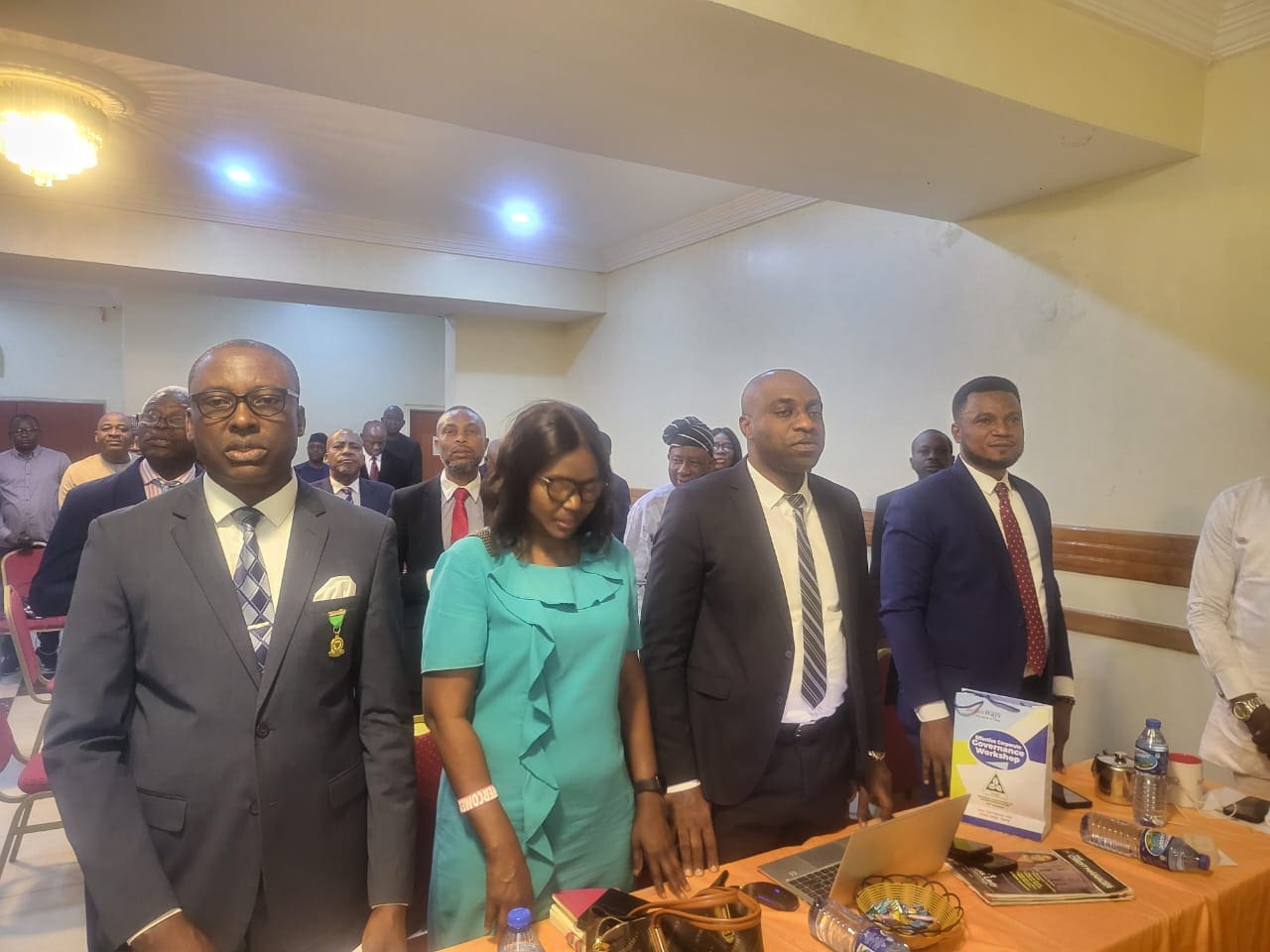
In a move to accelerate financial inclusion across Nigeria, the National Association of Microfinance Banks (NAMB), Federal Capital Territory (FCT) Chapter, has convened a high-level corporate governance training for Chairmen, Executive Directors, and Non-Executive Directors of Microfinance Banks operating within Abuja.
The strategic capacity-building session, themed “Corporate Governance: Framework for Growth and Sustainability”, brought together over 58 directors in a renewed push to reposition the microfinance subsector for enhanced impact, resilience, and long-term sustainability.
The initiative follows resolutions reached at the subsector’s 20th anniversary celebration held in Uyo last year, where stakeholders across the ecosystem emphasised the urgent need to deepen capacity building—starting from leadership levels—to sustain growth and expand reach to underserved communities.
Over the past two decades, Nigeria’s microfinance subsector has played a pivotal role in empowering Small and Medium Enterprises (SMEs), MSMEs, and Nano enterprises, significantly contributing to grassroots economic development. Industry leaders at the anniversary event agreed that strengthening governance frameworks would be instrumental in scaling impact and restoring investor confidence.
Delivering his remarks at the Abuja session, NAMB FCT Chairman, Sir Francis Akie, underscored the importance of sound corporate governance in driving sectoral transformation.
READ ALSO:
- 20 of 33 Banks Now Fully Recapitalised — CBN
- CAC Exposes 248 Fake Firms, Accuses Banks of Weakening Nigeria’s Compliance Chain
- Banks Keep Loans in Check Amid CBN’s 50% Deposit Rule
“Sound corporate governance is a critical component in actualising an active, virile, and impact-driven microfinance subsector in Nigeria. This is why the association has invested significantly in organising this session, the first in a series of strategic trainings designed for key operators within the microfinance ecosystem,” he stated.
The session was facilitated by Dr Victor Osadare, a Harvard-trained scholar, who charged directors to view their roles as a sacred trust held on behalf of the public.
He stressed the need to amplify the relevance of corporate governance compliance, which regulators and observers of the financial industry have identified as one of the things that bedevilled the industry.
According to him, institutions that operate without strong governance structures risk systemic failure.
“Without sound corporate governance, institutions become mere roadside businesses programmed for failure. Directors must see their responsibilities as patriotic and transgenerational, ensuring that the institutions they lead outlive their tenure through sound and honest practices,” he said.
Also speaking, Sir Joe Onyeabor, Public Relations Officer of NAMB FCT, noted that the knowledge acquired at the session would significantly position microfinance banks to align with Nigeria’s broader economic aspirations, including the vision of building a $1 trillion economy and pulling millions of Nigerians out of poverty.
He emphasised that strengthening governance would not only enhance operational efficiency but also expand financial access to millions of Nigerians currently excluded from the formal financial system.
Participants expressed enthusiasm and a strong commitment to implementing the strategies and governance frameworks discussed during the training. Industry leaders believe the initiative will accelerate efforts to drive financial inclusion to the “last mile”, integrating millions of unbanked Nigerians into the formal economic ecosystem.
With this strategic intervention, NAMB FCT has signaled a renewed commitment to building a more robust, transparent, and globally competitive microfinance sector — one positioned to power inclusive growth and sustainable national development

Sunday Michael Ogwu is a Nigerian journalist and editor of Pinnacle Daily. He is known for his work in business and economic reporting. He has held editorial roles in prominent Nigerian media outlets, where he has focused on economic policy, financial markets, and developmental issues affecting Nigeria and Africa more broadly.