

By Rafiyat Sadiq
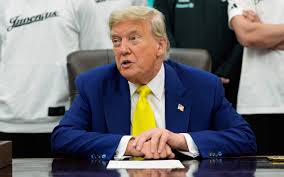
President Donald Trump has announced a 90-day extension to the current trade arrangement with Mexico, delaying the imposition of steep new tariffs.
The announcement came on his social media platform, Truth Social, following talks with Mexican President Claudia Sheinbaum.
Under the proposed terms, the revised agreement includes a 25% tariff on fentanyl-related imports, a 25% tariff on vehicles, and a 50% tariff on metals including steel, aluminium, and copper.
While the deal is now on hold, it remains part of the broader trade strategy Trump has pursued since returning to the White House.
Unresolved Deals as Deadlines Loom
Talks between the U.S. and several nations remain unsettled, with only eight trade agreements finalised out of Trump’s initial pledge to secure 90 deals in 90 days.
The looming August 1 deadline has triggered a wave of negotiations, with countries such as Vietnam, Indonesia, the UK, South Korea, and Japan scrambling to finalise terms to avoid punitive rates.
READ ALSO: Trump Imposes 25% Tariff on Indian Goods Starting August 1
India, meanwhile, has yet to reach an agreement. U.S. Treasury Secretary Scott Bessent said in an interview that negotiations with India have “frustrated” the administration, citing concerns about the country’s ties with Russia.
He also confirmed that India would face a 25% tariff and an unspecified penalty.
“India has been slow in responding, and that has caused a bit of friction,” Bessent told reporters, referencing India’s continued purchase and refining of Russian oil.
Tariffs Reach Historic Levels
Tariff rates under Trump’s policy will soon rise to levels not seen since the 1930s. Many countries have managed to secure modest reductions, but significant increases remain across the board. European Union goods will face a 15% tariff—down slightly from the originally proposed 20%, but still well above traditional levels. The United Kingdom accepted a 10% rate on most exports despite maintaining a trade surplus with the U.S.
The average U.S. tariff rate is now set to reach its highest point in nearly a century, with analysts describing Trump’s approach as a reshaping of global trade expectations.
“President Trump has completely recalibrated what countries think they can get away with,” one trade analyst said.
Mixed Outcomes from Bilateral Agreements
Japan agreed to a 15% tariff on automobiles, with a broader investment package of $550 billion committed to U.S. infrastructure and industry.
South Korea followed with a $350 billion pledge, largely focused on shipbuilding and chip manufacturing. While U.S. officials praised these deals as significant wins, details on implementation remain vague.
Commerce Secretary Howard Lutnick told reporters that “90% of the profits” from the South Korea agreement would benefit Americans.
However, South Korean officials suggested their investments would primarily support Korean companies expanding operations within the United States.
The Philippines agreed to lift tariffs on U.S. imports, but key provisions—particularly those related to military cooperation—remain unspecified. Indonesia, which originally faced a 32% tariff, managed to reduce its rate to 15% by agreeing to eliminate tariffs on over 99% of U.S. goods.
Legal Challenge Over Tariff Authority
Despite the rollout of sweeping new tariffs, a pending court case could disrupt the administration’s plans.
A U.S. trade court earlier this year ruled that several of Trump’s tariffs may violate domestic law, stating that the 1970s-era national emergency statute used to justify the tariffs did not grant the president authority to bypass Congress.
The case has since moved to the appeals court, with arguments scheduled for later today. Legal experts expect it could ultimately reach the Supreme Court.
Economic Impact and Inflation Concerns
While earlier stockpiling helped shield consumers from price increases, economists are beginning to detect signs that tariffs are pushing up prices for everyday goods. The official U.S. inflation rate rose to 2.7% in June, up from 2.4% in May.
Products such as appliances, computers, toys, and sports equipment have seen notable price jumps, according to federal data.
Canada Trade Talks in Jeopardy
Negotiations with Canada have also stalled. Trump reacted sharply to Prime Minister Mark Carney’s recent announcement supporting the recognition of a Palestinian state, calling it a “major obstacle” to any trade deal with Ottawa.
“Canada’s position makes it very hard to proceed with talks,” Trump wrote on Truth Social.
Final Hours Before Deadline
With less than 14 hours before the tariff deadline takes effect, Trump declared his tariff strategy a success, claiming it had made the United States “great and rich again”. He warned that countries failing to reach agreements would face full tariff rates by August 1.
The administration continues to project confidence, even as legal and diplomatic challenges mount. Treasury Secretary Bessent said fallback rates from April could be reinstated for countries that do not meet U.S. demands.
“Some of these nations waited until the last minute,” he said. “South Korea came in yesterday afternoon with a strong offer. That’s how we got a deal.”
Further updates are expected as talks continue into the night.

Rafiyat Sadiq is a political, justice, and human rights reporter with Pinnacle Daily, known for fearless reporting and impactful storytelling. At Pinnacle Daily, she brings clarity and depth to issues shaping governance, democracy, and the protection of citizens’ rights.