

By Esther Ososanya
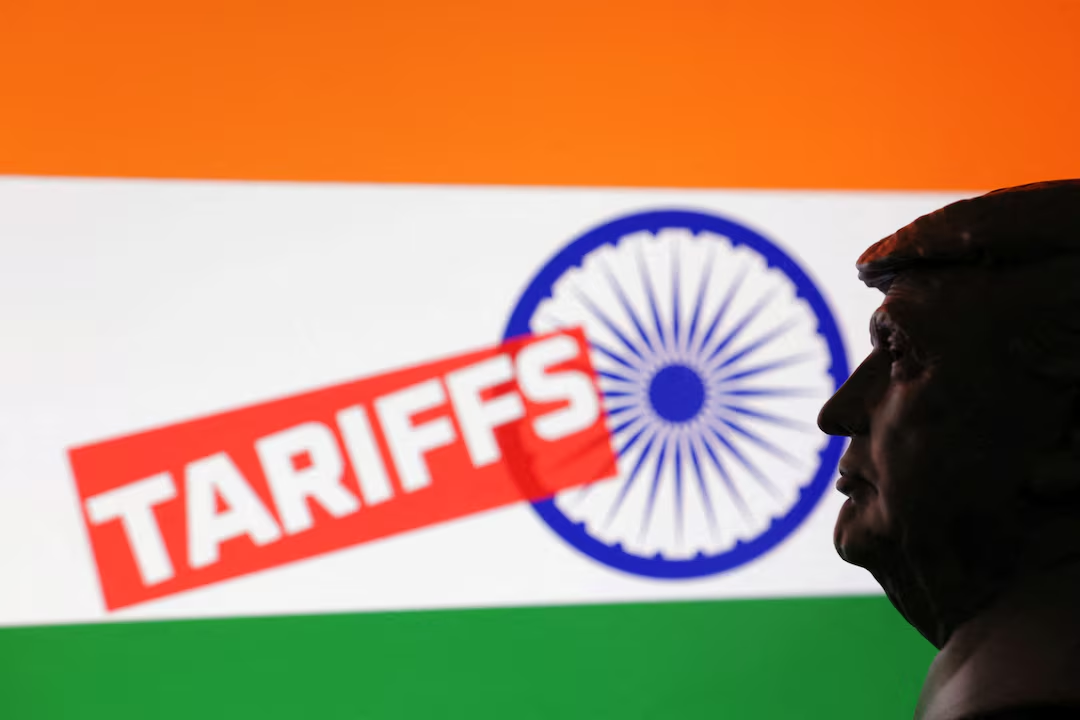
U.S. President Donald Trump on Wednesday imposed a 25% tariff on all goods imported from India, effective August 1, citing the country’s “unfair trade barriers” and continued defence and energy ties with Russia.
The announcement was made via a post on Trump’s Truth Social account, where he also warned of an additional, unspecified penalty in response to India’s persistent purchases of Russian military equipment and oil.
“While India is our friend, we have, over the years, done relatively little business with them because their tariffs are far too high… and they have the most strenuous and obnoxious non-monetary trade barriers of any country,” Trump wrote in all caps.
He further criticised India’s role in the Russia-Ukraine conflict, stating, “They have always bought a vast majority of their military equipment from Russia and are Russia’s largest buyer of ENERGY, along with China, at a time when everyone wants Russia to STOP THE KILLING IN UKRAINE — ALL THINGS NOT GOOD!”
A Fragile Trade Relationship
The United States and India, despite shared democratic values and growing defence cooperation, have long struggled to align on trade. India’s average tariff on agricultural imports stands near 39%, with duties reaching 45% on vegetable oils and close to 50% on apples and corn, frequent sticking points in past negotiations.
Washington has repeatedly raised concerns over India’s protectionist stance and the opacity of its trade policies. Trump’s latest move appears to be a direct retaliation for what he sees as India’s unwillingness to open its markets or curb its dependency on Moscow.
READ ALSO: Trump Extends Tariff Deadline to August 1 with Executive Order
The White House has previously warned that India’s increasing trade with Russia, particularly in discounted oil and defence equipment, undermines global efforts to isolate Moscow over its invasion of Ukraine.
Risk to Strategic Alignment
Analysts warn that the decision could derail months of quiet diplomacy and undercut Washington’s Indo-Pacific strategy, which hinges in part on a robust U.S.-India partnership to counterbalance China.
“India plays a key role in the U.S. strategic vision for Asia,” said Dr Rachel Monroe, an international trade analyst. “This tariff, and especially the implied penalties, could deeply undermine that alignment.”
While Trump maintains that the move will protect American interests and correct trade imbalances, critics argue it could backfire by pushing India closer to non-Western alliances.
As of press time, the Indian government had not officially responded to the tariff announcement.

Esther Ososanya is an investigative journalist with Pinnacle Daily, reporting across health, business, environment, metro, Fct and crime. Known for her bold, empathetic storytelling, she uncovers hidden truths, challenges broken systems, and gives voice to overlooked Nigerians. Her work drives national conversations and demands accountability one powerful story at a time.