

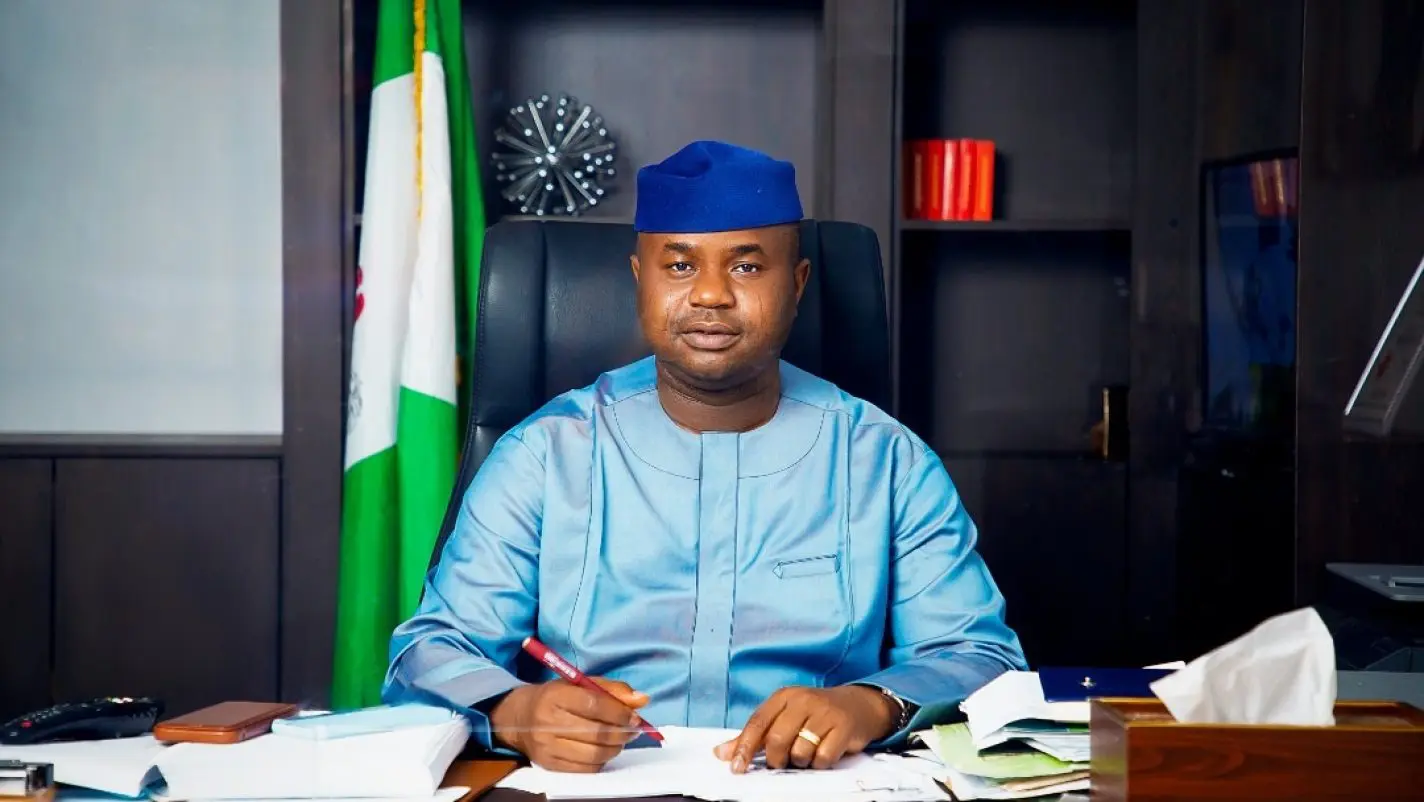
Nigeria’s sweeping fiscal reforms are beginning to yield measurable results, with the Executive Chairman of the Nigeria Revenue Service (NRS), Zacch Adedeji, declaring that the country has moved from policy intentions to real execution under President Bola Ahmed Tinubu.
Speaking at the commissioning of the NRS Corporate Headquarters in Abuja on Tuesday, Adedeji said the moment represents a turning point in Nigeria’s economic management, where reform is no longer theoretical but actively reshaping institutions.
“What stands before us is not merely an edifice,” he stated, “but the physical manifestation of a nation choosing order over drift, discipline over fragmentation, and execution over intent.”
Adedeji recalled that the Tinubu administration assumed office at a critical juncture, marked by constrained fiscal space, weak investor confidence, and structural inefficiencies across key sectors.
Rather than incremental adjustments, he said, the government embarked on a comprehensive reset of Nigeria’s economic and fiscal architecture, beginning with decisive macroeconomic reforms.
These included the unification of the foreign exchange market, the clearing of long-standing financial backlogs, and efforts to restore transparency and investor confidence in Nigeria’s financial system.
“These were difficult decisions,” he noted, “but necessary to reposition the economy on a credible and sustainable path.”
Historic Tax Overhaul Without Increased Burden
At the heart of the reforms, Adedeji revealed, is one of the most ambitious tax restructuring efforts in Nigeria’s history.
According to him, over 60 previously fragmented tax laws have been streamlined into a simplified and coherent framework aimed at improving compliance, enhancing predictability, and boosting administrative efficiency.
He emphasised that the reform was not driven by higher taxation, but by better systems, wider coverage, and stronger governance.
“The outcome speaks for itself,” Adedeji said, pointing to what he described as historic domestic revenue performance, driven by disciplined reform and institutional efficiency.
READ ALSO:
- NRS Sets January 2028 Deadline for Mandatory E-Invoicing Rollout
- NRS Launches Committee to Review Taxation Curriculum in Nigerian Institutions
- Tinubu Approves $20bn Final Investment Decision on Bonga Deepwater Project
- NRS Assumes Control of Mineral Royalties Under New Tax Law
Beyond taxation, Adedeji highlighted broader improvements in fiscal governance, including enhanced remittance systems, tighter control of public financial flows, and improved transparency mechanisms.
He also pointed to the rollout of the National Single Window initiative as a major step toward modernising trade processes, reducing inefficiencies, and strengthening revenue assurance.
In the energy sector, he cited the introduction of crude oil sales in naira as a transformative policy that is repositioning the sector from a fiscal burden to a stabilising force for the economy.
“These are not isolated interventions,” he stressed. “They represent a coordinated transformation of the fiscal state.”
Adedeji identified three core pillars underpinning the reforms macroeconomic stabilisation, revenue system reform, and institutional strengthening.
According to him, these pillars have collectively restored confidence, improved fiscal performance, and laid a durable foundation for inclusive and sustainable economic growth.
“This is what visionary leadership looks like,” he said, attributing the progress to the ability to take difficult decisions and align institutions toward measurable outcomes.
NRS Headquarters as Symbol of Institutional Renewal
The newly commissioned NRS headquarters a 16-floor, three-tower complex with capacity for over 3,000 personnel was presented as both a product and a driver of Nigeria’s fiscal transformation.
Adedeji described the facility as a centre of excellence designed to enhance efficiency, improve taxpayer experience, and foster innovation in revenue administration.
“This is not an endpoint, but a foundation,” he said. “Its true value will be measured by the efficiency it enables, the transparency it enforces, and the trust it builds.”
The NRS chairman credited key stakeholders for the reform programme, including the Minister of Finance and Coordinating Minister of the Economy, Wale Edun, and Minister of State for Finance, Taiwo Oyedele, for their roles in shaping and implementing the policies.
He also acknowledged the contributions of various Ministries, Departments, and Agencies, as well as private sector partners and contractors, noting that institutional transformation at this scale requires alignment and collaboration.
Adedeji further commended staff of the NRS for their professionalism and resilience during the transition from the Federal Inland Revenue Service (FIRS) to a modernised and performance-driven institution.
Tinubu Hailed as Visionary Reformer
In a strong tribute, Adedeji described President Tinubu as a “visionary reformer,” whose leadership, he said, has enabled bold and necessary decisions that are now redefining Nigeria’s fiscal trajectory.
“Only a leader with clarity of purpose and courage of conviction can drive change at this scale,” he said.
The commissioning event, attended by senior government officials, governors, members of the diplomatic corps, and business leaders, underscored a central message: Nigeria’s fiscal reforms are no longer promises they are being implemented, institutionalised, and built to endure.
Adedeji concluded that the new headquarters stands as a symbol of reform, a monument to institutional renewal, and a beacon of hope for a more disciplined, transparent, and prosperous Nigeria.

Esther Ososanya is an investigative journalist with Pinnacle Daily, reporting across health, business, environment, metro, Fct and crime. Known for her bold, empathetic storytelling, she uncovers hidden truths, challenges broken systems, and gives voice to overlooked Nigerians. Her work drives national conversations and demands accountability one powerful story at a time.