
From the sunlit streets of Accra to the sprawling townships of Johannesburg, a quiet storm has taken hold—a storm that knows no borders, spares no one, and spares no conscience.
Nigerians, once welcomed as traders, students, and neighbours, now move cautiously, their steps shadowed by fear. Every market stall, every classroom, every home abroad carries a hidden risk, a reminder that prosperity can provoke resentment, and familiarity can turn to hostility
In Ghana, Nigerians face economic marginalisation and targeted closures of small businesses under discriminatory laws. Recent months saw markets tense with unease. Nigerian traders, who once filled shelves with fabrics, electronics, and wares that adorned homes and businesses alike, now faced threats and harassment.
Rumours ignited fires of resentment: stories of wealth accumulation, “job stealing”, and cultural intrusion painted them as invaders in a land they had long contributed to. Children of immigrants are today learning that prosperity could invite danger.
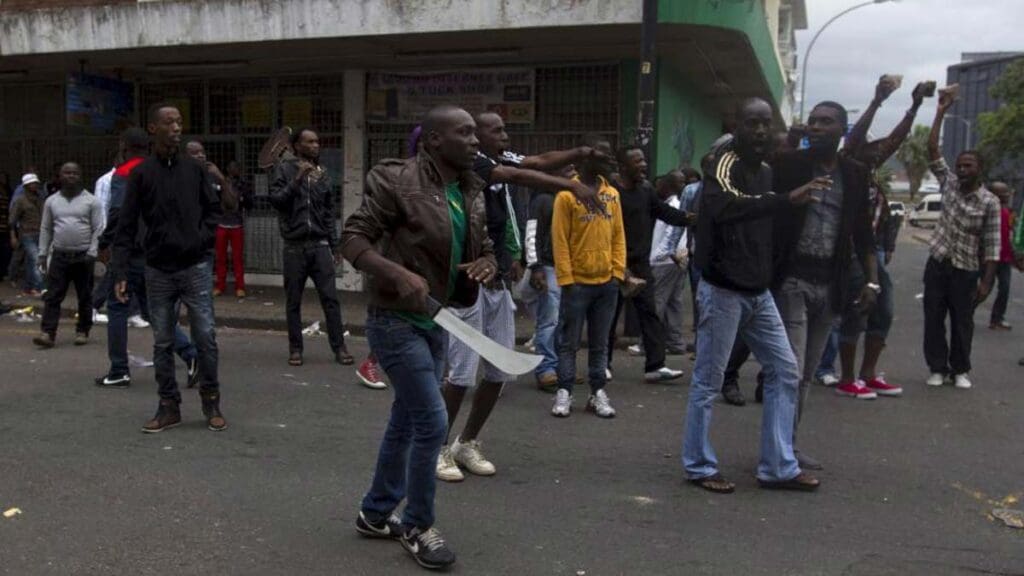
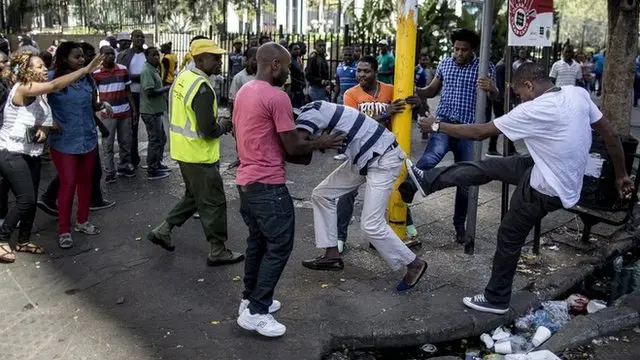
Further south, the echoes of xenophobia grew louder. South Africa’s townships and urban centres witnessed attacks that shook not just property but the soul.
In Gauteng and KwaZulu-Natal, South Africa, anti-migrant groups such as Operation Dudula are physically blocking non-South Africans—including legal residents and naturalised citizens—from accessing public healthcare.
A History Repeating Itself
This is not new. From the 1980s to the 1990s, Nigerian migrants across West Africa endured similar hostility. Every successful Nigerian became a symbol of envy, scapegoated for economic and political woes.
History has taught fear to wear a polished face, to hide behind rumours and misconceptions. Yet, the scars remain.
Xenophobia is more than vandalism or theft—it is a fracture of trust, a wound on the human spirit. It lives in whispered warnings to children, in the sleepless nights of displaced families, and in conversations hushed with anxiety across Nigerian households from Lagos to Abuja. ‘Africa is not safe for us,” the echoes say.
Systematic Denial of Basic Human Rights in South Africa
Humanitarian organisation Doctors Without Borders (MSF) reports that in over half of the 15 health facilities it assessed, non-South Africans were denied medical care by vigilante groups demanding ID documentation.
In many cases, clinic staff stood by or tacitly supported the actions, in direct violation of ethical and constitutional obligations.
READ ALSO: South Africa Reopens Investigation into Steve Biko’s Death After 48 Years
Even pregnant women, children, HIV patients, and those with chronic illnesses have been denied treatment.
According to Smart Nwobi, President of the Nigerian Union South Africa (NUSA), “Nigerians are dying daily. Many avoid hospitals for fear of violence or being turned away.”
Many Nigerians resort to self-medication, increasing the risk of complications and mortality. Notably, language barriers and ethnic profiling are being used to exclude even naturalised citizens.
Healthcare Workers Caught Between Duty and Danger
While most South African healthcare professionals maintain that they are ethically bound to treat all patients, the environment is increasingly hostile. Operation Dudula’s intimidation tactics have created fear within the medical community, making it difficult for them to uphold their obligations.
The South African Department of Health has publicly condemned the actions, reaffirming that access to healthcare is a constitutional right, regardless of nationality or immigration status.
Historical Narrative of Violence and Prejudice
In May 2008, over 62 were killed in nationwide xenophobic riots. In April 2015, foreign businesses were looted in Durban and Johannesburg. In 2017, Nigerian homes and businesses were attacked in Pretoria West.
Beyond physical violence, Nigerians face institutional discrimination. According to members of the United Nigerian Wives in South Africa, South African women married to Nigerian men are publicly shamed and verbally abused by Home Affairs officials.
“They called us prostitutes in front of our children,” one woman recalled.
South African Leadership Condemns Xenophobic Vigilantism
President Cyril Ramaphosa has denounced the attacks and reaffirmed the government’s commitment to constitutional law.
He declared, “There is no reason and no excuse for anyone to take the law into their own hands… Xenophobia has no place in our new democracy, and we must do everything to put it out.”
READ ALSO: Ghana Accepts US Deportees, Sparks Debate on Migrant Policies
Rising Economic Nationalism and Legal Discrimination in Ghana

Ghana’s expulsion of over 2 million West African migrants in 1969 and Nigeria’s 1983 retaliatory deportation under the slogan “Ghana Must Go” form a painful historical backdrop that still affects bilateral perceptions.
July 2025 Protests and Shop Closures
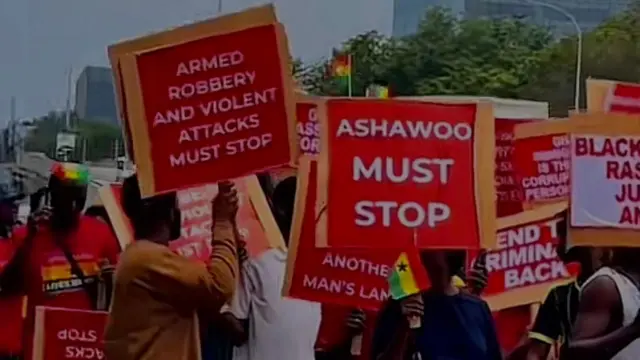
In July 2025, anti-Nigerian protests erupted in Accra’s Opera Square, leading to the closure of Nigerian-owned shops.
Protesters accused Nigerians of “dominating” sectors and blamed them for social ills.
Ghanaian authorities cited violations of the Ghana Investment Promotion Centre (GIPC) Act, which requires $1 million in capital for foreign-owned retail businesses—an unreachable bar for small-scale traders.
Despite growing hostility, many Ghanaians have spoken out in solidarity. Influencer Mahama Mad posted on X (formerly Twitter), “The attacks on Nigerians in Ghana are disgraceful… They have contributed to our economy, culture, and education.”
Giving an insider perspective, President of the Nigerian Union of Traders in Ghana (NUTAG), Evaristus Nwankwo, hinted that political motivations may be behind the anti-Nigerian sentiments.
Nwankwo said, “Some Ghanaian politicians use anti-Nigerian rhetoric to win votes.”
He also criticized internal divisions amongst Nigerians: “Some Nigerians in Ghana incite Ghanaians against each other… Others traffic underage girls into Ghana for prostitution and cybercrime. This tarnishes our collective image.”
President Mahma Looks Towards Reforms For Solution
In response, Ghana’s President John Mahama acknowledged the law’s incompatibility with pan-African trade goals under the African Continental Free Trade Area (AfCFTA).
He said, “We need to review the GIPC Act… The current $1 million capital requirement shuts out businesses that could bring employment.”
However, he clarified that retail market access would remain subject to national sovereignty and parliamentary decision.
To Target Nigerians Is To Wound The Continent Itself – Experts
President of the National Association of Nigerian Traders (NANTS), Barr. Ken Ukaoha, in an exclusive chat with Pinnacle Daily, said, “The wave of xenophobia could leave scars that last generations—or it could be halted by empathy, understanding, and unity.” Nigerians abroad are not outsiders—they are part of Africa’s beating heart. To target them is to wound the continent itself.
Ukaoha emphasised that the success and entrepreneurial spirit of Nigerians abroad often attract envy. He believes the attacks are politically orchestrated, particularly during election periods. “Nigerians are very enterprising and progressive… That spirit attracts envy.”
He warned that if Nigerians withdraw from Ghanaian markets, the economic impact would be severe.
“Most big and economically viable businesses and investments in Ghana’s retail sector are Nigerian-owned.”
He urged Nigerians to stay law-abiding, pay taxes, and avoid illegality, and for African governments to prosecute rights violators, whether private actors or public officials.
Attacks Fundamentally Opposed To Pan-African Values – Lawyers
The recent attacks have attracted the voice of renowned human rights lawyer Kayode Ajulo, who condemned the attacks as “barbaric” and fundamentally opposed to Pan-African values.
He has called on the Attorney General of Nigeria to pursue legal action against South Africa at the African Court on Human and Peoples’ Rights, arguing that the systemic abuse of Nigerians represents violations of key human rights treaties, including the African Charter on Human and Peoples’ Rights, and undermines continental treaties like AfCFTA.
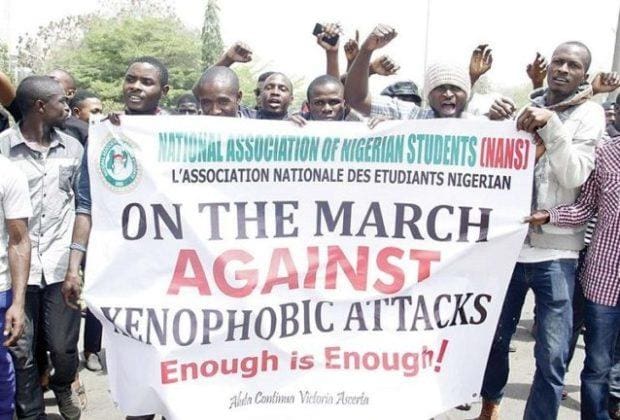
Also adding their voice to the various interventions, the Socio-Economic Rights and Accountability Project (SERAP) has formally requested the African Commission on Human and Peoples’ Rights to submit a case against South Africa at the African Court, seeking US$10 billion in reparations for Nigerian victims of xenophobic attacks.
The organisation argues that these repeated attacks constitute grave breaches of life, dignity, and property rights.
Veteran legal activist Femi Falana (SAN) has for years urged the South African government to prosecute xenophobic actors, highlighting its failure to prevent or redress these attacks as a violation of international obligations under the African Charter.
He continues to demand compensation for victims and transparent criminal accountability.
In the same vein, Nigerian lawyers working within the Pan African Lawyers’ Union (PALU) have strongly condemned xenophobic trends across Africa. They point to the failure of law enforcement, inflammatory public rhetoric, and state inaction as key enablers of xenophobia and impunity.