

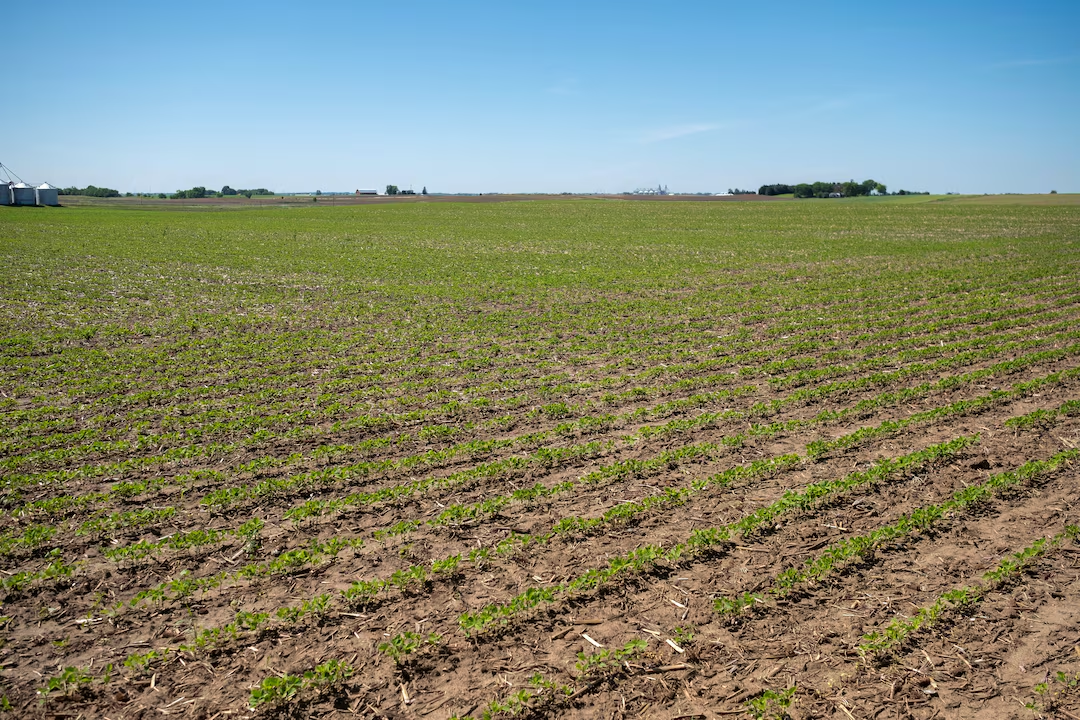
American soybean farmers are facing one of their toughest seasons in decades after losing access to their biggest customer, China. Despite trade missions to Nigeria, Vietnam, and Bangladesh, these alternative markets have not come close to replacing Beijing’s enormous demand.
For the first time in more than 20 years, Chinese buyers have not purchased soybeans from the U.S. autumn harvest. Instead, they are sourcing from Brazil and Argentina, leaving American farmers with overflowing storage bins and crop prices stuck near five-year lows. The slump is rippling through rural America, hitting farm incomes, equipment makers, and local economies.
Illinois, the largest U.S. soybean-producing state, is bearing the brunt. Ryan Frieders, a farmer in Waterman, said much of his crop will go into storage after selling at prices below the cost of production. “There isn’t this lost market that we haven’t looked at that could just suddenly explode and be a new China,” he admitted.
READ ALSO: 28 American Universities Canvass Nigerian Students at Abuja Fair
According to University of Illinois estimates, farmers in the state are facing losses of up to $8 per acre. Meanwhile, U.S. soybean exports to China plunged 39% by volume between January and July, and by 51% in value amounting to billions of dollars in lost revenue.
While exports to countries such as Bangladesh, Vietnam, Egypt, and Nigeria have risen modestly, they remain a fraction of China’s massive appetite. In 2024, China imported nearly 27 million metric tons of U.S. soybeans. By contrast, Mexico the second-largest buyer took only about 5 million.
Industry groups, backed by the U.S. government, have tried to diversify markets. Trade missions have been held in Southeast Asia, North Africa, and the Middle East. Taiwan has pledged $10 billion in U.S. farm purchases over four years, though analysts note this is consistent with existing trade levels rather than an increase.
With more than 1.4 billion people and the world’s largest hog herd, China is nearly impossible to replace. Its absence has allowed South American producers to seize market share. In September, Argentina briefly suspended export taxes on soybeans, prompting Chinese buyers to rush in with new orders.
Meanwhile, U.S. soybeans, though cheaper than Brazil’s—remain uncompetitive once China’s 23% tariff is factored in, adding roughly $2 a bushel for importers.
READ ALSO: Business Activity Moderates as PMI Slid to 53.4 Points in September
The decline in farm income is spilling into other sectors. Tractor and equipment manufacturer CNH Industrial reported a 20% drop in agricultural sales in the first half of 2025. In Decatur, Illinois home to food giant Archer-Daniels-Midland and once known as the soy capital of the world local leaders now admit the title may have shifted south to Brazil.
“The good news only comes when China actually starts to order,” CNH CEO Gerrit Marx said. For now, farmers across America’s Midwest can only store their crops and hope for a turnaround.

Esther Ososanya is an investigative journalist with Pinnacle Daily, reporting across health, business, environment, metro, Fct and crime. Known for her bold, empathetic storytelling, she uncovers hidden truths, challenges broken systems, and gives voice to overlooked Nigerians. Her work drives national conversations and demands accountability one powerful story at a time.