

Finance minister promises reforms in power, agriculture and regulation as CBN governor says stability is setting the stage for growth
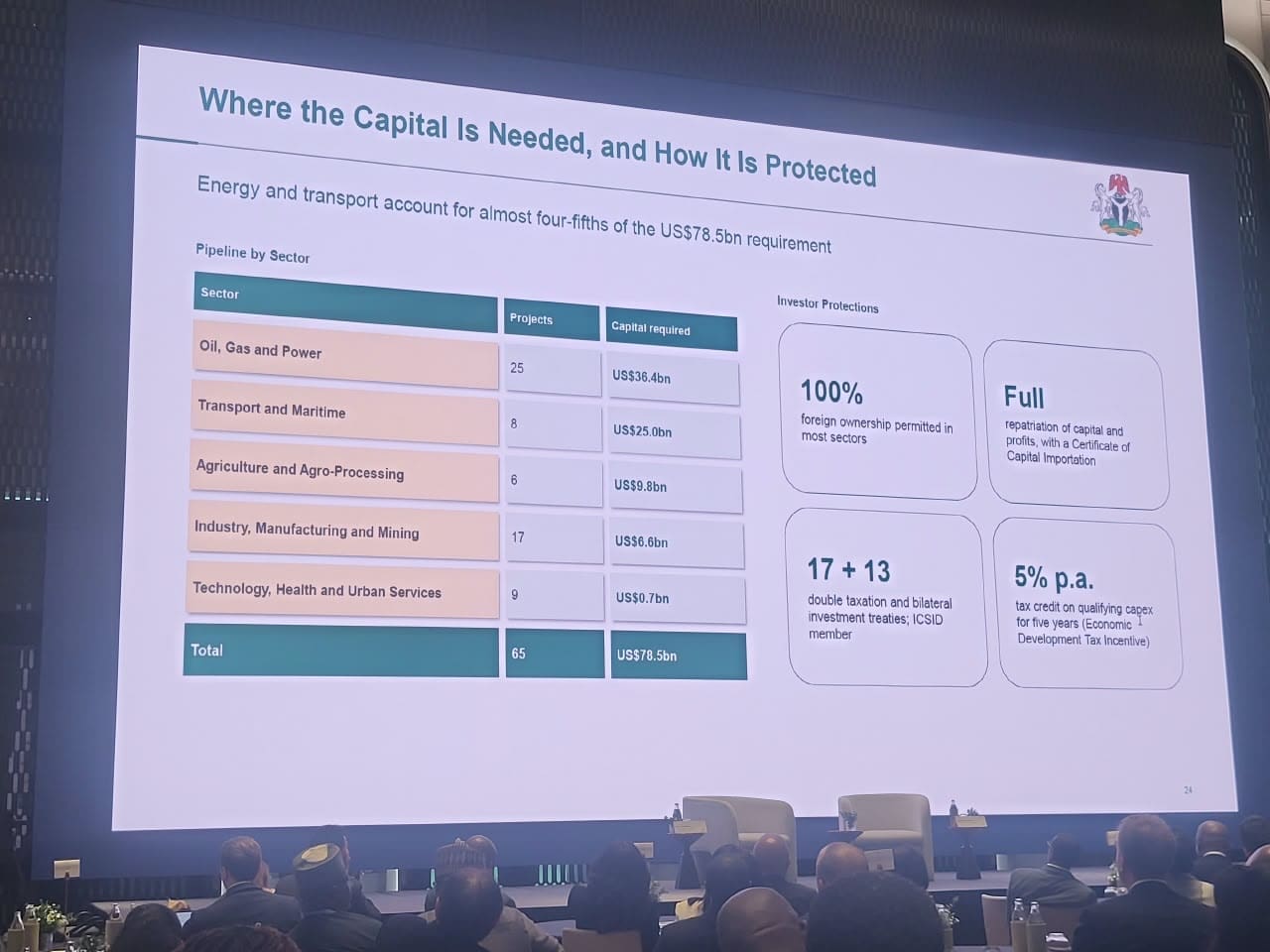
Nigeria has unveiled 65 investment opportunities across key sectors to attract domestic and foreign capital, create jobs and accelerate economic growth, as senior officials made the case to global investors on the sidelines of the ongoing IMF-World Bank Annual Meetings in Bangkok, Thailand
The Minister of Finance and Coordinating Minister of the Economy, Mr Taiwo Oyedele, and the Governor of the Central Bank of Nigeria (CBN), Mr Olayemi Cardoso, led the presentation.
Oyedele said the projects span oil and gas, power, transport, agriculture, manufacturing, mining, technology, healthcare and urban services. He added that a dedicated deal room had been set up to give investors project details, funding requirements and direct access to the relevant authorities.
Asked how investors can set up factories, he said the deal room would “handhold” them through the process.
Reforms ahead
Oyedele said the government would pursue five major reforms: agriculture, power, inflation, regulation and data.
In agriculture, he said food remains a key driver of inflation, and the government is working to trace where the pressures originate.
He disputed the common claim that poor roads and insecurity explain price increases. “Roads are generally better than before,” he argued, citing the World Bank’s latest Nigeria Development Update, which showed significant road investment by federal and state governments.
On power, he said Nigeria cannot run a $1 trillion economy “in darkness”. The government is examining market-reflective pricing, transmission constraints and efficiency gaps.
On inflation, he said there is now a plan with assigned roles and timelines, involving subnational governments, to bring it into single digits and keep it there. He said bringing inflation to single digits and creating conditions for single-digit interest rates would save the fiscal side more than $10 billion in 2026 numbers.
He also said excessive regulation, unclear rules and the burden placed on businesses cost the economy more than the combined revenue from corporate income tax, personal income tax and VAT. Fixing regulatory efficiency, he said, is a clear win-win that costs government almost nothing. The government has begun developing an economic policy framework to end the practice of introducing new rules, fees or licences without notice.
On data, Oyedele admitted that fiscal figures, including the tax-to-GDP ratio, are hard to find and that the World Bank and the IMF cite different numbers. The Ministry of Finance is finalising a data portal on finance.gov.ng that he promised would be timely, accessible and credible.
Tax incentive
On tax holidays, Oyedele pointed to the Economic Development Incentive, which gives qualifying businesses tax credits under the reformed tax framework. He said it is better than a tax holiday because it is hard to abuse: businesses must earn it.
He urged investors to prioritise long-term investment in productive sectors that can create jobs and expand domestic capacity. Nigeria, he said, needs decent jobs, not just jobs. Official unemployment is around 5 per cent, but poverty exceeds 50 per cent, which points to a large population of working poor.
Investor concerns
Oyedele acknowledged feedback from investors. On T-bill liquidity and price discovery, he said the government is working with the monetary authorities so that investors can exit naira paper without additional risk.
On the tax treatment of OMO bills, treasury bills and government bonds, he said he could not guarantee that there would be no tax, but he could guarantee clarity so investors can price correctly. He also said the government is working with the National Bureau of Statistics to provide data on time, including jobs data and a producer price index, to help break down the components of inflation.
He conceded that government communication has fallen short, saying it was “guilty as charged”.
He asked investors what would make them invest more and for longer and how to move from foreign portfolio investment (FPI) to foreign direct investment (FDI). As interest rates fall, he said, fixed income may become less attractive, but the internal rate of return on equity and FDI becomes more appealing, which is where the government wants to attract patient capital.
Cardoso: inflation is the poor’s biggest burden.
Cardoso said reducing inflation is crucial to protecting household purchasing power, especially for low-income Nigerians, describing it as arguably the most vicious tax on the poor. He said inflation has fallen from about 34 to 35 per cent to about 15 per cent, a significant decline, but that lower double digits are not good enough. The medium-term goal is single digits, and the move to inflation targeting will make policy more open and transparent.
The CBN governor said monetary and structural reforms had improved capital market performance and strengthened confidence in the financial system. He said banks raised about N4.6 trillion during the recapitalisation exercise, with roughly 72 per cent sourced from the domestic capital market.
He praised Dangote for breaking the cycle of exporting at one price and importing back at another and for moving into the value-added chain. He said investor confidence has returned, and the group is a beneficiary of the policies.
According to Cardoso, Nigeria is targeting economic growth of 7 per cent by 2027/2028, along with higher oil production and expanded infrastructure investment. The country plans to raise oil output to three million barrels per day and lift its infrastructure stock to 75 per cent of GDP.
Reserves and exchange rate
Cardoso said external reserves, at their highest in 18 years, have improved Nigeria’s capacity to withstand external shocks. He said reforms were implemented early enough that, when headwinds arrived from the war and from tariff discussions, the exchange rate held stable and even appreciated.
Oyedele also noted that the naira has been not only stable but also steadily appreciating, with a downward effect on inflation, and said closer fiscal-monetary collaboration matters more as the CBN pivots to inflation targeting.
Dangote testimony
Group Chief Economist of the Dangote Group, Mr Hassan Mammud, spoke on behalf of Mr Aliko Dangote, who could not attend.
He said fiscal and monetary reforms had helped the group stabilise significantly, particularly on the monetary side.
He said, “The transparency and credibility of policy allowed the group to plan with confidence on its roughly $17 billion refinery investment.”
Mammud said the group has just entered Kenya with a $20 billion investment in another refinery, calling it a model coming from Nigeria.
He urged investors to bring their money to Nigeria, saying boldness must be matched by credible policy and regulatory reform.
Oyedele said the best proof that Nigeria is ready for business is for investors already in the country to say so.
DMO on Q4 bond calendar
Responding to concerns about the fourth-quarter bond calendar and market volatility, the Director-General of the Debt Management Office, Ms Patience Oniha, said the calendar combines large refinancing with new borrowing. Volumes are not significantly different from Q3, she said, and rates have moved with the lower MPR.
Issuance slowed in the first and second quarters but picked up after the budget was passed.
The DMO, she said, monitors rates and demand and adjusts accordingly.
“Be advocates.”
Responding to the question of how the reforms affect ordinary Nigerians, Cardoso said the benefits are indirect but real and that without them the effects would be felt negatively.
He urged those in the room to act as advocates, saying stability is “setting the platform for investment” and, in turn, for growth.
Sunday Michael Ogwu is a Nigerian journalist and editor of Pinnacle Daily. He is known for his work in business and economic reporting. He has held editorial roles in prominent Nigerian media outlets, where he has focused on economic policy, financial markets, and developmental issues affecting Nigeria and Africa more broadly.