

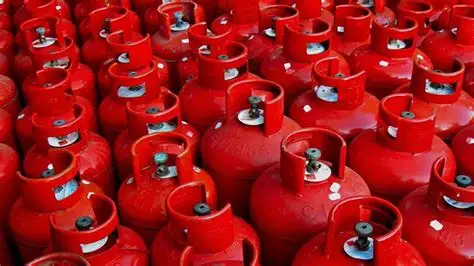
Nigerian Association of Liquefied Petroleum Gas Marketers (NALPGAM) has stated that the price of Liquefied Petroleum Gas (LPG), commonly known as cooking gas, remains “stubbornly high” despite improved supply in the last one month.
Pinnacle Daily reports that cooking gas is selling between ₦1,500 and ₦1,800 per kilogramme in Lagos, pushing a 12.5kg cylinder refill up to about ₦18,000 – ₦23,000. This is still high when compared to about ₦1,300 per kilogramme sold in May 2026.
The president of NALPGAM, Edu Inyang, stated that though there is improvement in supply, prices remain elevated as they are yet to return to the previous level.
Consumers across the country witnessed a sudden surge in the price of the commodity in May, which industry stakeholders attributed to a supply disruption linked to the closure of the Strait of Hormuz, which blocked vessel movements due to the ongoing war in Iran.
LPG is a globally traded commodity. Ongoing geopolitical conflicts, particularly instability and tensions in the Middle East affecting critical shipping lanes like the Strait of Hormuz, have generally driven up global energy benchmarks. When global prices rise, local prices in Nigeria rise right along with them.
Retail prices went up as high as ₦2,500 per kilogramme, pushing many households who couldn’t afford it to resort to other cooking alternatives such as charcoal and firewood.
The cooking gas crisis forced the Minister of State for Petroleum Resources (Gas), Ekperikpe Ekpo, to convene an emergency stakeholders’ meeting in Abuja on June 22.
The intervention reportedly led to an improvement in supply, but prices still remain high.
In a statement on Thursday, the NALPGAM president said the federal government’s intervention only eased supply, while the products still remain ‘stubbornly high.’
Inyang argued that LPG consumers are yet to enjoy lower prices because international prices still remain elevated, coupled with foreign exchange challenges.
“The immediate impact has been greater product availability rather than lower prices,” Inyang stated.
“LPG retail prices remain stubbornly high. While prices have stopped escalating at the previous pace, consumers are yet to experience meaningful relief because international LPG prices remain elevated, foreign exchange costs continue to increase import expenses, transportation and inland distribution costs remain high, domestic production is still insufficient to fully satisfy national demand, and market competition has not yet driven prices downward,” he stated.
READ ALSO:
- Middle East War Hits Nigerian Kitchens as Cooking Gas Price Rises to ₦1,500/kg
- Fresh Concerns as Cooking Gas Price Rises
- Consumers Groan as Cooking Gas Hits ₦1,600/kg, 12.5kg now ₦20,000 Amid Supply Squeeze
- NMDPRA, Security Agencies Join Forces to Stop LPG Hoarding, Diversion
Some consumers who spoke to Pinnacle Daily in Lagos said that, though the price has dropped, the cost is still high when compared to what it was sold for a few months ago.
“We used to buy the gas at N1,200 and N1,300 some months ago, but now, after rising to about N2,300 recently, it is now N1,700 and N1,800,” said Ifeoluwa Olukola, a resident of Isolo, told Pinnacle Daily.
“What we are buying gas now is still very when compared to the price some months ago. We pray that it drops further; not many can afford it now,” said Adebisi, a resident of Ogba.
He called on the government to work with gas marketers to further drive down the cost, stressing that cooking gas is clean, environmentally friendly, and more convenient than other energy sources for cooking.
Apart from the geopolitical tensions and exchange rate issues, experts note that there are also challenges of inadequate domestic storage infrastructure and logistics.
Because Nigeria lacks an integrated pipeline network for LPG distribution, nearly all cooking gas is moved across the country by road. High diesel prices and deteriorating road infrastructure mean that transportation and haulage fees make up a massive chunk of the final retail price.
While emergency interventions by the Ministry of Petroleum Resources have successfully boosted product availability and stopped severe fuel queues, marketers note that structural fixes—like delinking local pricing completely from the US dollar, expanding inland storage, and fixing transport networks—are the only things that will bring permanent relief to Nigerian kitchens.

Victor Ezeja is a Nigerian journalist skilled in producing insightful news analyses, feature stories, and interviews that simplify complex issues and drive informed public discourse. His work combines rigorous research, balanced reporting, and compelling storytelling to highlight developments shaping industries and society. Victor, who holds a Master's Degree in Mass Communication, specializes in energy, aviation, business, and economic reporting. He can be reached via @VICTOREZEJA on X