

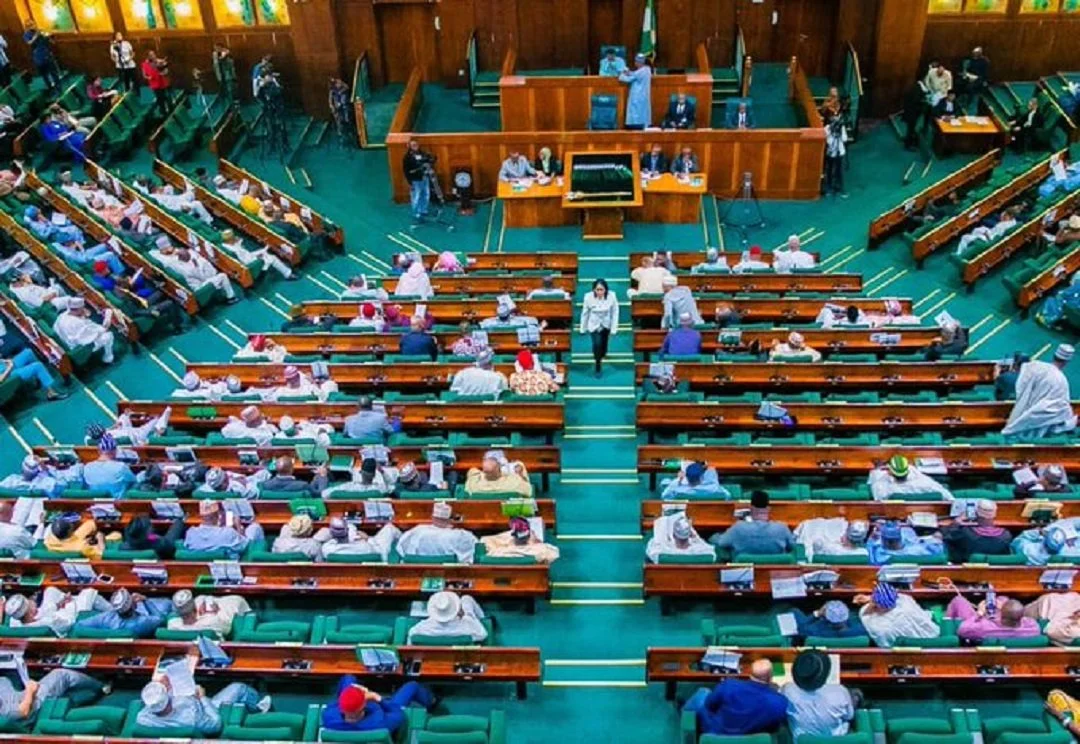
The Nigerian National Assembly has experienced a legislative discrepancy, as the Senate and the House of Representatives approved different crude oil price benchmarks for the 2026–2028 Medium Term Expenditure Framework (MTEF).
While both chambers agree on many macroeconomic targets, the disagreement over oil prices, which is the major source of Nigeria’s foreign exchange earnings, highlights a tension between fiscal caution and the need to fund the ₦54.18 trillion proposed budget for 2026.
The Divergence in Oil Benchmarks
The House of Representatives (also known as the “Green Chamber”) opted to align with the Executive’s proposal, while the Senate chose a more conservative path for the 2026 fiscal year.
The House approved the fiscal framework on Thursday, December 18, after the adoption of the report of the House Committees on Finance, National Planning and Economic Development, presented by the Chairman of the Finance Committee, Hon. James Abiodun Faleke.
The House pegged the oil price benchmark at $64.85 per barrel against $60 per barrel approved on Tuesday, December 16.
READ ALSO: Reps Clash Over Oil Price Benchmark, Suspend MTEF Consideration
The House committees also recommended oil benchmark prices of $64.30 per barrel in 2027 and $65.50 in 2028. However, the Senate approved $65.00 and $70 per barrel for 2027 and 2028, respectively.
The committees said their projections were based on perceived improvement in Nigeria’s crude oil output, adding that the country recorded one of the strongest month-on-month production increases among members of the Organisation of Petroleum Exporting Countries (OPEC) in November 2025, according to the December 2025 OPEC Monthly Oil Market Report.
Why the Chambers Differ
Chairman of the Senate Committee on Finance, Senator Sani Musa, had, while presenting the Committee’s report, argued that a lower benchmark of $60 for 2026 is necessary to shield the economy from global volatility. Musa cited geopolitical tensions in the Middle East and Europe as primary risks that could lead to sudden price shocks.
On the other hand, the House of Representatives stepped down consideration of the MTEF/FSP on Wednesday after the Committees recommended adjusting the crude oil benchmark to $60. Speaker Tajudeen Abbas warned that lowering the benchmark to $60 without a clear plan to cover the resulting revenue gap would force the government into higher borrowing. The House eventually reverted to the Executive’s $64.85 figure to maintain the internal consistency of the proposed budget.
Areas of Shared Macroeconomic Projections
Despite the oil price row, both chambers have found common ground on other critical economic indicators for the 2026–2028 period.
The lawmakers pegged oil production at 1.84 million barrels per day (mbpd) for 2026, rising to 1.92 mbpd by 2028.
They also approved exchange rate estimates of ₦1,512, ₦1,432.15, and ₦1,383.18 for 2026, 2027, and 2028, respectively. This means there is a target to strengthen the Naira to about the ₦1,300 per dollar threshold in the next three years. Also, they put inflation targets at 16.5 per cent, 13 per cent, and 9 per cent for the same period.
READ ALSO: Senate Confirms 64 Career and Non-Career Ambassadorial Appointments
On GDP growth, the chambers have optimistic targets of 4.68 per cent in 2026, climbing to 7.9 per cent by 2028, driven by the expected positive impact of tax reforms.
Budget Implications
In the 2026 budget estimate presented to a joint session of the National Assembly on Friday, President Bola Tinubu proposed ₦58.18 trillion. The president pegged the capital expenditure at ₦26.08 trillion, the total estimated revenue at ₦34.33 trillion and ₦15.52 trillion for debt servicing. The budget deficit is ₦23.85 trillion, representing 4.28 per cent of GDP. This means new borrowings to finance the deficit.
Experts have expressed concern that this heavy reliance on debt—accounting for about 40 per cent of the budget—could deepen Nigeria’s debt burden.

Victor Ezeja is a Nigerian journalist skilled in producing insightful news analyses, feature stories, and interviews that simplify complex issues and drive informed public discourse. His work combines rigorous research, balanced reporting, and compelling storytelling to highlight developments shaping industries and society. Victor, who holds a Master's Degree in Mass Communication, specializes in energy, aviation, business, and economic reporting. He can be reached via @VICTOREZEJA on X