The Nigerian House of Representatives has suspended discussion on the 2026–2028 Medium-Term Expenditure Framework (MTEF) and Fiscal Strategy Paper (FSP). The decision to step down the documents was taken on Wednesday following a heated debate over how crude oil price benchmarks and revenue projections were calculated. The debate ensued in plenary immediately after James Faleke, …
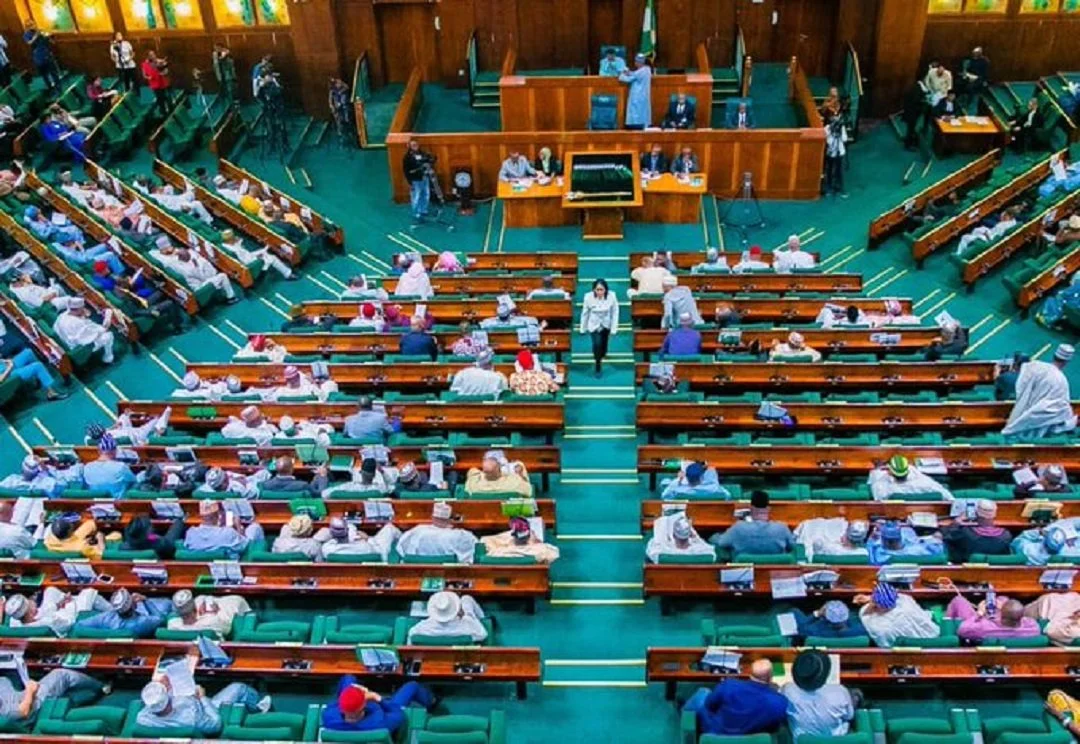
The Nigerian House of Representatives has suspended discussion on the 2026–2028 Medium-Term Expenditure Framework (MTEF) and Fiscal Strategy Paper (FSP).
The decision to step down the documents was taken on Wednesday following a heated debate over how crude oil price benchmarks and revenue projections were calculated.
The debate ensued in plenary immediately after James Faleke, chair of the Joint Committees on Finance, National Planning, and Economic Development, presented the reports to the House.
The lawmakers had convened the Committee of Supply to evaluate the findings after confusion arose about proposed modifications to key macroeconomic assumptions, particularly crude oil benchmark prices, and the implications for government revenue and the size of the 2026 budget.
The joint committee proposed lowering crude oil benchmark prices from the executive’s predictions of $64.85, $64.30, and $65.50 per barrel in 2026, 2027, and 2028 to $60, $65 and $70, respectively. The committee stated that the suggestion was influenced by geopolitical tensions in Europe and the Middle East, as well as global oil market volatility.
The idea attracted instant criticism from Speaker of the House Tajudeen Abbas, who warned that changing the oil benchmark without commensurate modifications to other data would skew the whole framework.
READ ALSO: Tax MoU: The Only Mistake France Made Was Codifying Our Requests for Assistance – Oyedele
The speaker questioned the committee’s consideration of revenue losses from decreased oil prices and their impact on the estimated ₦54.46 trillion budget for 2026.
Pinnacle Daily reports that last Wednesday, President Bola Tinubu forwarded the MTEF/FSP to the House, where it was referred to the joint committees. On Tuesday, a public hearing was held with key members of the economic management team, including the Minister of Finance and Coordinating Minister of the Economy, Wale Edun, and the Minister of Budget and National Planning, Atiku Bagudu.
Faleke, who presented the report, stated that Nigeria’s crude oil production forecast was optimistic, noting that the country had one of the biggest month-on-month production improvements among OPEC members in November 2025, according to the December 2025 OPEC Monthly Oil Market Report.
Key Economic Projections (2026–2028)
The framework predicts exchange rates of ₦1,512 in 2026, ₦1,432.15 in 2027, and ₦1,383.18 in 2028. Inflation is expected to be 16.5 per cent, 13.1 per cent, and 9.9 per cent, respectively. Real GDP growth is expected to be 4.68 per cent in 2026, increasing to 7.9 per cent by 2028, owing primarily to ongoing economic reforms and a new tax regime.
The committee suggested a ₦54.46 trillion federal budget for 2026, with ₦34.33 trillion in retained revenue, ₦17.88 trillion in new borrowings, ₦15.52 trillion in debt payments, and a fiscal deficit of ₦20.13 trillion.
READ ALSO:
- Nigeria Faces Fresh Pressure As OPEC+ Plans To Ramp up Oil Production
- Nigeria Records 31.6m Barrels Output Shortfall in 4 Months
- NCAA Suspends ‘No Pay, No Service’ Action Against 11 Airlines Over Debt
However, lawmakers questioned how these statistics could remain unchanged if oil price predictions were reduced.
Speaker Abbas warned that lowering the benchmark price by around $5 per barrel would have a substantial impact on oil and gas income, and he urged the committee to specify whether the resultant shortfall would be absorbed by greater domestic revenue or more borrowing.
READ ALSO: Oil Prices Rise as Trump Orders Venezuela Tanker Blockade
Deputy Speaker Benjamin Kalu also expressed concerns about the budget projections, stating that while a cautious oil benchmark was sensible, it would unavoidably result in a revenue deficit that needed to be addressed.
Faleke responded, arguing that the MTEF/FSP was based on assumptions and that exact statistics would be updated throughout budget preparation. He argued that the framework did not diminish non-oil revenues and that the committee’s primary focus was on oil-related estimates.
Concerns Over Timing and Scrutiny
Concerns about time fuelled the discussion even further. Saidu Abdullahi, Deputy Chairman of the Finance Committee, criticised the MTEF/FSP’s late submission, claiming it violated the Fiscal Responsibility Act’s requirement that the documents be provided latest by September. This delay, he argued, leaves the House with very little time to perform the proper scrutiny required for such a massive financial plan.
With disagreements unresolved, Faleke moved that the reports be stepped down for additional work. The motion was adopted by the House.
The House adopted the motion, and the Joint Committees are expected to return with a revised report on Thursday that aligns the oil benchmarks with the overall revenue and expenditure targets.
Senate Cuts Oil Benchmark to $60 for 2026 Budget
Meanwhile, the Senate approved the MTEF/FSP on Tuesday, slashing the crude oil benchmark to $60 per barrel for 2026.
The lawmakers in the upper chamber emphasised that the downward adjustment of the benchmark price was necessary to reflect current realities in the global oil market.
Sani Musa (APC, Niger East), Chairman of the Senate Committee on Finance, stated that the committee examined the Federal Government’s oil price projections in light of current global uncertainties.
Musa, who presented the report, stated that the change was necessary “in recognition of the global geopolitical tensions in Europe and the Middle East, as well as the sensitivity of global crude oil prices.”
Despite the lower oil price benchmark, the Senate maintained crude oil production projections of 1.84 million barrels per day (mbpd) in 2026, 1.88 mbpd in 2027, and 1.92 mbpd in 2028, expressing confidence in ongoing sector reforms and attempts to stabilise output.

Victor Ezeja is a Nigerian journalist skilled in producing insightful news analyses, feature stories, and interviews that simplify complex issues and drive informed public discourse. His work combines rigorous research, balanced reporting, and compelling storytelling to highlight developments shaping industries and society. Victor, who holds a Master's Degree in Mass Communication, specializes in energy, aviation, business, and economic reporting. He can be reached via @VICTOREZEJA on X