

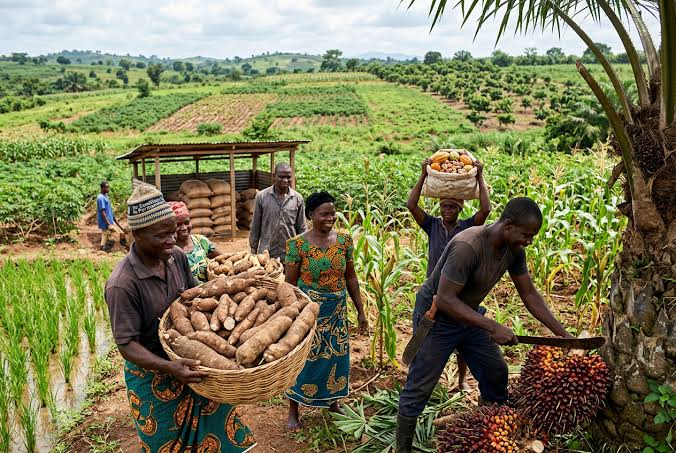
Farmers and other stakeholders in the agriculture sector have urged the Federal Government to introduce practical measures to reduce production costs and provide more support for farmers following President Bola Tinubu’s Independence Day address.
They called on the government to implement workable measures to reduce production costs in the sector.
They made the call in separate interviews on Thursday in Lagos while reacting to President Bola Tinubu’s 66th Independence Day speech.
Tinubu had promised to reduce production and transport costs across sectors, saying the measures would help Nigerians achieve shared prosperity.
Farmers Seek More Funding
The Chairman of the All Farmers Association of Nigeria in Lagos, Sakin Agbayewa, commended the administration’s efforts but called for increased funding and support for farmers.
Agbayewa said the government had made efforts to reduce production costs, citing the distribution of fertilisers to farmers across 26 states as an example.
RELATED NEWS:
- Nigeria at 66: Uwaleke Highlights Capital Market’s N163trn Growth
- Nigeria at 66: Obi Decries Insecurity, Hardship as over 140 Million Live in Poverty
- EXCLUSIVE: Nigeria Has Never Seen This Insecurity in 66 Years — Fage
- Nigeria @66: ‘Age of Prosperity’ Begins – Tinubu
“In all sincerity, President Bola Tinubu’s administration has been trying to reduce the cost of production for us farmers, and he has done well. The distribution of fertilisers to farmers across 26 states of the country is a testament to this,” he said.
He added that the government was making progress and said the Nigeria Forest Security initiative would help improve the safety of farmers and their fields.
Stakeholder Wants Subsidised Inputs
A farmer and agriculture analyst, Omotunde Banjoko, called for subsidised farm inputs and an end to the importation of agricultural products that could be produced locally.
Banjoko welcomed the President’s promise to reduce production costs, noting that farmers had repeatedly raised concerns over the rising cost of inputs and other expenses.
“It is a welcome development that President Tinubu’s administration wants to reduce the cost of production in the agricultural sector. Given the rising cost of production, the promise to reduce production costs is welcome because that is what we have been clamouring for,” he said.
He urged the government to sustain funding for farmers and ensure that announced interventions were fully implemented.
Banjoko also called for the provision of mechanisation equipment at subsidised rates across local government areas to boost production and lower costs for farmers.
Expert Seeks Value-chain Approach
Ismail Olawale, a strategic agriculture communication expert, said the government needed to adopt a comprehensive approach to reducing production costs in the agricultural sector.
Olawale described the President’s promise as positive but said effective implementation would require a clear understanding of the different stages of the agricultural value chain.
“From all indications and from the president’s speech, ensuring lower production costs in the agriculture sector is a good promise,” he said.
“But for the president to achieve this, with whatever policy he wants to set up or plan, the Presidency needs to understand the value chain across agriculture.”
Tinubu Promises More Agricultural Investment
In his Independence Day address, Tinubu said his administration would focus on reducing the cost of living by cutting production and transportation costs.
The President said ongoing reforms had contributed to improvements in the economy, including more than four per cent economic growth, reduced oil theft, a more stable foreign exchange market and $6 billion in non-oil exports in 2025.
He also said the government would expand mechanised irrigation and dry-season farming, as well as improve roads, railways and ports.
Tinubu further highlighted measures aimed at strengthening social support, education loans and consumer credit through CREDICORP.
The agriculture stakeholders, however, stressed the need for sustained funding, affordable inputs, mechanisation and effective implementation of government interventions to make the promised reduction in production costs meaningful for farmers.

Rafiyat Sadiq is a political, justice, and human rights reporter with Pinnacle Daily, known for fearless reporting and impactful storytelling. At Pinnacle Daily, she brings clarity and depth to issues shaping governance, democracy, and the protection of citizens’ rights.