

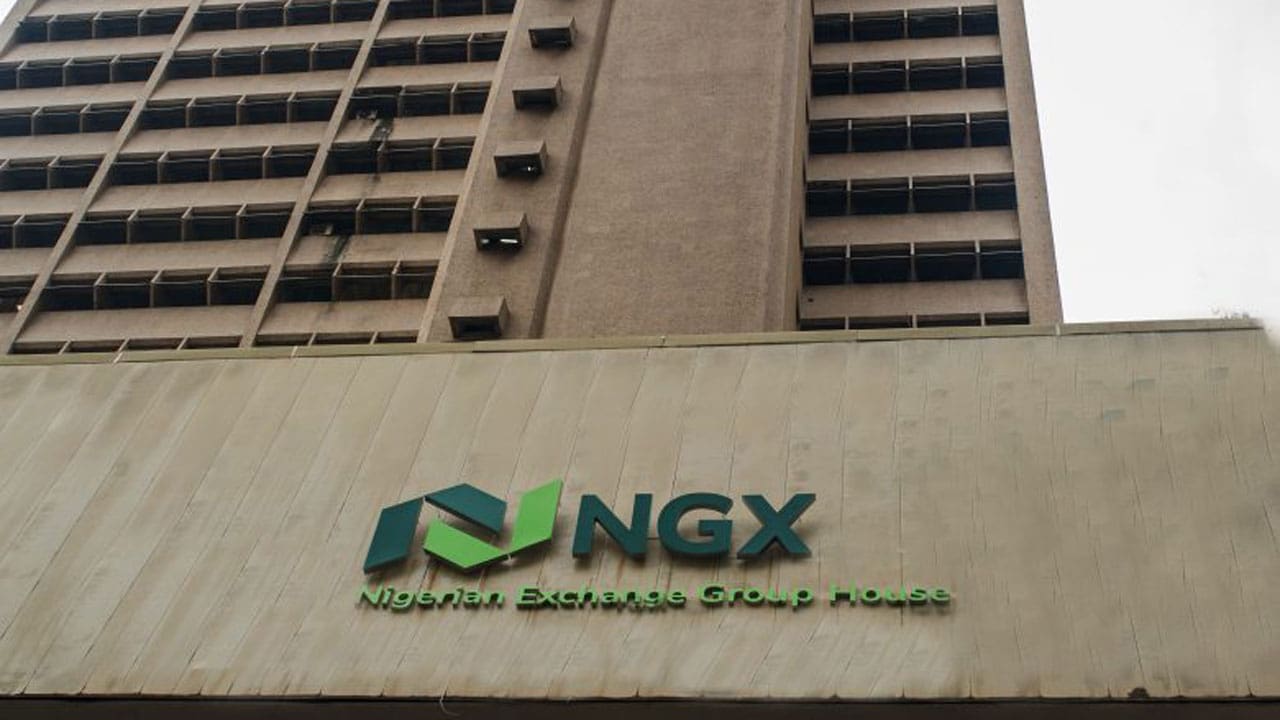
Nigeria’s capital market has grown from a modest market dominated by government securities at independence into a multi-trillion-naira financial ecosystem with equities market capitalisation now exceeding N163 trillion, Prof Uche Uwaleke has said.
Uwaleke, Director of the Nasarawa State University Institute of Capital Market Studies and President of the Capital Market Academics of Nigeria, gave the assessment on Thursday as Nigeria marked its 66th independence anniversary.
In a statement titled “Nigeria at 66: Why the Capital Market Gives Us Cause to Celebrate,” Uwaleke said the market’s institutional development, technological transformation and expanding role in financing the economy provided “a compelling story of institutional evolution, resilience and promise.”
He, however, acknowledged that Nigeria’s development remains constrained by infrastructure deficits, weak institutional capacity, unemployment, poverty, manufacturing challenges, food insecurity and difficulties in education and healthcare.
He said Nigeria remained heavily dependent on imports across several critical sectors, while exporting a substantial proportion of its commodities in primary form.
For Uwaleke, these challenges make it difficult to justify “unqualified celebration” at 66, but he argued that the country’s development should not be assessed only through its shortcomings.
“The appropriate response to Nigeria’s 66th independence anniversary is consequently neither uncritical celebration nor wholesale pessimism,” he said.
He traced the capital market’s development to 1946, when the colonial administration issued a development stock to finance public expenditure, while the establishment of the Lagos Stock Exchange in 1960 laid the foundation for an organised securities market as Nigeria attained independence.
The Exchange commenced operations in 1961, providing a formal platform for trading government and private-sector securities and mobilising domestic savings.
READ ALSO:
- Alliance Warns Nigeria Nearing Institutional Collapse, Urges Reforms
- Nigeria at 66: CAPPA Demands Reforms That Ease Hardship
- Nigeria at 66: RMD, Others Urge Collective Action to Build Strong National Reputation
- ‘Deobanks Could Reshape Financial Infrastructure Beyond Apps’
The Lagos Stock Exchange was renamed the Nigerian Stock Exchange in 1977, while the Securities and Exchange Commission was established in 1979 to strengthen regulation, investor protection and market confidence.
Uwaleke said subsequent laws, including the Securities and Exchange Commission Act of 1988, the Investment and Securities Act of 1999 and the Investment and Securities Act 2007, progressively strengthened the market’s regulatory framework.
He also identified the establishment of the Central Securities Clearing System (CSCS) in 1997 as a major milestone that reduced risks associated with paper-based transactions and improved securities ownership and settlement.
The market has since expanded through electronic trading, dematerialisation of securities, collective investment schemes and a deeper debt market.
Uwaleke said the emergence of the FMDQ Securities Exchange and organised over-the-counter markets further strengthened Nigeria’s financial architecture, particularly in fixed-income securities, foreign exchange-related instruments and money market products.
He also highlighted the contributory pension system as an important source of long-term domestic savings for government securities, corporate debt, equities and infrastructure-related investments.
The demutualisation of the Nigerian Stock Exchange in 2021 and its transition into Nigerian Exchange Group Plc marked another stage of institutional development, he said.
Uwaleke noted that Nigeria’s settlement cycle had also improved, moving from T+3 to T+2 in 2025 and T+1 in June 2026, meaning eligible transactions are settled one business day after trading.
He described the Investment and Securities Act 2025 as another major development, saying it strengthened the Securities and Exchange Commission’s supervisory and enforcement powers and provided a framework for emerging areas including digital and virtual assets and commodities exchanges.
Beyond market development, Uwaleke said the capital market had become an important channel for financing businesses and government.
He cited the recent banking recapitalisation exercise, during which banks used public offers, rights issues and other approved capital-raising mechanisms to mobilise additional funds.
Looking ahead, he said the proposed second Capital Market Master Plan and the planned National Savings Scheme could further deepen domestic savings, investment and market participation.
He also identified the planned listing of Dangote Refinery on the Nigerian Exchange as a development that could deepen the equity market and allow Nigerian investors to participate in the ownership of a major industrial asset.
Uwaleke urged regulators and market operators to make the capital market more accessible to ordinary Nigerians through investor education, financial literacy and digital access.
“At 66, Nigeria may not yet be the country its founders envisaged, but it remains a country of immense possibilities,” he said.
“The capital market reminds us that the journey of nation-building is not measured only by the distance yet to be covered, but also by the institutions already built and the opportunities they create for the future.”

Alex is a business journalist cum data enthusiast with the Pinnacle Daily. He can be reached via ealex@thepinnacleng.com, @ehime_alex on X