

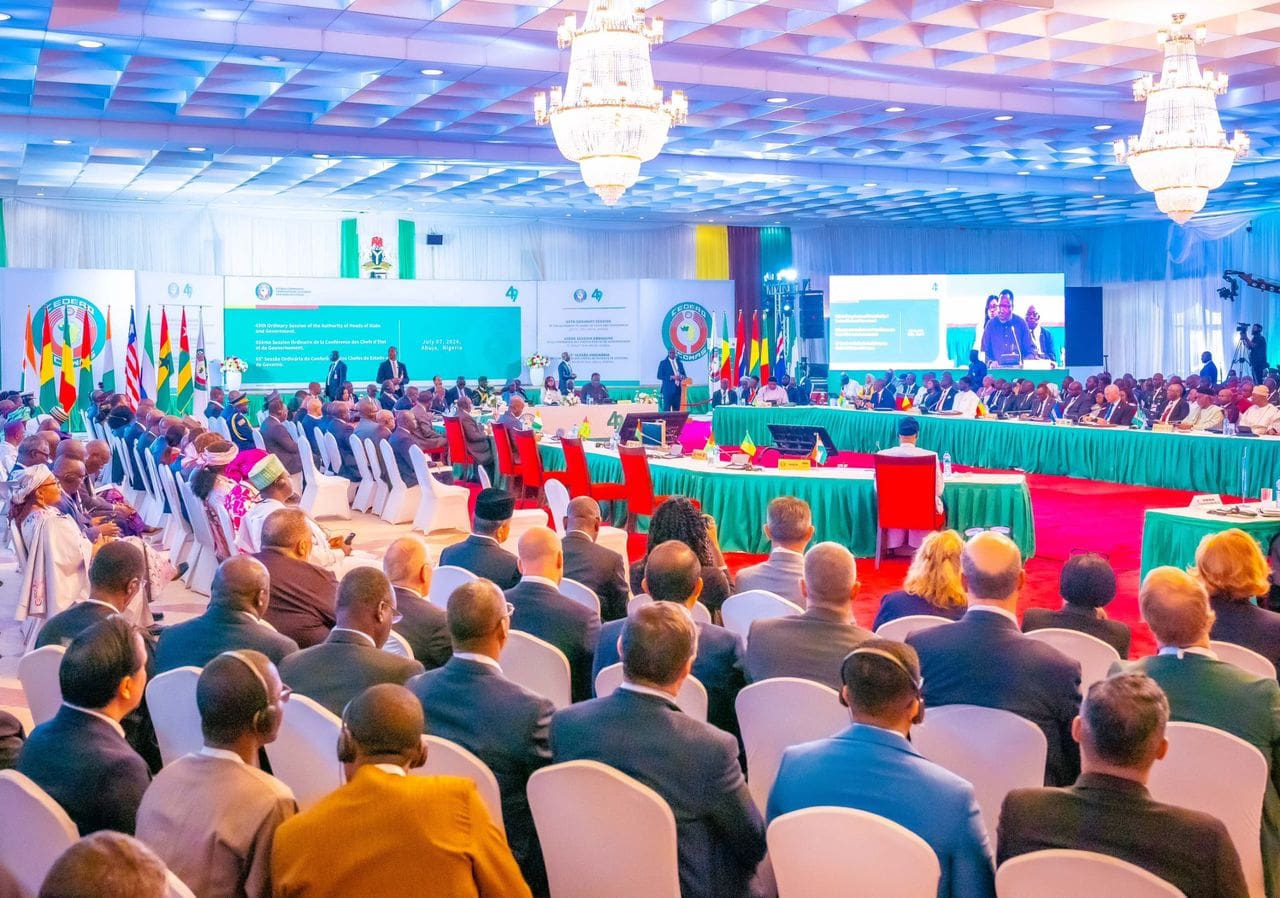
The Economic Community of West African States (ECOWAS) has declared a state of emergency across the region following escalating political instability and security threats in member states.
The announcement was made on Tuesday by ECOWAS Commission President Omar Touray during the 55th Session of the Mediation and Security Council at the ministerial level in Abuja.
Rising Security Risks Across the Region
Touray warned that West Africa faces unprecedented security challenges, including persistent military interventions in Guinea-Bissau and Benin, non-compliance with democratic transition norms in Guinea, and the growing influence of terrorist and criminal networks.
“Elections have become a major trigger of instability in our community,” he said.
He called for urgent and coordinated action to confront terrorism, cross-border crime, and geopolitical pressures threatening regional cohesion.
Humanitarian Crisis Deepens
Highlighting worsening humanitarian conditions, Touray cited UNHCR data showing that as of October 2025, approximately 7.6 million people are forcibly displaced in West Africa, including more than 6.5 million internally displaced persons.
READ ALSO: ECOWAS Condemns Coup Attempt in Benin, Hails Army
The largest populations of displaced persons are in Nigeria, Burkina Faso, Niger, and Mali, while Niger, Mali, Nigeria, Côte d’Ivoire, and Togo host the highest numbers of asylum seekers. “Decisions and actions must be taken to reverse this trend,” he said.
ECOWAS Commitments and Diplomatic Actions
Touray urged member states to uphold constitutional norms and maintain unity, while welcoming new ministerial representatives, including Nigeria’s Defence Minister, retired General Christopher Musa, and Cabo Verde’s Foreign Affairs Minister, José Luis Livramento.
READ ALSO: AU Condemns Attempted Military Coup in Benin
Sierra Leone’s Foreign Affairs Minister and Chair of the Council of Ministers, Timothy Kabba, called for decisive action to protect democratic governance, citing recent coups in Guinea-Bissau and an attempted coup in Benin.
The council’s recommendations will be presented to the ECOWAS Heads of State and Government, who are expected to take measures to restore stability and strengthen democratic institutions in the region.

Rafiyat Sadiq is a political, justice, and human rights reporter with Pinnacle Daily, known for fearless reporting and impactful storytelling. At Pinnacle Daily, she brings clarity and depth to issues shaping governance, democracy, and the protection of citizens’ rights.