

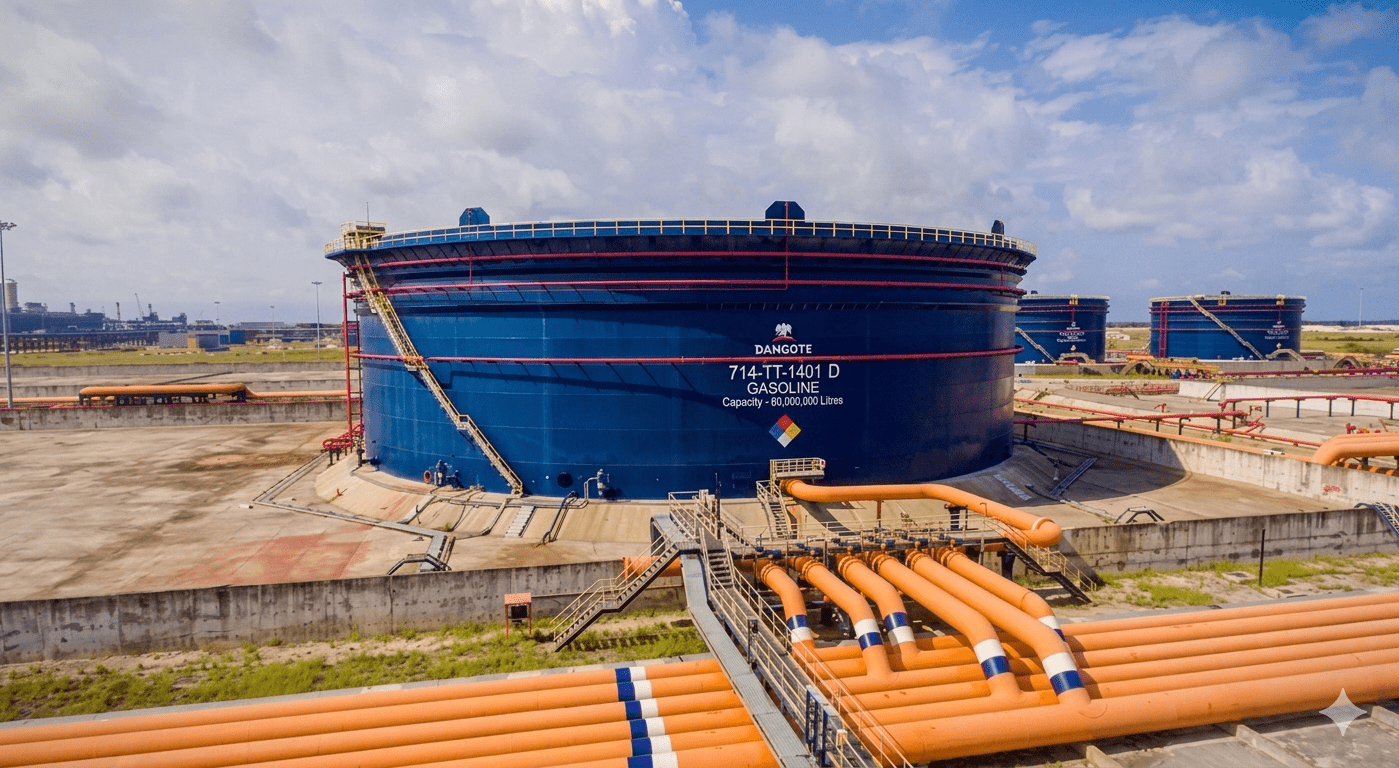
The Dangote Refinery has expanded its crude sourcing to include cargoes from the United Arab Emirates (UAE), marking a notable shift in its supply chain strategy.
According to a report by S&P Global Commodity Insights, the $20 billion refinery recently imported two cargoes of crude oil from the UAE, marking its first-ever procurement of Middle Eastern crude.
This followed the resumption of oil exports with the reopening of the Strait of Hormuz after the United States and Iran reached an interim peace agreement to ease tension in the Gulf region.
This geopolitical breakthrough has returned a steady flow of Gulf supply to the global market, making grades like the UAE’s flagship Murban highly cost-competitive.
The refinery, which started commercial operations in 2024, had struck a deal with the Nigeria National Petroleum Company (NNPC) Limited for crude oil supply in naira to reduce foreign exchange exposure. S&P Global report noted that the deal led to the supply of between 13 and 15 cargoes of Nigerian crude monthly in naira.
READ ALSO:
- Dangote Refinery Reduces Petrol Price Again amid Global Oil Dip
- NNPC Boosts Crude Supply to Dangote Refinery Amid Global Energy Crisis
- How UAE’s OPEC Exit Threatens Nigeria’s Economy
- Diversifying Nigeria’s Economy Starts with Agriculture – Prof Utomi
- Aviation Fuel Crisis: FG to Include ATK in Naira-for-Crude Deal
However, rising demand for feedstock as the refinery ramped up operations forced it to expand sourcing of crude, leading to imports from the United States and other parts of the world.
While initially designed for Nigeria’s light sweet crude, Dangote Refinery CEO David Bird, in an interview, noted that the facility is scaling its crude-blending capability.
This strategy includes integrating heavier, cheaper grades. As the plant targets a future expansion to 1.4 million barrels per day (mbd) by 2028, the company projects that up to 30% of the feed on each processing train could eventually be Middle Eastern grades.
Analysts note that securing Middle Eastern crude underscores Dangote’s broader goal to protect its massive processing margins from local asset constraints, ensuring it can operate independently of single-market infrastructure deficits.

Victor Ezeja is a Nigerian journalist skilled in producing insightful news analyses, feature stories, and interviews that simplify complex issues and drive informed public discourse. His work combines rigorous research, balanced reporting, and compelling storytelling to highlight developments shaping industries and society. Victor, who holds a Master's Degree in Mass Communication, specializes in energy, aviation, business, and economic reporting. He can be reached via @VICTOREZEJA on X