

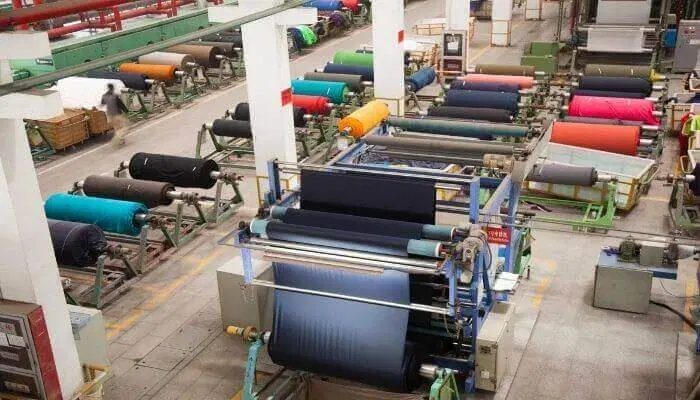
The Centre for the Promotion of Private Enterprise (CPPE) has warned that the Senate’s proposed ban on textile fabric imports could put the livelihoods of an estimated 10 million Nigerians at risk.
The group stressed that the measure would disrupt Nigeria’s fashion, garment and furniture industries rather than revive local textile manufacturing.
In a statement issued on Sunday by its Chief Executive Officer, Dr Muda Yusuf, the CPPE said that although the goal of reviving Nigeria’s textile industry is commendable, an outright ban on textile imports would likely do more harm than good.
“The proposed measure is unlikely to achieve its intended objectives and could have significant adverse consequences for the Nigerian economy,” Yusuf said.
He argued that the proposal overlooks the wider industries that depend on imported textile fabrics, warning that restricting imports would disrupt supply chains, increase production costs and threaten businesses across the garment, fashion, furniture and creative sectors.
According to the CPPE, Nigeria’s fashion, garment-making and tailoring industry is conservatively valued at about N10 trillion and provides livelihoods for an estimated 10 million Nigerians, making it one of the country’s most vibrant creative economy sectors.
Yusuf said textile fabrics remain essential inputs for the industry, stressing that an import ban would reduce consumer choice and threaten thousands of micro, small and medium enterprises engaged in fashion, tailoring and garment production.
READ ALSO:
- FAAN Bans Cash Transactions at Airports to Plug Revenue Leakages
- Trump Imposes 25% Tariff on Indian Goods Starting August 1
- FG Extends Ban on Raw Shea Nut Exports to February 2027
- Trump Imposes Sweeping Tariffs on Drugs, Trucks, Furniture to Protect U.S. Manufacturing
- Investors Lose ₦2.42trn as NGX Extends Weekly Decline
He noted that the country’s furniture and interior design industry, valued at an estimated N7 trillion, also relies heavily on textile fabrics used in upholstered furniture, office furniture, hotel furnishings and mattresses.
“A supply disruption would increase production costs and weaken the competitiveness of the sector,” he said.
The CPPE maintained that the decline of Nigeria’s textile industry is driven by structural challenges rather than import competition.
According to Yusuf, high energy costs, expensive credit, poor infrastructure, logistics bottlenecks, obsolete technology, smuggling, weak access to long-term finance and policy inconsistency have made local textile manufacturers uncompetitive.
He noted that imported textile fabrics already attract a combined import duty and import adjustment tax of between 35 and 45 per cent but said those tariff protections have failed to revive the industry because “the core problem lies in production economics rather than import penetration.”
“The challenge confronting Nigeria’s textile industry is fundamentally one of competitiveness rather than import penetration,” he said.
The CPPE also argued that local textile manufacturers currently lack the capacity to meet the quantity, quality and variety of fabrics required by Nigeria’s fashion, garment, furniture and interior design industries.
It warned that an outright import ban would create supply shortages, increase production costs and hurt downstream industries that generate significantly more employment than textile manufacturing.
Rather than banning imports, the organisation called on the government to adopt measures that improve the competitiveness of local manufacturers.
These include using government procurement to support locally produced textiles and garments for uniforms, creating a dedicated textile competitiveness fund financed partly from textile-related import taxes, reviving domestic cotton production through improved support for farmers, strengthening border enforcement to curb smuggling, and reducing production costs by improving energy supply, infrastructure and access to affordable finance.
“Sustainable revival will require structural reforms that improve productivity, reduce production costs, revive cotton production, expand access to affordable finance and leverage government procurement to stimulate domestic demand,” Yusuf said.

Alex is a business journalist cum data enthusiast with the Pinnacle Daily. He can be reached via ealex@thepinnacleng.com, @ehime_alex on X