

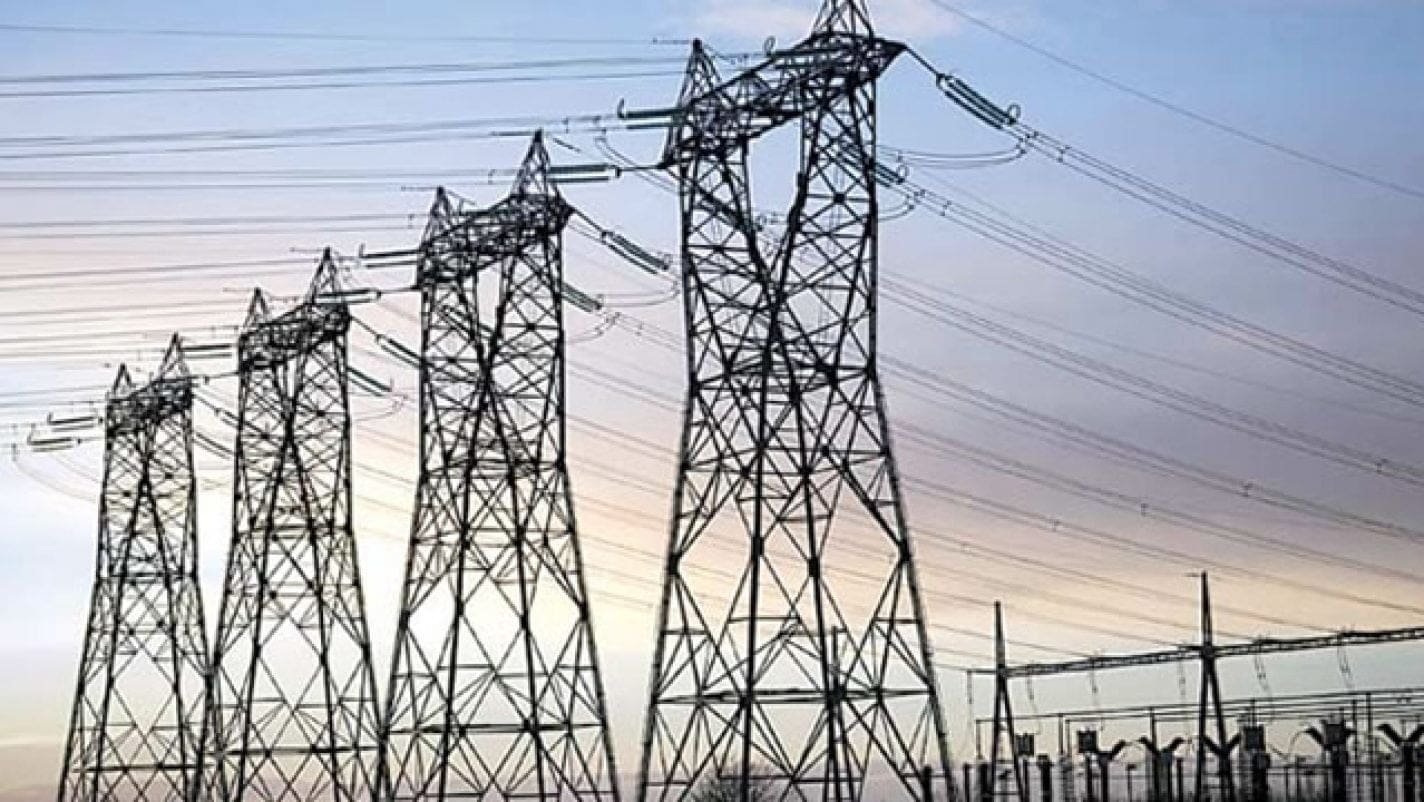
Despite fresh budgetary allocations, intervention funds, debt repayments, and financial support aimed at reviving Nigeria’s electricity industry, millions of Nigerians continue to grapple with poor power supply. As the government injects more resources into the sector, stakeholders have continued to express concerns over the impact.
Over the past year, Nigeria’s power sector has witnessed one of its biggest waves of financial intervention in recent years. The Federal Government allocated over ₦3.9 trillion to the power sector through national budgets, multilateral loans, and debt-clearance programmes in the last year to restore liquidity and attract investment into electricity generation, transmission and distribution.
The Fiscal Allocations: Paper vs. Reality
In terms of budgetary provisions, the Federal government dramatically scaled up its numbers, but a massive gap remains between what is approved and what is actually disbursed. The FG appropriated ₦858 billion for capital projects in the 2025 fiscal year. However, during a recent briefing to the Senate, the Nigerian Bulk Electricity Trading Plc (NBET) revealed that out of the ₦858 billion capital appropriation, only ₦60 million had actually been released to clear the tariff gap. NBET Acting Managing Director, Johnson Akinnawo, said the funding shortfall has increased the agency’s debt exposure to power generation companies.
In the 2026 budget, the Federal Government allocated a total of ₦1.107 trillion to the power sector. This includes ₦1.096 trillion designated for capital projects and ₦10.379 billion for recurrent expenditures.
Commenting on the funding shortfall, a public policy expert, Emmanuel Osemeka, said the poor releases for funding capital projects in the electricity sector contribute to why there is persistent blackout across the country.
“There is no way we are going to improve our power sector infrastructure with these kinds of releases,” Emeka stated in an interview on News Central TV breakfast programme.
“It is unthinkable that a government would budget almost a trillion for its power sector, yet the only release you do for an entire fiscal year (365 days) is ₦60 million. It speaks to where the administration’s focus is. The administration is focusing on renewable energy for the Aso Rock Villa,” he added, lamenting the humongous amount budgeted for installation of renewable energy facilities at the Villa both in 2025 (about ₦10 billion) and the 2026 national budget.
Clearing Legacy Debts
In April, President Bola Tinubu approved a ₦3.3 trillion payment plan under the Presidential Power Sector Financial Reforms Programme to clear longstanding legacy debts owed to GenCos and gas suppliers, to ease liquidity pressures across the national electricity value chain.
According to the Presidency, the repayment plan covers debts accumulated between February 2015 and March 2025.
It said then that implementation of the debt repayment had begun, with 15 power plants signing settlement agreements totalling ₦2.3 trillion.
Part of it, the Presidency clarified, was ₦501 billion raised earlier in the year through bonds under the Presidential Power Sector Debt Reduction Programme to fund these payments. “Out of the amount, N223 billion has been disbursed, with further payments underway,” part of the statement signed by Presidential spokesman, Bayo Onanuga, had stated.
In an update on the debt repayment, Minister of Power, Joseph Tegbe, stated that the first tranche of the ₦501 billion had already been disbursed to GenCos. The minister, who spoke during the commissioning of a 505-kilowatt peak (kWp) interconnected solar mini-grid project in Lagos on Wednesday, said the second tranche is scheduled for disbursement in July.
“The total debt estimate was about N3.33 trillion. President Tinubu approved raising a bond and making cash available to pay the GenCos. After verification, the first tranche of the N501 billion was paid to GenCos. The second tranche is due sometime in July,” Tegbe stated.
He noted that beyond settling outstanding obligations, the government was implementing measures aimed at preventing the continued accumulation of debts across the power value chain.
The GenCo Disbursal Controversy
However, the minister’s comment has generated controversy as electricity generation companies (GenCos) disputed the claim.
The Association of Power Generation Companies (APGC) Executive Secretary, Joy Ogaji, said available records indicate that less than half of the approved ₦501 billion has been disbursed to generation companies.
Ogaji, in a statement, highlighted previous engagements involving the Ministry of Power and the NBET, noting that operators were expecting further payments under subsequent tranches.
She called on the Federal Government to publish details of beneficiaries of the money paid already and the amounts received for transparency and accountability.
“I want to confirm that they have not even disbursed up to 50 per cent of the N501 billion. If they say they have, they should publish the names of the GenCos they have paid, how much each received, and the total amount disbursed,” she stated.
Electricity Subsidy Burden
The Federal Government has also been putting funds into the power sector through paying tariff shortfalls, commonly regarded as electricity subsidy.
According to quarterly reports released by the Nigerian Electricity Regulatory Commission (NERC) in 2025, the Federal Government incurred a total electricity subsidy obligation of ₦1.928 trillion. This subsidy represents the difference between the cost-reflective tariffs and the allowed tariffs, which the government mandated to be frozen at the rates payable in July 2024 throughout the year, NERC stated in its reports.
In the first Quarter (Q1), ₦536.40 billion (59.16% of total generation costs) was incurred as subsidy obligation. It dropped to ₦514.35 billion (59.60% of total generation costs) in the second quarter, ₦458.75 billion in the third quarter and ₦418.79 billion (52.30% of total generation costs) in the fourth quarter.
Grid Disruptions and Fuel Shortages
Despite these financial commitments to the sector, millions of households and businesses continue to grapple with unreliable electricity supply.
Industry stakeholders noted that frequent grid disturbances, worsening gas supply constraints, mounting debts owed to generation companies, and inadequate transmission capacity continue to limit power availability.
A report by the Nigerian Independent System Operator (NISO) in February indicated that gas-fired plants have been operating well below required fuel supply levels, reducing national electricity generation despite the financial interventions.
NISO said the power plants were receiving less than half of the fuel they needed, worsening the electricity supply across the country.
In the last 12 months, Nigeria’s actual average power generation has hovered between 4,000 MW and 5,500 MW, despite an installed capacity of roughly 13,500 MW. Output consistently fell short due to recurring gas supply constraints, transmission challenges, and frequent national grid collapses.
READ ALSO:
- GenCos Debts: Geregu, Niger Delta Power, Others Reach Settlement Agreement as FG Issues ₦501bn Bond
- GenCos Slam NLC Over ‘Political Settlement’ Claims, Defend ₦6trn Debt Recovery
- Higher Electricity Cost Looms as NMDPRA Raises Gas Price for GenCos
- Edo Sets Precedent on Electricity Disputes, NERC Hails Judiciary
The situation has become even more concerning following the cancellation of about $717.7 million in undisbursed financing under the World Bank-supported Power Sector Recovery Programme after key reform milestones were not achieved, raising fresh questions about implementation capacity and accountability.
Structural Weaknesses Overpowering Financial Injections
Industry analysts argue that while financing remains necessary, money alone cannot solve Nigeria’s electricity crisis. They point instead to structural weaknesses, including poor market liquidity, inadequate cost-reflective tariffs, legacy debts, weak governance, electricity theft, vandalism, transmission bottlenecks, and inconsistent policy implementation.
Rumundaka Wonodi, Pioneer CEO of NBET, said that while the approval of bailout funds would help boost liquidity in the power sector, it does not solve the structural challenges bedeviling electricity supply.
For businesses already burdened by inflation and rising operating costs, unreliable electricity means higher dependence on diesel and petrol generators, eroding competitiveness and slowing economic growth. Households continue to pay higher electricity tariffs in many service bands while enduring prolonged outages.
The growing disconnect between increased financial commitments and limited improvement in electricity supply has intensified calls for greater transparency in how intervention funds are utilised.
Energy economists have urged the government to shift attention from announcing new funding packages to ensuring measurable outcomes such as higher generation capacity, improved transmission infrastructure, reduced technical and commercial losses, better revenue collection, and stronger accountability across the electricity value chain.
As Nigeria continues to invest in rescuing the power sector, the central question remains whether these expenditures are translating into tangible improvements for consumers—or simply keeping an ailing system afloat.

Victor Ezeja is a Nigerian journalist skilled in producing insightful news analyses, feature stories, and interviews that simplify complex issues and drive informed public discourse. His work combines rigorous research, balanced reporting, and compelling storytelling to highlight developments shaping industries and society. Victor, who holds a Master's Degree in Mass Communication, specializes in energy, aviation, business, and economic reporting. He can be reached via @VICTOREZEJA on X