

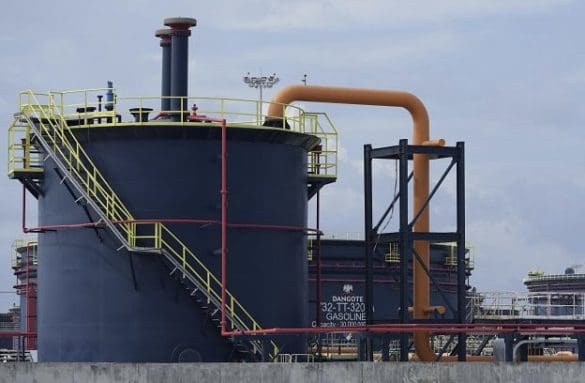
NNPC has increased crude oil allocations to the Dangote Refinery to seven cargoes for May 2026, up from the five cargoes supplied in previous months.
A Reuters report said two trade sources and a refinery official made the disclosure on Tuesday.
The increase was in response to record-high fuel prices in Nigeria and significant supply disruptions in global markets due to the ongoing conflict in Iran.
Despite the increase, it still falls short of the facility’s full requirement of 13 to 15 cargoes per month to operate at its 650,000 barrels per day (bpd) capacity. This means the refinery is only receiving about 50 per cent of its required domestic feedstock, forcing it to continue importing crude to make up the shortfall.
The Dangote Refinery CEO, David Bird, recently revealed that the refinery has been paying premiums as high as $18 per barrel above the Brent crude benchmark to secure international cargoes due to supply disruptions caused by the ongoing conflict in the Middle East.
NNPC cargoes are considerably cheaper for the refinery because they involve much lower shipping costs compared to crude sourced from the international spot market.
Economic Impact
The decision to increase crude cargoes supplied to Dangote Refinery comes at a time of extreme volatility in the global energy market. The war involving Iran has closed the Strait of Hormuz, causing the worst global oil supply disruption in history. Oil prices have surged above $100 per barrel. This has consequently pushed petrol and diesel prices in Nigeria to record highs.
Dangote has been adjusting depot prices in response to the global oil price volatility. It recently applied a ₦75 per litre cut in its gantry price to ₦1,200 per litre, signalling some relief to consumers as marketers slightly reduced pump prices in some parts of the country.
READ ALSO:
- Middle East War: Why Nigeria Should have Strategic Petroleum Reserves
- Middle East Tensions: Concerns as Fuel Prices Rise in Nigeria After Oil Price Surge
- Afreximbank Commits $2.5bn to $4bn Financing for Dangote Refinery
- NNPC Records ₦60.5trn Revenue, ₦5.7trn Profit in 2025
- Dangote, NNPC Sign Landmark Gas Agreements to Boost Industrial Expansion
There are concerns that diverting more crude to Dangote Refinery reduces the volume available for Nigeria’s international exports, which could impact foreign exchange earnings.
Strategic Importance
However, the move by NNPC is seen as a strategic attempt to bolster domestic refining and reduce Nigeria’s dependence on expensive imported refined products. By increasing local supply, the government hopes to eventually stabilize pump prices and ensure energy security during the global supply crisis.
Energy experts have earlier stressed that the only way for Nigeria to achieve energy security and stabilize prices of refined petroleum products in the country, especially in times of crisis, is to create Strategic reserves and boost local refining capacity by allocating more crude to domestic refineries.
The NNPC is reportedly in negotiations with Dangote to potentially allocate even more volumes in the future. The situation highlights the ongoing challenge of balancing the strategic goal of domestic refining capacity against the fiscal need for crude oil export revenues.

Victor Ezeja is a Nigerian journalist skilled in producing insightful news analyses, feature stories, and interviews that simplify complex issues and drive informed public discourse. His work combines rigorous research, balanced reporting, and compelling storytelling to highlight developments shaping industries and society. Victor, who holds a Master's Degree in Mass Communication, specializes in energy, aviation, business, and economic reporting. He can be reached via @VICTOREZEJA on X