


For decades, Nigeria’s economy has largely revolved around crude oil revenues, leaving the country vulnerable to global oil price shocks, foreign exchange volatility, and rising unemployment. Despite its vast arable land, large population, and abundant natural resources, experts say the nation has yet to fully harness the potential of agriculture and other non-oil sectors to drive sustainable economic growth.
Amid growing concerns over food insecurity, inflation and dwindling oil earnings, renowned political economist and founder of the Centre for Values in Leadership (CVL), Pat Utomi, says Nigeria must urgently rethink its economic model by investing aggressively in agriculture, industrialisation and value-chain development.
In this interview with Pinnacle Daily’s VICTOR EZEJA, Prof. Utomi speaks on the dangers of overdependence on oil, why agriculture remains critical to economic diversification, and the policies needed to reposition Nigeria for long-term prosperity. He also highlighted critical steps Nigeria should take in its membership of the Organisation of Petroleum Exporting Countries (OPEC) in the event of a shift in alliance following the exit of the United Arab Emirates (UAE).
Given the threat to oil and gas resources posed by a couple of factors, including geopolitical tensions and an emerging threat to OPEC’s existence, what would you suggest Nigeria should do to shield the economy from shocks?
Where we are right now, making the policy response around crude oil is not the matter; we must learn to return to producing right now. Nigeria does not produce. It has become too fully dependent on crude oil, and it is still damaging its other sectors. For example, the current government, in trying to win an election and realising that food prices are high and food price-driven inflation is running high, chose to use those oil revenues again to import food. That obviously is lowering food prices in the short term, but they are killing the agricultural sector, finally. As insecurity has already made agriculture problematic, many farmers haven’t been to farms for years, and they begin to forget how to farm. Then you bring in food, cheap food imports, and you completely demolish agriculture. And when you don’t have the revenues to import the food and your people cannot produce food, then you are dead.
Agric Revolution to Boost Food Production
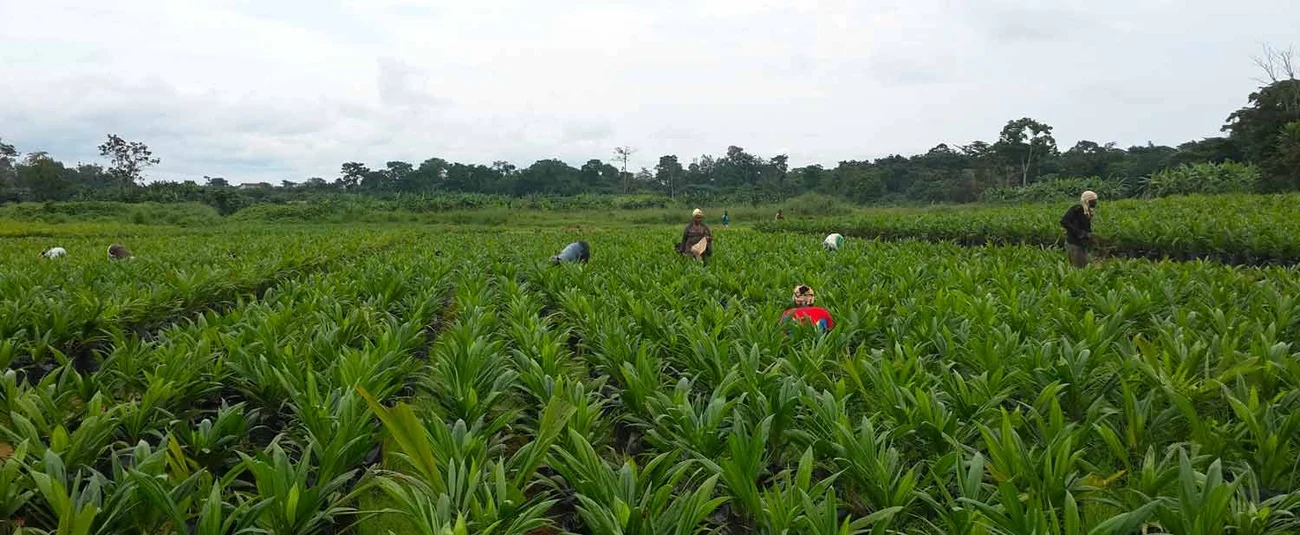
So one of the policy responses for now must be, first of all, to create production clusters for food protected with the military to give assurances to farmers, offer incentives to farmers to return to producing and essentially develop value chains around agricultural produce that will create an incentive for people to move to that sector.
Economic Diversification based on Factor Endowments
Of course, there are other sectors like technology, where young people are beginning to play, and you strengthen those sectors and stuff like that. More or less long and short, begin industrial policy-driven diversification of the economy the right way, based on our factor endowments. What is the endowment of Benue State? Sesame seed. How do you build a value chain? How do you secure the education of people in Benue State so that even the primary school curriculum reflects how to increase the yield of sesame seed? You go to Delta State and look at it, and they have a strong endowment and can produce a lot of rubber. How do you create the rubber value chain so that in X number of years, every aircraft that lands has a one-third certainty that the tyres are coming out of factories in Delta State, Nigeria?
The Malaysians have done that and have become major suppliers of aircraft tyres and all of that. These are the kinds of things that we need to be doing.
The UAE’s decision to exit from OPEC has been generating reactions. What are your thoughts on that?
The so-called Arab elites have somehow become more monetary and more power-driven than traditional ideology. I think the UAE leadership are using this to announce their independence from Middle Eastern ways. They have begun to break from tradition with their development strategies.
Now, with the right-of-centre activism present in the United States, many of them see it as an opportunity to play on the side of the global wealth centres, freeing themselves from a certain tradition that pushed for egalitarianism in global finance.
How OPEC Started
If you recall the history of OPEC, it is always important to remember how OPEC started. OPEC started because Venezuela, back in the 1950s, was, of course, a major supplier to the United States, and oil cost so little that it was cheaper than water. A pro-American president in Venezuela won; his name was Romulo Betancourt. Betancourt assumed that because he was pro-American, if he appealed to Washington, they would pay more for crude oil on the assurance that if he earned more money, he would be able to fight the Communist insurgency in Latin America; in effect, he would become the American policeman in Latin America with all the resources. He made a trip to Washington and was very warmly welcomed but was nicely told that supply and demand determine the price. So, he got nothing out of the trip to Washington and was very bitter. One day in 1960, he jumped on a plane and went to Baghdad in Iraq, and out of that trip came OPEC.
OPEC, obviously, has been a cartel – no question – but has redressed the balance of economic power on oil. To have oil in the 1950s was not profitable for countries but a game of the oil companies; however, with OPEC, that changed.
So in some ways, I think the leadership in the UAE, having made a success of becoming Western, so to speak, is seizing the moment of Trump to more or less say, ‘Well, we are independent of this egalitarian thought’, which OPEC represents.
Does this indicate a weakening of OPEC as a price-influencing cartel?
All these years, there have been several attempts to break OPEC, but somehow, it has managed to hold together. But invariably, that may happen with the breaking of OPEC. Given current crude oil price pressures around the world and the effects on standards of living everywhere, there is obviously going to be greater pressure. Today in the US, the price of petrol reached $4 per litre, I guess, in some places, the highest in many years.
So, politically, the forces moving against OPEC will garner more strength, and it may eventually, of course, have an impact in terms of weakening the cartel.
However, I think the truth is that OPEC’s mission has been done, even if its value in managing supply to the market and all of that drops, but its primary mission, from when Romulo Betancourt was there in 1959, has been accomplished.
It was facilitated by a couple of other things that Betancourt could not have anticipated, which include the 1973 Yom Kippur Arab-Israeli war, where the Arabs tried to use crude oil as a weapon, which led to the quadrupling of oil prices. All of those have worked for OPEC in many ways.
The biggest, which I shouldn’t call a failure of OPEC, because it is not necessarily part of their goal, is that whereas the rise of Aramco and national oil companies was enormously facilitated by the rise of OPEC, as a body, it managed to do well to advise its weaker members on strategy for avoiding the so-called cost of oil and Dutch disease. And so it left countries like Nigeria poorer, even though oil prices went up for them.
What are the immediate and long-term implications for Nigeria as an OPEC member?
Assuming that it unravels very quickly and oil prices, with everybody pumping from everywhere, go down very significantly, in the short run, it will affect Nigeria’s managing of its debt and the fact that it has committed so much in pre-selling some of its crude, mortgaging its crude, but it will probably force Nigeria to adopt strategies for examining that mortgage of revenues, and maybe actually it’s in Nigeria’s best interest in the long run. Who knows?
Right now, the problem with managing the whole crude business in Nigeria is that there is very limited creativity and thoughtfulness because it is, quote and unquote, “easy money”. But once there’s pressure to become more creative, Nigeria may come out better off for it.

So, you are trying to say that if such a thing happens, maybe in terms of reduction of oil prices, it could force Nigeria to think more towards economic diversification?
Very obviously, that’s one of the first things that will happen. And then, you know what happens with the revenues from crude oil is that poor politicians take it and usually award contracts for construction and stuff like that to their friends. Now, one of the effects of that is that it distorts labour markets. People who could have been on the farm will abandon it to come and become construction workers, and then, when you can’t pay them their salaries when oil prices weaken, they have left the farm and are not producing crops anymore. They have no jobs in the city. That is one of the major problems that constitute Dutch disease. So, it will not now be a factor as such if oil prices were to become lower.
With the unfolding scenario, should Nigeria rethink its alliance with OPEC?
Yeah, it doesn’t have to wait for that to happen before it rethinks and redesigns its strategy. It’s just that the political class is too lazy to focus on what is the needful. So in the short term, we just expect that the funds are here and we spend them. But even if prices didn’t crash, we should restrategise.
I will tell you a particular story in this regard. One of the things that changed the trajectory of Indonesia relative to Nigeria was that Suharto had this group of economists who were called the ‘Berkeley Mafia’ because they had their PhDs from UC Berkeley. One of them, who served as the oil minister, became a good friend of mine. He’s late now, Professor Mohammad Sadli, and I was his guest in Indonesia back in the 90s, and he told me so many interesting stories, but let’s just skip those stories. But now, one of the things that happened, of course, was that in the middle of rising oil prices, they made Indonesia literally devalue or prevent their currency from becoming so strong that the effect I’ve just explained to you did not affect the agricultural sector. They continue to grow other sectors of the economy.
RELATED NEWS:
- Why We Quit OPEC – UAE Energy Minister
- How UAE’s OPEC Exit Threatens Nigeria’s Economy
- Lokpobiri Pushes For Higher OPEC Quota, Says Nigeria Produces Above mbpd
- Nigeria’s Crude Oil Output Rises in January but Misses OPEC Quota
- How Middle East War is Deepening Nigeria’s Food Crisis
Now, we had a small group in Lagos, which was called ACE, the Association of Concerned Economists. Funny enough, it was literally put together by a lady who was an economic counsellor at the US Embassy back in the 80s. And it was Elizabeth Sheldon, I think. So we used to meet first in the offices of Moses Tiger, who was then, I think, Managing Director of Philips Oil, then in the home of Rasheed Badamosi, who later became minister for national planning under Abdulsalam, and I used to talk about these things and say, ‘Nigeria is making these mistakes, and this is what Nigeria should be doing.’
So in 1998, Rasheed Gbadamosi led the Nigerian delegation to OPEC (because there was no oil minister then). So in this OPEC meeting, when oil prices were in single digits and had fallen to $9, all the OPEC members were fighting, quarrelling, and scrambling for an increase in their quota. So Gbadamosi said he was watching the Indonesian minister, who did not seem interested in the conversation. He was doodling. So during tea break, he went to the Indonesian minister and said, ‘Ah, you mean you people are not interested in getting a better quota.’ Why are you so uninterested in this conversation? And the Indonesian minister said to him, ‘Well, it is Nigerians who are not serious.’ We are currently making more revenue from LNG (liquefied natural gas).
I think at that time their LNG was in train seven or something like that. Nigeria hadn’t even got train one going. He said the quota doesn’t matter to them so much. ‘We’re making more money from gas. That is not in the OPEC quota.’
Rasheed Gbadamosi said he just didn’t know when he shouted ‘Pat’. The man said, ‘What has Pat got to do with this?’ and he said, ‘Sorry, there’s a friend of mine called Pat who has been saying these things in our meetings in Lagos.’
So as soon as Gbadamosi arrived in Lagos, the first thing he did was call me and say, ‘Today, I heard what you’ve been saying very clearly, and we laughed about it. But that is really what Nigeria failed to do; it should have done back in those days. It allowed our agricultural sector to become crippled and manufacturing to suffer.
What we need to do is reconsider, going back to where we should have been in the early 90s in terms of how Indonesia navigated the process differently.

Victor Ezeja is a Nigerian journalist skilled in producing insightful news analyses, feature stories, and interviews that simplify complex issues and drive informed public discourse. His work combines rigorous research, balanced reporting, and compelling storytelling to highlight developments shaping industries and society. Victor, who holds a Master's Degree in Mass Communication, specializes in energy, aviation, business, and economic reporting. He can be reached via @VICTOREZEJA on X