

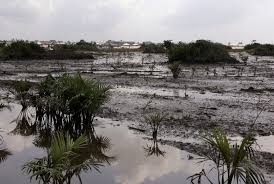
A Federal High Court in Uyo has thrown out a ₦54 billion suit filed against Mobil Producing Nigeria Unlimited, now known as Seplat Energy Producing Nigeria Unlimited, over an alleged 2014 oil spill.
The court held that the case was filed outside the period allowed by law.
The suit was instituted by representatives of Barracks, Nditia and Okposo 2 communities, who sought compensation for environmental damage linked to the spill.
The plaintiffs had urged the court to treat the incident as a “continuing injury” in a bid to avoid the limitation period.
However, the court rejected the argument, ruling that the alleged spill was a completed act that occurred in 2014 and could not be revived more than a decade later.
A central issue before the court was whether the incident amounted to a “continuing injury” or merely the lingering effects of a past occurrence.
RELATED NEWS:
- ‘A Fight You Can’t Win, Don’t Start It,’ Wike Warns Makinde Over PDP Crisis
- Makinde Accuses Wike’s PDP Faction of Backing Tinubu’s Re-election
- 2027: Makinde Meets Kwankwaso as PDP Reconciliation Stalls
Counsel to the defendant, Abasiemediong Etuk, argued that a continuing injury must involve repeated or ongoing wrongful acts, not the persistence of damage from a single event.
She maintained that the spill was a one-off incident and that any residual environmental impact did not extend the timeframe for filing the suit.
According to her, while the effects of the spill may remain, the cause of action is tied to the date the incident occurred.
In its judgment, the court agreed with the defence, describing the plaintiffs’ claim as misconceived.
It held that the alleged spill was not ongoing but a completed act with residual consequences, and ruled that the limitation period began in 2014, making the suit filed in 2026 statute-barred.

Rafiyat Sadiq is a political, justice, and human rights reporter with Pinnacle Daily, known for fearless reporting and impactful storytelling. At Pinnacle Daily, she brings clarity and depth to issues shaping governance, democracy, and the protection of citizens’ rights.