

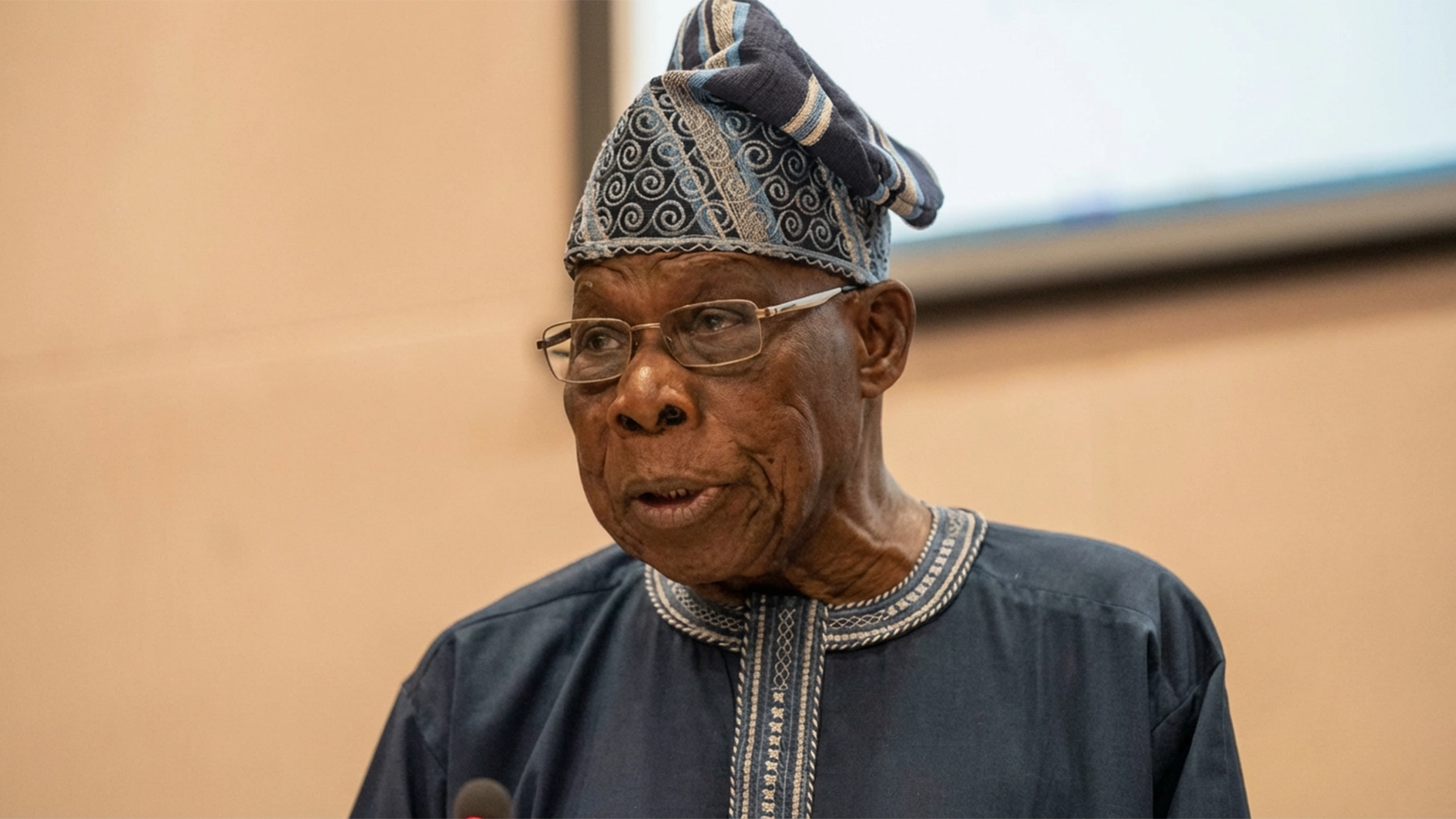
Former President Olusegun Obasanjo recounted how his administration pushed Aliko Dangote to shift from importing cement to local production, saying the policy helped drive the businessman’s expansion into cement manufacturing across Africa.
Obasanjo recalled that the effort began in 2003, when Nigeria had been producing cement for decades but still relied heavily on imports.
In a video seen by Pinnacle Daily, Obasanjo said Dangote, who was then one of the country’s major cement importers, told him that importing and selling cement was more profitable than producing it locally.
“I said, Aliko, why are you importing cement, and you are not producing cement? When the raw material for producing cement, limestone, is almost everywhere,” Obasanjo recalled.
According to Obasanjo, Dangote responded: “Because it’s more profitable for me to import cement and sell it than it is for me to produce cement, which is an honest answer.”
Obasanjo said he then asked Dangote what the government could do to make local production more attractive.
READ ALSO:
- World Bank Import Push Threatens Nigeria’s Gains- Centre
- Dangote Cement Earns More Profit Per Bag Than BUA, Lafarge
- MTN, Dangote, 24 Firms Control Over 90% of NGX Value
- FG Launches Postcode System to Improve Deliveries
- Nigeria at 66: Uwaleke Highlights Capital Market’s N163trn Growth
According to Obasanjo, Dangote proposed linking cement importation to local production.
“He said, ‘Tie my importation of cement to my production of cement,’” Obasanjo said.
The former president said the government subsequently required companies seeking to import cement to present plans for local production.
Dangote submitted a plan to produce five million metric tonnes of cement, despite Nigeria having produced less than two and a half million tonnes after decades of production, Obasanjo said.
He recalled that officials in the ministry doubted the plan and warned him that Dangote could be seeking an import licence without intending to establish the proposed production capacity.
Obasanjo said he nevertheless monitored the project closely, including through security personnel who reported whether construction work was progressing.
“One day, Aliko came to me and said, ‘Mr President, I’m worried about you. I thought I’ve done something,’” Obasanjo recalled.
He said he told Dangote that the project was important to Nigeria regardless of whether it was being developed by the government or private sector.
“Look, this project is a Nigerian project,” Obasanjo quoted himself as telling Dangote.
Obasanjo said Dangote eventually completed the first five-million-tonne cement project in Nigeria shortly before he left office and subsequently established additional five-million-tonne projects.
He said he later travelled with Dangote to Tanzania, Ethiopia and Senegal as the businessman expanded his cement operations across Africa.
Obasanjo also recounted difficulties Dangote faced in Senegal, alleging that French company Lafarge opposed his expansion and that residents were instigated to challenge the land on which his cement factory was built.
He said Dangote won the court case but had to pay $12 million before being able to operate the factory, two years after its completion.
Obasanjo said Dangote eventually expanded cement production beyond Nigeria and became a major producer across Africa.
“Aliko dominates cement production in Africa,” he said, adding that the company produces about 50 million tonnes in Nigeria for export to other African countries and about 50 million tonnes elsewhere in Africa.
Obasanjo said Dangote’s experience in cement production also helped provide the encouragement and inspiration for the businessman’s later investment in the refinery.
He credited policies implemented during his administration with helping create the conditions for Dangote and other Nigerian entrepreneurs to expand.
“If Aliko and others like him haven’t taken advantage of the policies that my administration put in place, then the story that we are celebrating today would not have been possible,” he said.
Obasanjo also said that while his initial concern was Nigeria’s self-sufficiency in cement, Dangote eventually took the ambition beyond Nigeria and expanded across Africa.
“Aliko, may you never be tired. May God continue to expand your post, and you are my boss,” he said.

Alex is a business journalist cum data enthusiast with the Pinnacle Daily. He can be reached via ealex@thepinnacleng.com, @ehime_alex on X