

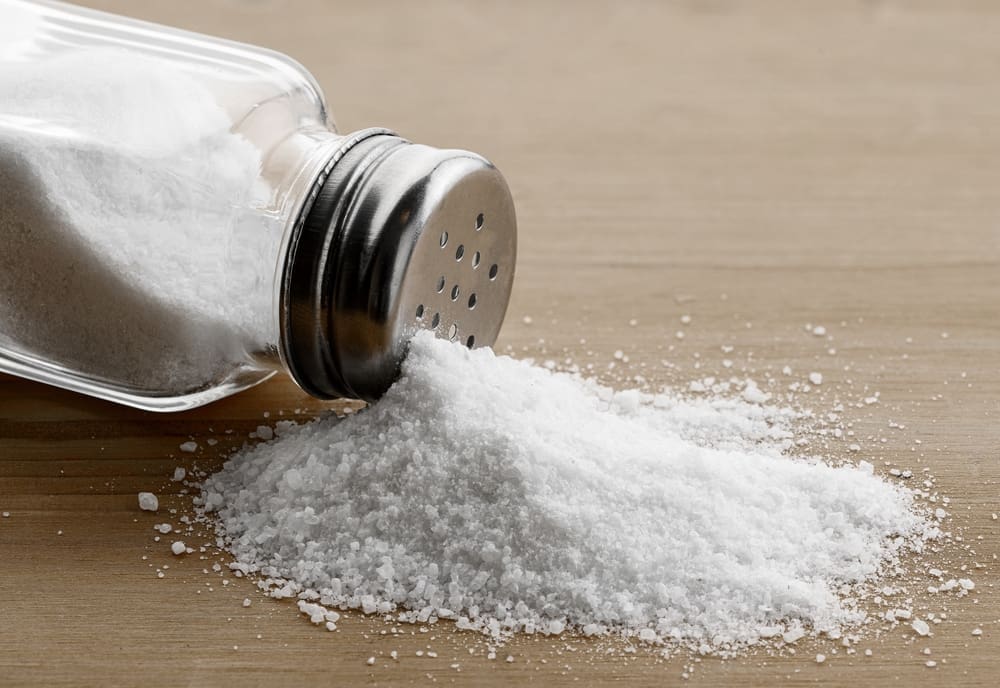
In kitchens, restaurants, and street food stalls across Nigeria, a quiet danger is being consumed daily, one that has no immediate symptoms but deadly long-term consequences. From seasoning cubes to bread and processed snacks, excessive salt intake is fast becoming a major public health concern, fuelling a surge in non-communicable diseases and placing millions of lives at risk.
At the centre of this growing alarm is a renewed push by health experts, policymakers, and civil society organisations to confront what many now describe as a “silent epidemic”.
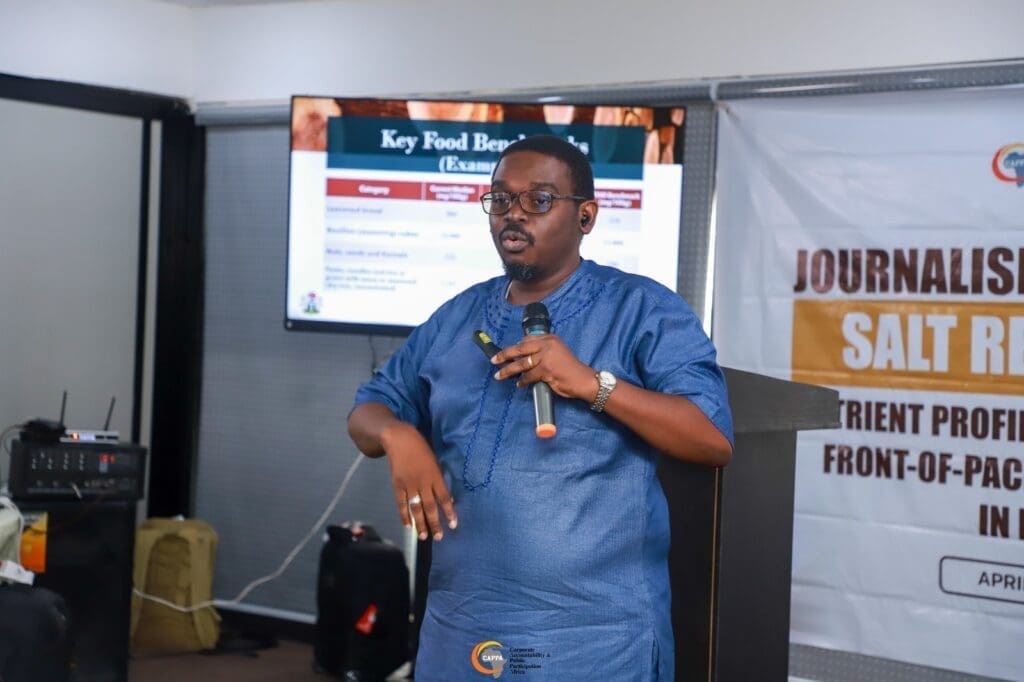
At a recent journalism training in Abuja organised by Corporate Accountability and Public Participation Africa, public health researcher and consultant Joseph Ekiyor delivered a stark warning: Nigerians are consuming far more salt than their bodies can safely handle.
“Excessive salt intake has been shown to cause high blood pressure over time, and high blood pressure is a primary risk factor for cardiovascular diseases,” he said.
The implications are dire. Cardiovascular diseases, heart attacks, strokes, and related complications remain among the leading causes of death globally, claiming close to 20 million lives each year.
Health authorities, including the World Health Organisation, recommend that adults consume no more than 5 grams of salt per day. However, Nigeria’s average daily intake is estimated at about 10 grams, double the safe limit.
“That means the average Nigerian is consuming salt in excess.
The Science Behind the Danger
Salt, while essential in small quantities, becomes harmful when consumed excessively. It increases blood pressure, leading to hypertension, a condition that often goes unnoticed until it causes severe complications such as stroke, kidney failure, or heart disease.
According to WHO-backed data, reducing salt intake by just 30 per cent globally could save up to 1.6 million lives.
“It’s not just prevention,” Ekiyor explained. “Salt reduction also lowers the risk of complications in people already living with hypertension. This is why it is considered a life-saving intervention.”
What Adults and Children Must Know About Daily Intake Limits
| SECTION | DETAILED EXPLANATION |
|---|---|
| What is the main issue? | Health experts warn that Nigerians are consuming too much salt daily, often without knowing. This excessive intake is increasing cases of high blood pressure (hypertension) and related diseases such as stroke and heart failure. |
| How much salt do Nigerians consume? | On average, Nigerians consume about 10 grams of salt per day, which is almost double the recommended safe limit. |
| What is the recommended safe intake? (World Health Organization) | Adults should consume less than 5 grams of salt per day (about one level teaspoon). This includes all salt sources, not just table salt. |
| What about children’s salt intake? | Children need even less salt than adults. Intake should be carefully controlled depending on age. Experts stress that children should not be exposed to high-salt diets early in life because it increases their long-term risk of hypertension, obesity and heart disease. |
| What does this situation mean in simple terms? | It means most people are eating almost twice the safe amount of salt daily, mainly through everyday foods, not necessarily from adding salt at the table. |
| Why is too much salt dangerous? | Excess salt causes the body to retain water, which increases blood pressure. Over time, this puts pressure on the heart, damages blood vessels, and strains the kidneys. |
| Major health risks linked to excess salt | – High blood pressure (hypertension) – Stroke – Heart disease – Kidney failure – Sudden cardiovascular death |
| Where is the salt coming from? | Most salt intake comes from processed and everyday foods, including: – Seasoning cubes (bouillon) – Bread and baked products – Instant noodles – Packaged snacks – Fast foods and restaurant meals |
| Why is it difficult to control salt intake? | Because salt is often hidden inside processed foods. Even when people stop adding salt at home, they still consume high amounts through packaged or prepared meals. |
| What are health experts saying? | Experts describe salt reduction as a simple, low-cost, life-saving intervention that can prevent millions of deaths globally if properly implemented. |
| Global health warning (impact potential) | The World Health Organization estimates that reducing salt intake by 30% globally could save up to 1.6 million lives every year. |
| What should adults do? | – Reduce salt in cooking – Limit seasoning cubes – Avoid frequent fast food and processed meals – Eat more fresh foods like fruits, vegetables, and natural proteins |
| What should parents do for children? | – Do not add extra salt to children’s meals. – Limit processed snacks and instant foods – Encourage home-cooked meals – build healthy eating habits early to prevent lifelong health risks |
| What is the key message? | Salt is necessary for the body, but excess intake is a silent killer. The danger builds over time, often without symptoms, until serious health conditions develop. |
Reducing salt intake is one of the simplest ways to protect both adults and children from life-threatening diseases. The problem is not salt itself but too much of it in everyday food.

Government Steps in with 30% Reduction Target
Recognising the urgency, the federal government has unveiled an ambitious strategy to cut Nigerians’ sodium consumption by 30 per cent over the next five years.
Also speaking at the training, Femi Stephen of the Federal Ministry of Health and Social Welfare revealed that the National Sodium Reduction Guidelines are already 70 to 80 per cent complete.
Nigeria’s current sodium intake stands at approximately 3.9 grams per day, nearly double the WHO’s recommended 2 grams. “That means Nigerians are consuming almost twice the safe level of sodium, largely driven by processed foods and dietary habits,” Stephen noted.
One of the most concerning aspects of the crisis is that high salt levels are embedded in everyday foods consumed multiple times daily.
From bread to bouillon cubes, snacks to processed meals, Nigerians are exposed to hidden sodium sources that accumulate dangerously over time.
“Our bread is significantly higher in salt compared to global benchmarks, and seasoning cubes contain extremely high sodium levels,” Stephen revealed.
To address this, the government plans to introduce sodium benchmarks across different food categories, ensuring that manufacturers gradually reduce salt content in their products.
From Guidelines to Enforcement
While Nigeria already has existing salt guidelines, experts say they lack the force of law. “Guidelines are soft law,” Ekiyor explained. “But there’s a process of moving from guidelines to regulation. When we get there, enforcement becomes possible.”
This transition is crucial. Mandatory limits would empower regulatory agencies to ensure compliance, allowing consumers to demand healthier options whether at bakeries, supermarkets, or food vendors.
The Standards Organisation of Nigeria is currently working to align food standards with these new sodium reduction targets.
Another key pillar of the government’s strategy is the introduction of Front-of-Pack Warning Labels (FOPWL) and Nutrient Profile Models (NPM). These tools are designed to simplify nutritional information, helping consumers quickly identify high-salt products without needing technical knowledge.
“Front-of-pack labelling will enable Nigerians to make healthier choices at a glance,” Stephen explained.
READ ALSO:
- Hypertension Crisis: Experts Advocate Potassium-rich Diet, Reduced Salt Intake for Nigerians
- 2.1m Unvaccinated Children Puts Nigeria at Risk of Outbreaks
- Nestlé Nigeria, Livestock Ministry Join Forces to Launch Dairy Skills Training Hub
- Why Nigeria Remains the Global Epicentre of Malaria Burden
However, experts agree that policy alone is not enough. Public awareness and behavioural change remain critical. “We are engaging schools, media platforms, and public institutions to drive awareness,” Stephen said. “Government facilities will also be encouraged to serve healthier, lower-sodium meals.”
He added that consumer demand will ultimately shape industry behaviour. “Industry responds to demand. If consumers reject high-salt products, manufacturers will adjust accordingly.”

For Akinbode Oluwafemi, Executive Director of Corporate Accountability and Public Participation Africa (CAPPA), the media has a crucial role to play in turning policy into impact. He warned that rising cases of non-communicable diseases in Nigeria are closely linked to dietary patterns driven by processed foods.
“Nigerians consume nearly double the WHO recommended daily salt intake, increasing risks of hypertension and other illnesses,” he said. Oluwafemi urged journalists to go beyond statistics and tell human stories that resonate.
“Behind the numbers are real people, families affected by hypertension and related illnesses. These stories must be told to drive change.” He also challenged the media to scrutinise industry practices, expose interference, and hold stakeholders accountable.
A Global Fight with Local Stakes
The push for salt reduction in Nigeria is part of a broader global movement to tackle non-communicable diseases through cost-effective interventions. Globally, countries are setting mandatory salt limits across food categories from bakery products to processed meals, recognising that prevention is far cheaper than treatment.
For Nigeria, the stakes are particularly high. Rising healthcare costs, reduced workforce productivity, and increasing mortality rates all point to an urgent need for action.
The evidence is clear: Nigerians are consuming too much salt, and the consequences are already unfolding in hospitals and homes across the country.
But there is hope. With stronger regulations, informed consumers, responsible industry practices, and sustained media advocacy, the tide can be turned. As Ekiyor puts it plainly, “Reducing salt is not just about diet; it’s about saving lives.”

Esther Ososanya is an investigative journalist with Pinnacle Daily, reporting across health, business, environment, metro, Fct and crime. Known for her bold, empathetic storytelling, she uncovers hidden truths, challenges broken systems, and gives voice to overlooked Nigerians. Her work drives national conversations and demands accountability one powerful story at a time.