

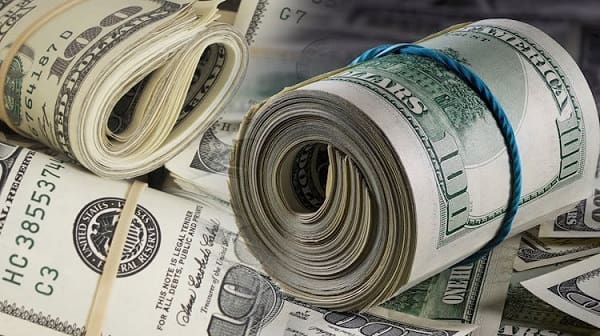
Nigeria’s external reserves have witnessed a surge in recent times, reaching a seven-year high of $46.7 billion as of November 14.
According to the Central Bank of Nigeria (CBN), the figure can provide 10.3 months of import cover in goods and services.
The CBN Governor, Olayemi Cardoso, hinted at this at the 20th Anniversary of the Monetary Policy Department meeting in November.
He said sustained inflows and renewed investor participation across various asset classes supported the surge, stressing that the accretion reflects renewed investor confidence, improved oil receipts, and stronger balance-of-payments inflows.
Cardoso added that the surge in the external reserves has been a key pillar behind the naira’s stabilisation, noting that the gap between the official and Bureau de Change windows has narrowed to below two per cent.
Check by Pinnacle Daily shows that publicly available data on the CBN website indicates that Nigeria’s gross external reserves are currently at $45.44 billion as of December 11, and were at $43.64 billion as of November 14.
Why the reserve surged
Why the figure disclosed by Cardoso was not reflected on the CBN website for public consumption: the federal government at the time successfully issued a $2.35 billion Eurobond, which was oversubscribed by $10.65 billion.
The Debt Management Office (DMO) announced this on Wednesday, November 5, Pinnacle Daily reported.
Analysts presumed that the Eurobond loan, which will further worsen Nigeria’s debt profile, put at N152 trillion as at the end of the second quarter, strengthened the external reserves.
External reserves usage
External reserves, or foreign reserves, are a country’s official holdings of foreign currencies, gold, and other liquid assets.
It is managed by the central bank to stabilise the domestic currency, fund imports, manage payment imbalances, and build international confidence in the nation’s economy.
It is the assets the apex bank holds in foreign currencies.
It is used to back liabilities, manage monetary policy, and stabilise the exchange rate.
Analysts say it plays a crucial role in a country’s economic stability.
Nigeria lags behind other African countries
Checks by Pinnacle Daily show that in Africa, several countries maintain significant external reserve buffers to mitigate economic shocks, support imports, and maintain financial credibility on the international stage.
Various credible data, including from the comprehensive economic information consortium (CEIC), Trading Economics, and the central banks’ official websites, provided records on the external reserves of the top countries examined.
Libya
According to figures released by the Central Bank of Libya, the country’s total foreign assets amounted to $99.4 billion at the end of November this year.
It shows that the country’s current external reserves reflect improving investment returns and a stronger position in managing its foreign assets.
South Africa
At the end of November, South Africa’s net foreign reserves rose to $70.02 billion, the central bank data showed.
Its gross reserves increased to $72.068 billion in November from $71.55 billion in the prior month.
Algeria
Algeria’s foreign exchange reserves were measured at $47.1 billion in Oct 2025, compared with $49.6 billion in the previous month.
Egypt
The Central Bank of Egypt (CBE) announced that the country’s net international reserves increased to $50.215 billion in November 2025, up from $50.07 billion in October.
Global ratings agency Fitch has projected that Egypt’s reserves will reach $52.6 billion by the end of the current fiscal year, after hitting a record $50.1 billion in October.
Nigeria
While the CBN disclosed that the country’s external reserves surged to a seven-year high at $46.7 billion as of November 14, publicly available data on its website shows that they currently stand at $45.44 billion as of December 11.
Morocco
Foreign exchange reserves in Morocco were measured at $41.3 billion in October, which equated to five months of import cover.
Angola
The country’s current account surplus rose to 5.4 per cent of gross domestic product (GDP) as its gross reserves increased to $15.8 billion, equivalent to 7.7 months of import cover.
This was largely due to a rebound in the country’s oil exports and reduced imports.
Kenya
The country’s foreign exchange reserves remained adequate at $12.009 billion, representing 5.2 months of import cover as of November 20.
Tunisia
The country’s foreign exchange reserves were measured at $8.4 billion in September, compared with $8.6 billion in the month before it.
A stronger buffer is needed to absorb global economic shocks
Sharing his thoughts with Pinnacle Daily, the chief economist at SPM Professionals, Dr Paul Alaje, said the surge in Nigeria’s external reserves to over $46 billion is worth celebrating, aligning with the fact that the country’s reserves have moved away from the $30 billion they were some four to five years ago.
“But what we need as a country should actually go beyond $100 billion because of the nature of the economy and our consumption pattern to cover perhaps a minimum of about 18 months of import cover.
“But what we have now is about 10 to 11 months of import cover. This has a lot to do with stability, and it also has to do with confidence in our currency,” Alaje said.
He stressed that any major push would generally affect the exchange rate if Nigeria had any setback in its currency.
“To that effect, I think it is worth celebrating, but the celebration should not be to go and relax. We should know that the goalpost is a minimum of $100 billion. That is what we should be looking at.
“But you know the benchmark has been very low for a long time. So, perhaps that is why we have to first celebrate what we have, but that should not be our limit. Our limit should go far beyond that,” Alaje maintained.
He explained that the reason the apex bank should hold a minimum of $100 billion in external reserves is that when there is a global economic shock, if Nigeria’s reserves are very low, the shock could quickly and almost immediately impact the exchange rates.
Also, is that when it comes to production, manufacturers need to stock their machinery and get some quality imports into the country, which also affects the country’s reserves?
“The good news is that we now have Dangote Refinery that has helped us reduce our PMS [premium motor spirit] and diesel import by nearly 50 per cent, which I think is largely commendable,” he said.
With this input from the Dangote refinery, he believes that Nigeria’s reserve may not go low if the CBN properly manages the entire system.
“If we manage the system really well, then our reserve may not be as low as it has always been.
“But honestly, if we don’t, then we should be ready to have a much lower reserve in the coming period,” Alaje maintained.
He urged the apex bank to remain disciplined in the face of fiscal pressure that might influence its monetary policies.
“I think the central bank should remain very disciplined, the way it has been. Discipline is key.
“The fiscal side is responsible for most of the electionary spending that we have, which most of the time has a negative impact on the entire reserve of the country.
“So discipline by CBN is what can help us as a people and make sure that there is justification for every single dollar that leaves the vault.
“If it is not justified honestly, the little gain we have made in the last one and a half years or thereabouts may disappear overnight,” Alaje warned.

Alex is a business journalist cum data enthusiast with the Pinnacle Daily. He can be reached via ealex@thepinnacleng.com, @ehime_alex on X