

By Esther Ososanya
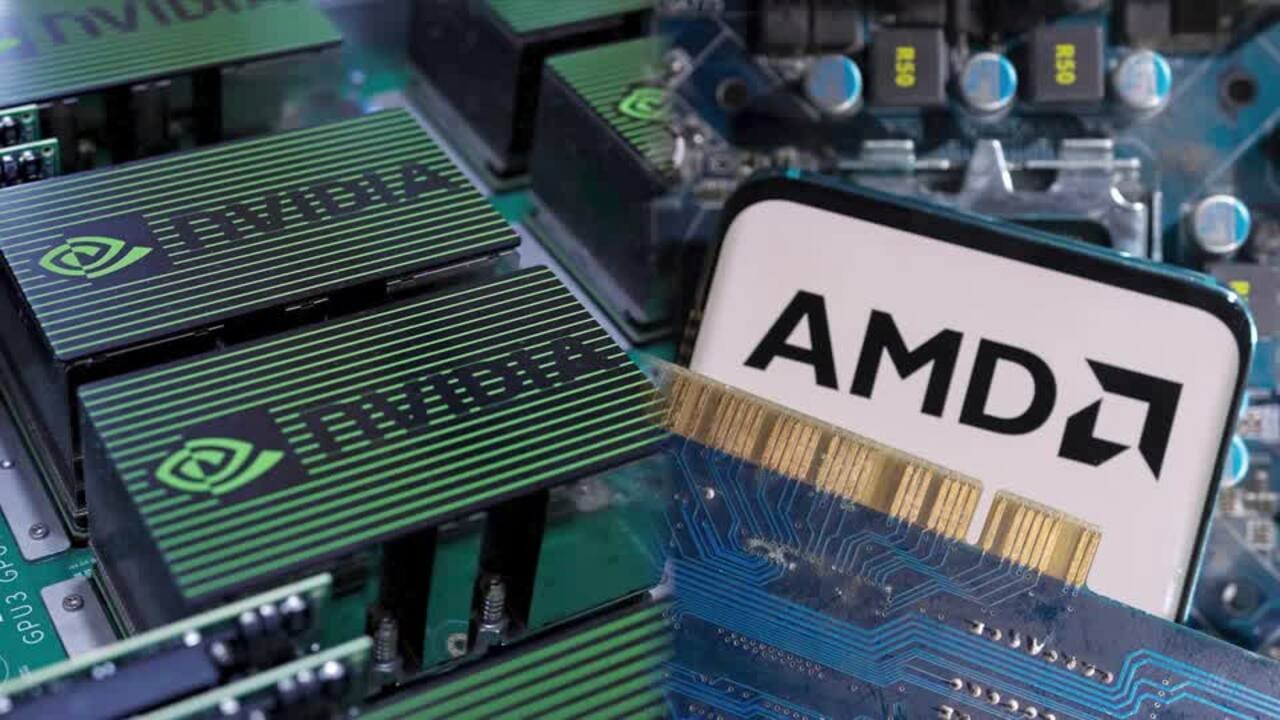
Nvidia and AMD have agreed to give the U.S. government 15% of revenue from sales to China of advanced computer chips, a U.S. official said on Sunday, in an unusual move likely to unsettle U.S. companies.
U.S. President Donald Trump’s administration halted sales of H2O chips to China in April, but Nvidia announced last month that Washington had said it would allow the company to resume sales and it hoped to start deliveries soon.
Another U.S. official said on Friday that the Commerce Department had begun issuing licenses for the sale of H20 artificial intelligence chips to China. Shares of Nvidia and AMD fell 1.8% and 3.3%, respectively, in pre-market trade on Monday.
The deal to pay the U.S. government from sales in China is unusual for a president and marks Trump’s latest intervention in corporate decision-making. He harangues company executives to invest in America to shore up domestic jobs and manufacturing and demanded last week new Intel (INTC.O) CEO Lip-Bu Tan immediately resign, calling him “highly conflicted” due to his ties to Chinese firms.
Industry Voices and National Security Debate
“It’s wild,” said Geoff Gertz, a senior fellow at the Centre for New American Security, an independent think tank in Washington, D.C. “Either selling H2O chips to China is a national security risk, in which case we shouldn’t be doing it to begin with, or it’s not a national security risk, in which case, why are we putting this extra penalty on the sale?”
When asked if Nvidia had agreed to pay 15% of revenues to the United States, an Nvidia spokesperson said in a statement, “We follow rules the U.S. government sets for our participation in worldwide markets.”
The spokesperson added, “While we haven’t shipped H20 to China for months, we hope export control rules will let America compete in China and worldwide.” AMD did not respond to a request for comment on the news. The U.S. Department of Commerce did not immediately respond to a request for comment.
China’s foreign ministry, approached for comment on Monday, said that China had repeatedly expressed its position on the issue of U.S. chip exports to China.
The ministry in the past has accused the U.S. of using technology and trade issues to “maliciously contain and suppress China”. The chipmakers agreed to the arrangement as a condition for obtaining the export licences for their semiconductors, including AMD’s MI308 chips. The report said the Trump administration had yet to determine how to use the money.
Commerce Secretary’s Justification
U.S. Commerce Secretary Howard Lutnick said last month the planned resumption of sales of the AI chips was part of U.S. negotiations with China to get rare earths and described the H20 as Nvidia’s “fourth-best chip” in an interview with pressmen.
Lutnick said it was in U.S. interests to have Chinese companies using American technology, even if the most advanced was prohibited from export, so they continued to use an American “tech stack”.
READ ALSO: Trump Administration Opposes Global Plastic Treaty
The U.S. official said the Trump administration did not feel the sale of H20 and equivalent chips was compromising U.S. national security. The official did not know when the agreement would be implemented nor exactly how but said the administration would be in compliance with the law. Alasdair Phillips-Robins, who served as an adviser at the Commerce Department during former President Joe Biden’s administration, criticised the move. “If this reporting is accurate, it suggests the administration is trading away national security protections for revenue for the Treasury,” Phillips-Robins said.
Nvidia generated $17 billion in revenue from China in the fiscal year ending January 26, representing 13% of total sales. AMD reported $6.2 billion in China revenue for 2024, accounting for 24% of total revenue.

Esther Ososanya is an investigative journalist with Pinnacle Daily, reporting across health, business, environment, metro, Fct and crime. Known for her bold, empathetic storytelling, she uncovers hidden truths, challenges broken systems, and gives voice to overlooked Nigerians. Her work drives national conversations and demands accountability one powerful story at a time.