

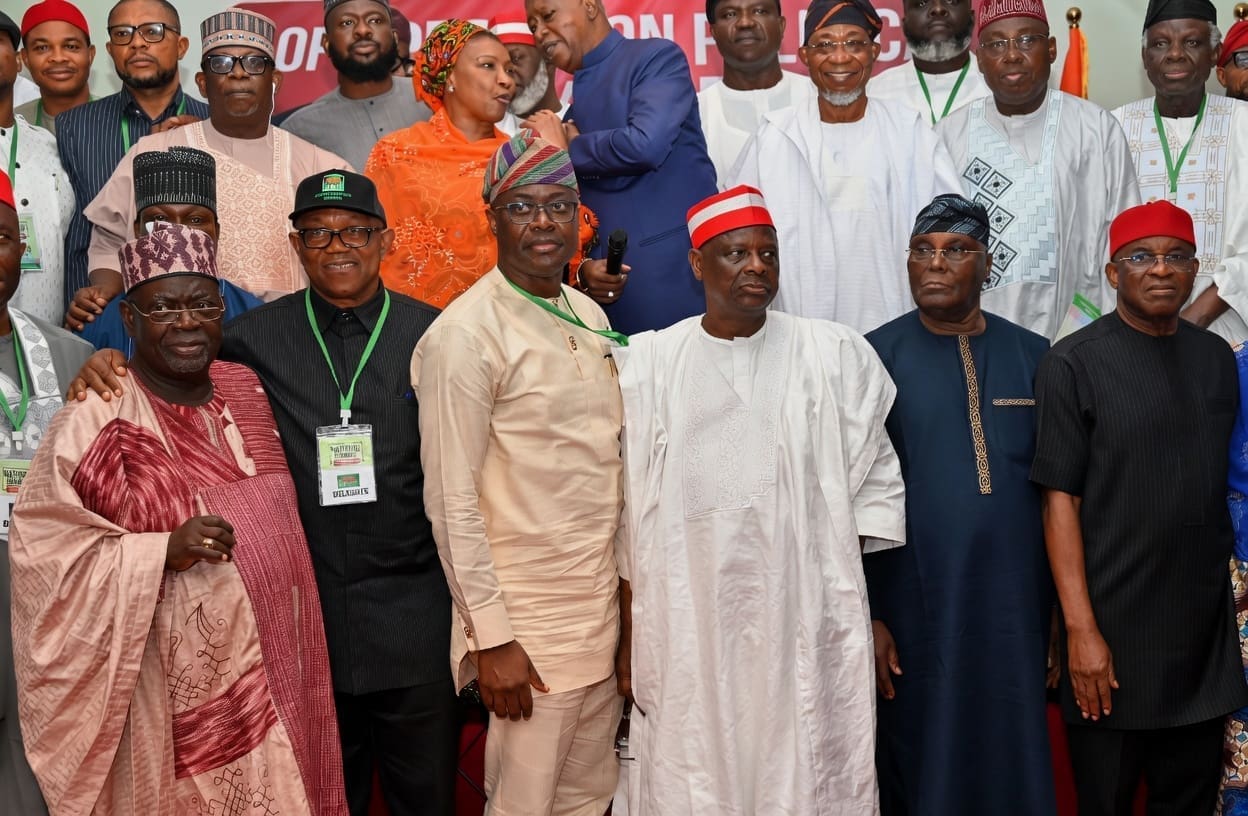
Efforts by Nigeria’s opposition bloc to rally behind a single presidential candidate for the 2027 elections seem to be suffering setbacks, following emerging divisions after the Ibadan summit. Analysts say the developments may favour the ruling All Progressives Congress (APC).
While leaders at the meeting signalled a shared resolve to challenge President Bola Ahmed Tinubu, cracks appeared almost immediately.
Disagreements among key players, including a faction of the African Democratic Congress (ADC) led by Nafiu Bala, which rejected the summit’s outcome, and the African Action Congress (AAC) led by Omoyele Sowore, which also pulled away, have cast doubt on the strength of the proposed alliance.
The summit, hosted by Oyo State Governor Seyi Makinde, brought together major opposition figures such as former Vice-President Atiku Abubakar, Labour Party’s 2023 presidential candidate Peter Obi, and former Kano State governor Rabiu Musa Kwankwaso.
Beyond political differences, the opposition faces institutional constraints that limit its room for manoeuvre.
Nigeria’s electoral system requires all candidates to run under a single party platform, leaving little flexibility for coalition-style arrangements.
Timeframes for party primaries, mergers and consensus building are also tight, making coordination difficult.
These pressures are compounded by internal disputes within parties and overlapping ambitions among leading contenders.
Legal, Structural Barriers Persist
Beyond internal disagreements, the opposition also faces legal and structural constraints.
Nigeria’s electoral framework requires candidates to run under a single political party, while timelines for primaries, mergers, and consensus arrangements leave limited room for last-minute alliances.
These challenges are compounded by ongoing intra-party disputes and competing presidential ambitions among leading figures.
RELATED NEWS:
- How Ibadan Convention Deepened PDP Crisis – Saraki
- Turaki-led PDP to Appeal Court Ruling Nullifying Ibadan Convention
- Umar Sani Faults Court Judgment Nullifying PDP Ibadan Convention
Mixed Reactions Trail Opposition Push
Despite the disagreements, the Ibadan summit is seen as part of ongoing efforts by opposition leaders to forge alliances ahead of the next general elections.
Political economist Prof. Pat Utomi described the declaration as a call for national mobilisation, saying the choice of Ibadan was symbolic and reflected a willingness among political actors to put aside personal interests.
He urged opposition parties to unite around a new policy direction focused on production, discipline and inclusive growth.
APC Dismisses Coalition, Faults Makinde
The APC has moved to capitalise on the situation, describing the proposed coalition as disorganised and lacking credibility.
Speaking on Sunday Politics, a Channels Television programme, APC National Publicity Secretary, Felix Morka, said discussions at the summit were largely focused on attacking the ruling party.
He described the meeting as a repetition of what he called “reckless, baseless and unfounded allegations” against the APC.
“When they gathered in Ibadan, you would expect them to focus on their plans for Nigeria. Instead, they spent their time talking about the APC,” he said.
Morka added that the internal arrangements of opposition parties were not a concern for the ruling party.
“Whether they come together under one candidate or not is entirely their business. When the time comes, we will participate fully in the election, and they should also prepare,” he said.
Meanwhile, the APC’s National Secretary, Ajibola Basiru, mocked former Vice-President Atiku Abubakar after a photo surfaced showing him apparently dozing during the event.
Basiru described the gathering as unserious and questioned its legitimacy.
The Oyo State chapter of the party also dismissed the summit as a coalition of failed political actors, accusing its conveners, including Governor Seyi Makinde, of lacking the credibility to present a viable alternative to Nigerians.
PDP Defends Makinde, Blames APC
The Peoples Democratic Party (PDP) countered the APC’s claims, accusing President Tinubu, the ruling party and key institutions of fuelling political tension ahead of the 2027 elections.
In a statement by its National Publicity Secretary, Ini Ememobong, the PDP defended Makinde, saying his reference to past violence was intended as a warning rather than a threat.
According to the party, the governor used history to caution against suppressing opposition voices, noting that political repression and rising public frustration could trigger serious consequences.
ADC Faction, Sowore Reject Summit
The Nafiu Bala-led faction of the ADC distanced itself from the Ibadan gathering, insisting it was not part of the summit.
In a statement by its Director of Media and Public Affairs, Christopher Okechukwu, the faction described the meeting as a platform for individuals pursuing personal ambitions and said those who attended under the ADC banner were not recognised as members.
It reaffirmed its readiness to participate fully in the 2027 elections and to field candidates for all elective positions.
Similarly, human rights activist and AAC presidential candidate in 2023, Omoyele Sowore, however, distanced himself from the opposition summit, describing it as an attempt to recycle discredited political actors.
Sowore disclosed in a post on his X page that he was invited to the gathering but declined to attend, insisting that Nigerians deserve a genuine alternative rather than what he termed a “charade”.
“There is no need to pretend that the same men (and a few women) who held Nigeria to ransom for years, presiding over stagnation, corruption and systemic decay, can suddenly reinvent themselves as champions of progress or defenders of the people,” he said.
Conclusion
The Ibadan meeting underscored a shared desire among opposition leaders to work together, but it also revealed lingering divisions, legal hurdles and competing ambitions.
While the push for a united front remains alive, its success will depend on how quickly those differences are resolved.
For now, both the opposition and the ruling APC appear to have openings—one seeking cohesion, the other benefiting from the gaps.

Rafiyat Sadiq is a political, justice, and human rights reporter with Pinnacle Daily, known for fearless reporting and impactful storytelling. At Pinnacle Daily, she brings clarity and depth to issues shaping governance, democracy, and the protection of citizens’ rights.