

The International Monetary Fund (IMF) has lowered Nigeria’s economic growth forecast for 2026 to 4.1 per cent, citing the impact of the ongoing Middle East war on energy prices and global supply chains.
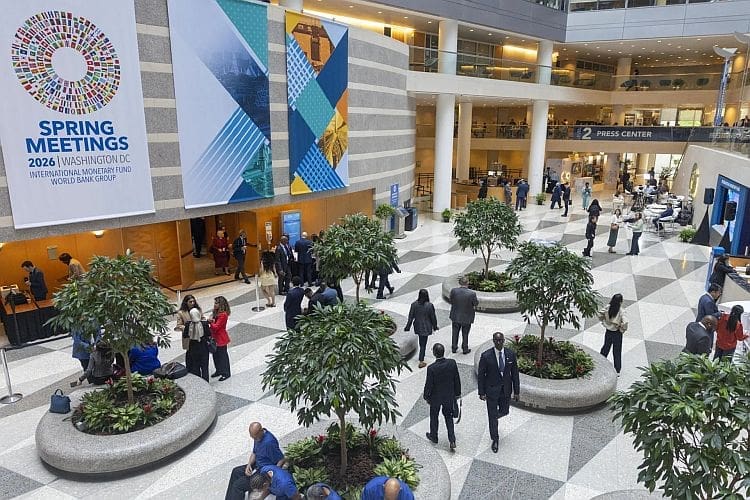
The downgrade was announced during the IMF and World Bank Spring Meetings in Washington, D.C., where officials warned that rising fuel costs and supply disruptions are weakening economic recovery across Sub-Saharan Africa.
According to the IMF Chief Economist, Pierre-Olivier Gourinchas, the revision reflects mounting pressure on countries that rely heavily on imported energy.
“On Sub-Saharan Africa, we are seeing some downgrade of growth, and we are seeing some uptick in inflation in a number of countries in the region.
“The impact is very much along the lines of what we see more broadly — for a lot of the countries, especially the ones that are energy importers,” Gourinchas said.
He added that the Fund is engaging with affected countries to assess their needs and is working closely with global institutions to address disruptions in energy markets.
Further explaining the downgrade, Denz Igan of the IMF’s Research Department said the cut reflects competing economic pressures.
READ ALSO:
- Oil Prices Surge Further as Middle East War Sustains Supply Disruption
- U.S.-Iran War: More Pressure on Domestic Fuel Prices as Oil Rises Above $100
- Tinubu Approves ₦3.3trn for final settlement of Power Debt
- African Subsidiaries Drive Profit Surge for Zenith, GTBank
“War-related higher fuel and fertiliser prices and higher shipping costs are going to weigh on non-oil activity in Nigeria.
“There’s some offset coming from higher oil prices, but the net balance is weaker growth in 2026, with some recovery built in for 2027,” Igan said.
The IMF also warned that inflation across Sub-Saharan Africa is expected to rise from 3.4 per cent in 2025 to five per cent in 2026, driven by higher oil and fertiliser prices, possible fuel shortages, and rising logistics costs.
It noted that Nigeria’s tight monetary policy will play a key role in keeping inflation under control, even as external pressures build.
In addition, the Fund highlighted a sharp drop in financial support to the region, with bilateral aid falling by as much as 20 per cent in 2025—removing a key cushion at a time when economies are facing rising costs.
Pinnacle Daily reports that the World Bank also revised Nigeria’s growth outlook downward in its April 2026 Africa Economic Update, aligning with the IMF’s 4.1 per cent projection for 2026.
The bank had earlier forecast 4.4 per cent growth but now expects a slower expansion, with projections of 4.2 per cent in 2027 and 4.3 per cent in 2028.
Despite the downgrade, the World Bank said Nigeria’s services sector—particularly ICT, finance, and real estate—will remain the main driver of growth, while agriculture and industry continue to face structural challenges.
It also projected that inflation in Nigeria will gradually ease from 23 per cent in 2025 to 14.9 per cent in 2026, before slowing further to 10.7 per cent by 2028, supported by tighter policies and improving supply conditions.

Alex is a business journalist cum data enthusiast with the Pinnacle Daily. He can be reached via ealex@thepinnacleng.com, @ehime_alex on X