

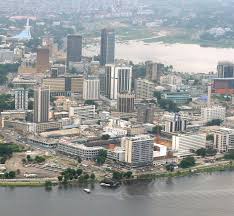
As Côte d’Ivoire prepares for President Alassane Ouattara’s fourth term in office, the nation finds itself at a defining crossroads. On one hand, it is celebrated across the continent as an economic success story, a country that has managed to sustain robust and uninterrupted growth for more than a decade.
On the other hand, deep inequalities, heavy dependence on a single economic hub, and a fragile political environment continue to cast long shadows over its development trajectory.
International observers agree on one point: Côte d’Ivoire has become one of Africa’s fastest-growing economies. Since emerging from the bitter political crisis of 2010–2011, the country has posted some of the strongest GDP growth rates on the continent, transforming itself into a regional economic engine. But behind the impressive figures lies a complex reality, one that raises pressing questions about sustainability, inclusiveness, and political stability.
READ ALSO: Plight of Nigerians in Côte d’Ivoire: VDM Doing More Than Govt. Agencies – Diaspora Community
Economist Modibo Mao Makalou provides critical insight into what makes Côte d’Ivoire’s growth exceptional. While rapid growth is common in countries recovering from conflict, he notes that the Ivorian case is unique because it has persisted far beyond the immediate aftermath of the crisis.
“Since the end of the political crisis in 2011, Côte d’Ivoire has recorded one of the highest growth rates on the continent,” Makalou explains. “This momentum is expected to continue into next year, with growth potentially reaching up to 8%.”
Indeed, Côte d’Ivoire has become a magnet for investment, driven by infrastructural development, agricultural expansion, and strong performance in telecommunications, construction, and energy. Yet the Malian economist warns that not all Ivorians are feeling the impact.
Despite the glowing macroeconomic indicators, inequalities remain stark. Makalou highlights one structural challenge: the overwhelming concentration of economic activity in Abidjan.
“The structure of Côte d’Ivoire’s economy is largely based on the tertiary sector, with activities concentrated in Abidjan,” he says, adding that “This metropolis alone accounts for almost 90% of the country’s economy.”
The result is a widening gap between the urban elite and the rural population. Job opportunities, investment, and essential services are unevenly distributed, fueling frustration in regions left behind. Compounding the problem is the vast informal sector, which represents about 80% of economic activity. This limits tax revenue, reduces economic stability, and exposes workers to precarious conditions with little social protection.
Political Stability: The Delicate Thread Holding the Economy Together
While Côte d’Ivoire enjoyed a relatively peaceful presidential election in October 2025, the country’s history of violent political transitions remains fresh in the minds of citizens and investors.
“In Côte d’Ivoire, politics and the economy are intrinsically linked,” Makalou stresses. “Money doesn’t like noise. Investments dislike uncertainty and instability.”
Periods of political tension have historically led to capital flight, delays in investment decisions, and declines in growth. The upcoming legislative elections scheduled for the end of the year are already being watched closely.
“These elections were a sword of Damocles,” Makalou notes. “We must see how the next one will unfold.”
Despite these risks, the economist remains cautiously optimistic. If political stability holds, Côte d’Ivoire could reach its ambitious goal of attaining upper-middle-income status by 2030, as envisioned in the National Development Plan (PND 2021–2025).
READ ALSO: Top 10 World’s Longest-serving Leaders Who Turned Power into a Lifetime Trophy
While Côte d’Ivoire contends with inequality and political fragility, Senegal faces a different challenge, an economic tremor triggered by what experts describe as hidden debt estimated to exceed $11 billion.
Economist Dr. Seydou Bocoum outlines the stark choices facing the government:
“Senegal has two options: borrow to repay the debt, known as leveraging, or turn to monetary creation where the central bank purchases the debt,” he tells Africanews.
However, the situation is complicated by Senegal’s inability to secure a new loan from the International Monetary Fund. This leaves the country navigating a precarious fiscal landscape, with rising public anxiety and limited room to manoeuvre.
The crisis could have ripple effects on regional stability, investor confidence, and West Africa’s economic integration efforts.
Africa’s Ports Turn to Digitalization to Boost Competitiveness
Amid these economic challenges, one area is showing promise across the continent: the digital transformation of African ports.
From Dakar to Abidjan and Lagos, ports are increasingly adopting digital tools to address long-standing operational bottlenecks. A growing number of startups are working with port authorities to modernize systems and speed up processes.
These digital solutions tackle:
- Delivery delays
- Excessive paperwork
- Cargo tracing challenges
- Security and risk management
- Inefficient communication between stakeholders
By automating key services, African ports hope to strengthen their competitiveness in the global maritime sector, reducing costs, improving turnaround time, and attracting new investment.
READ ALSO: 25 Countries With Lowest Salaries
Côte d’Ivoire’s growth story, Senegal’s debt troubles, and the push for port digitalization present a revealing snapshot of Africa’s evolving economic landscape. The continent is full of momentum, ambition, and potential, but also deeply affected by governance challenges, global economic pressures, and the need to ensure that growth is inclusive and sustainable.
As the region marches toward 2030, the choices made today in politics, finance, and technology will determine whether Africa’s economic rise becomes a shared success story or remains uneven and fragile.

Esther Ososanya is an investigative journalist with Pinnacle Daily, reporting across health, business, environment, metro, Fct and crime. Known for her bold, empathetic storytelling, she uncovers hidden truths, challenges broken systems, and gives voice to overlooked Nigerians. Her work drives national conversations and demands accountability one powerful story at a time.