

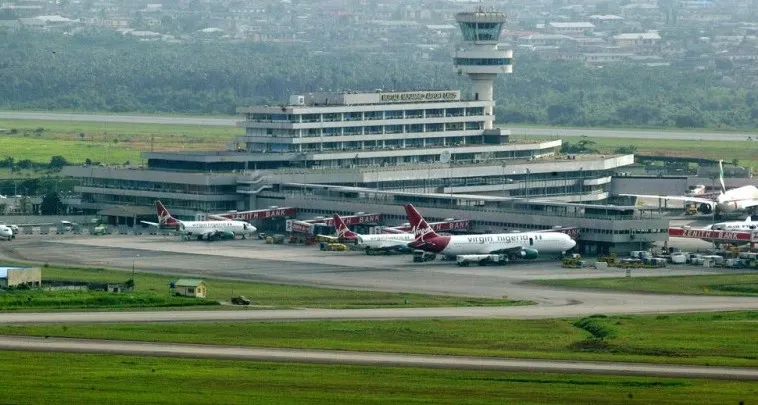
Aviation industry stakeholders have expressed concerns about the implications of the proposed additional security levy imposed on international travelers flying into or out of Nigeria.
The additional $11.50 charge on passengers’ tickets for the Advance Passenger Information System (APIS) is set to take effect on December 1, 2025. For a round trip, this translates to an extra $23 per passenger.
The charge, announced by the Nigeria Civil Aviation Authority (NCAA) in partnership with the Nigeria Immigration Service, will be collected at the point of ticket sales by airlines, who will be responsible for remitting it to the NCAA.
The purpose, according to the aviation regulator, is to fund the APIS, a digital platform that collects and verifies passenger information before flight arrival/departure to enhance security and border control.
Adding to the existing $20 security fee, the new charge raises the total security levy on an international ticket to $31.50.
In a notice to airlines, the NCAA said the collection, which may last for 20 years, would facilitate passenger clearance at Nigerian airports by collecting and processing passenger data before their arrival.
The agency claimed that it will also assist in tracking passenger movements, improving border control, and providing airlines with a cost-recovery mechanism for system maintenance.
“The APIS charge will be collected as a point of sale and will be levied on all tickets issued from December 1, 2025, for each passenger departing from or arriving in Nigeria,” part of a memo issued by the NCAA to airlines read.
READ ALSO: How Nigerian Airlines lost N7.5trn to Overseas Maintenance in 5 Years
“The lifting airline is responsible for remitting the APIS charge to the NCAA,” it added.
The agency urged all airlines operating international flights into and out of Nigeria to take immediate steps to update their ticketing and reservation systems to reflect the new APIS charge.
Though the civil aviation regulator argues that the move is in line with international best practices and the International Civil Aviation Organisation (ICAO) standards, industry analysts, however, believe that the levy has significant implications for travel costs, passenger security, and Nigeria’s tourism sector.
According to the memo, the NCAA specifically exempted airline crew on duty, diplomats, transit/transfer passengers within 24 hours, and infants. Also, exempt from the new levy are passengers who encounter what it describes as “involuntary re-routing” due to technical faults or weather circumstances.
This new charge is another addition to a long list of charges, including: $100 Passenger Service Charge collected by the Federal Airports Authority of Nigeria (FAAN), 5 per cent Ticket Sales Charge (TSC), 5 per cent Cargo Sales Charge (CSC) and Value Added Tax (VAT) on tickets, among other airport and passenger charges.
Too Much Tax Affects Good for Industry Growth
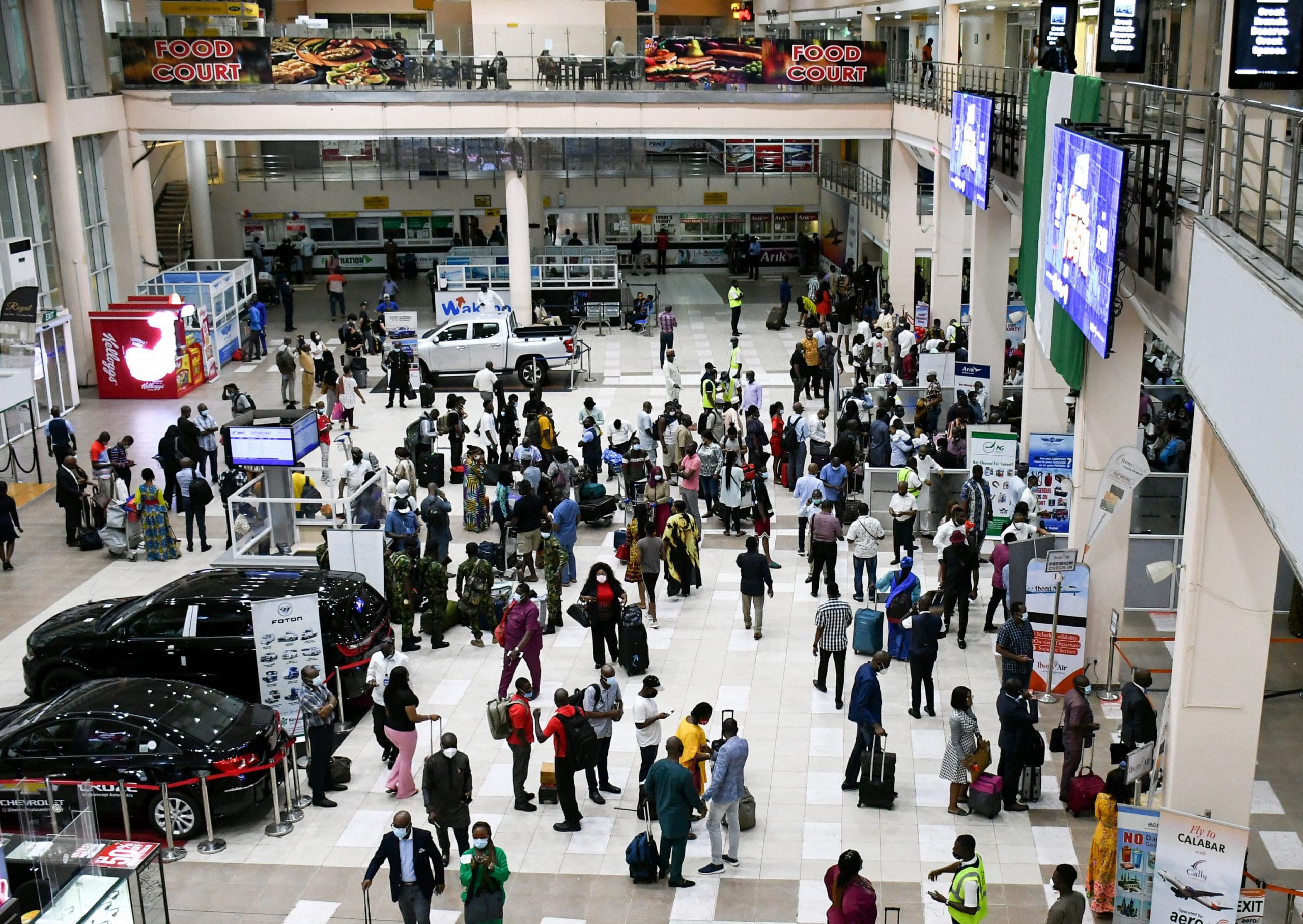
Secretary-General of the Aviation Roundtable, Olumide Ohunayo, said the new charge adds to the burden faced by passengers and airlines in the Nigerian aviation system.
In an interview with Pinnacle Daily, Ohunayo said that in many countries, the APIS service is free, as it is part of the system that enhances security.
He said the charge will be included in the ticket, leading to an increase in airfare on the international route.
He highlighted various taxes imposed on airlines and passengers, stating that it is making Nigeria less competitive in attracting tourists when compared to other countries, both within the West African region and other parts of the world.
READ ALSO: NCAA Summons Domestic Airlines over Passengers’ Flights Delay, Cancellation
He called on the government to review the tax to relieve the burden on travellers, stressing that there is no reasonable justification for it.
“I think the tax is too much, the government should review that $11.5 dollar, there is no reason for that. You don’t tax the industry to kill it,” Ohunayo stated.
The aviation analyst urged the authorities to adopt policies and actions that encourage more passengers to travel. He stressed that as more passengers travel, the authorities are able to generate more revenue that boosts the economy and helps the agencies in financing their activities.
He said the NCAA is currently among the top 10 generators of revenue for the Federal Government, arguing that such is a wrong practice for an industry regulator.
“As of today, the Nigerian Civil Aviation Authority is among the top 10 generators of revenue for the Federal Government. That is wrong. A regulator being among the top 10 generating money for the federal Government shows that the system is built to milk users of the system and other service providers in the ecosystem. It is not right for the regulator to be among the highest revenue generators, and now that they have added this $11.5 per trip. That thing should be reviewed and removed immediately.”
Multiple Taxation for Similar Services
The public and industry experts are questioning why a new $11.5 fee is needed for passenger data collection when a $20 security fee already exists. The justification that the old fee is for “personnel and equipment” and the new one is for “system infrastructure” is seen as a bureaucratic distinction without a real difference to the passenger.
Speaking to Pinnacle Daily, an aviation security expert, Group Captain John Ojikutu (rtd), said the proposed $11.5 per passenger amounts to multiple taxation.
Ojikutu warned that the authorities should be careful about the kind of charges collected, even when they are not being accounted for.
He highlighted other existing charges imposed on passengers through airlines, such as the $20 meant for the security levy, the five per cent Ticket Sales Charge (TSC) and Cargo Sales Charge (CSC), and $100 Passenger Service Charge (PSC).
He queried the difference between the $20 security levy and the new $11.5 fee. “What’s the difference between this new $11.50 and the $20 already being collected?” he asked. “All these things they are saying now, I do not understand. If they are looking for money, they have sufficient money they are collecting, and they are not accounting for it.”
He expressed concerns that this levy is coming at a time when Nigeria’s passenger traffic is dropping. “We are supposed to have about 20 million passengers in a year, but that has not been the case,” he stated.
READ ALSO: Between Using Flight Mode and Switching Off Phone During Flight: Time to Rethink
It has been established that there is a strong interdependence between air transport and tourism, and they play a crucial role in economic growth. Industry report indicated that there were about 1.3 billion international tourists recorded in 2023, and 56 per cent of them travelled by air.
A review done by the African Airline Association (AFRAA) in 2024 revealed that Nigeria is the third most costly country in Africa for flight ticket taxes and charges. The report, which is a review of data on taxes, charges, and fees collected by the International Air Transport Association (IATA) indicated that Nigerian international air travelers pay an average of $180 in taxes per departure and arrival. This is 264 per cent more than the average in other African countries. According to the chart of the top 10 most expensive countries for international departures, Gabon is the highest with $ 297.7, followed by Sierra Leone with $294.
The additional charge further increases the financial burden on travelers and could incentivize more people to use neighboring countries’ airports for their travels. This, according to analysts, underscores the need for more efforts to enhance the efficiency of these sectors.
READ ALSO: Nigeria’s Aviation Sector Generates $2.5bn, 217,000 Jobs Annually
Some experts said the APIS is a national security programme, and queried why the authorities should impose an $11.50 charge on passengers.
There are also concerns about whether the collected funds will lead to visible improvements, as past levies have not resulted in significant infrastructure upgrades.
Pinnacle Daily reports that 2024 data shows 4.3 million international passengers, a 6.5 per cent increase from 4.04 million the previous year. Based on this figure, the NCAA is estimated to generate approximately $49.45 million per year if the fee is implemented in December 2025. Over 20 years, revenue is expected to reach about $989.9 million (₦1.42 trillion) at a current exchange rate of ₦1,436 per dollar.
Efforts to get comments from the Director, Public Affairs and Consumer Protection, NCAA, Michael Achimugu, on the matter were unsuccessful as he did not respond to email and text messages as of press time.
There are concerns that the growing cost disparity makes it even more attractive for travelers to fly from neighbouring countries like Accra (Ghana), Cotonou (Benin), or Lome (Togo).
This practice, known as “airport shopping,” drains the Nigerian economy of revenue that should go to local airlines, airports, hotels, and other service providers.
According to the 2024 AFRAA review, international air travellers spent an average of $ 111.5 in Ghana, and $123.4 in the Benin Republic.
While the intention of the government to enhance security through the APIS is valid, critics have questioned the method of funding it through a direct, additional passenger levy, stressing that it creates more burden for travellers, as it adds to the already high cost of flying from Nigeria, impacts on the tourism economy and risks pushing more passengers to use airports in other countries.

Victor Ezeja is a passionate journalist, scholar and analyst of socioeconomic issues in Nigeria and Africa. He is skilled in energy reporting, business and economy, and holds a master's degree in Mass Communication. He can be reached via @VICTOREZEJA on X