

The Nigerian Securities and Exchange Commission (SEC) has raised concern over the slow pace of regional integration of the capital markets in West Africa, warning that each year of delay is a lost opportunity to mobilise resources for critical projects that can transform our economies.
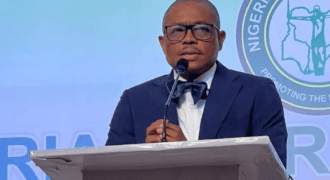
Sec Director-General, Emomotimi Agama raised the concern at a meeting on validation of the West Africa Securities Regulators Association (WASRA) Charter and recognition of the body as the regulator for the cross-border securities market in ECOWAS, on Thursday, October 2 in Abuja
He urged West African countries to accelerate the integration of their capital markets, describing it as the only way to mobilise the scale of investment needed to drive the region’s development.
He noted that Africa faces an annual infrastructure financing gap of over $100 billion, stressing that West Africa alone requires tens of billions of dollars to modernise transport corridors, upgrade energy systems, and build resilient digital infrastructure.
READ ALSO: Business Activity Moderates as PMI Slid to 53.4 Points in September
“Without integrated markets that pool liquidity and broaden investor participation, our governments and private sector will remain constrained, relying on limited fiscal space and expensive borrowing,” Agama said.
Agama, the chairman of WASRA, said the initiative represents “a watershed moment” in the region’s financial history.
He noted further that West Africa faces urgent developmental challenges ranging from infrastructure deficits and climate adaptation to digital transformation and job creation.
“To meet these challenges, we require capital at scale, and the truth is simple: no single national market can provide it alone. An integrated regional capital market is no longer a luxury; it is a necessity,” Agama maintained.
He cited that the European Union and the Association of Southeast Asian Nations (ASEAN) have achieved significant economic transformation by harmonising rules, fostering investor confidence, and facilitating seamless cross-border funding.
READ ALSO: Nigeria’s Aviation Sector Generates $2.5bn, 217, 000 Jobs Annually
“The creation of a single market enabled European firms to access funding seamlessly across borders, boosting innovation and competitiveness. Closer to home, ASEAN coordinated standards and deepened financial cooperation, strengthening its resilience as a regional bloc,” the SEC boss said.
He emphasised that West Africa, with its population of more than 400 million and a combined gross domestic product (GDP) of about $800 billion, has even greater potential, cautioning that potential means little without decisive action.
“In agriculture, integrated markets can mobilise capital for value-chain development, agro-processing, and food security, which are critical priorities for our region.”
“In the digital economy, regional capital can support innovation hubs, fintech scale-ups, and broadband expansion, ensuring that West Africa fully participates in the fourth industrial revolution,” Agama highlighted.
He further stressed that cross-border pools of capital, backed by harmonised regulation, could deliver “transformative impact” across multiple sectors, including youth empowerment and job creation.
According to, Agama, the WASRA is established with a clear mandate to anchor market integration.
READ ALSO: Beware of AI-Generated Investment Scams, SEC Warns Nigerians
“First, to contribute to the establishment of appropriate mechanisms for the regulation of capital markets; ensuring their proper functioning and the protection of investors. This speaks directly to the heart of investor confidence, without which no market can thrive,” he said.
He added that WASRA would foster integration through joint programmes and common projects, promote mutual assistance across the region, and set common standards for effective regulation.
“Integration is not only about policy declarations; it is about practical collaboration and shared initiatives that deliver results for our markets and our people,” Agama stressed.
He called on policymakers, especially finance ministers within ECOWAS, to champion the WASRA initiative.
He stressed, “The political will of our leaders is the single most important factor in moving from aspiration to reality”.
“WASRA stands ready, in partnership with ECOWAS, WACMIC, and WAMI, to provide the technical leadership required.”
The Minister of Finance and Coordinating Minister of the Economy, Wale Edun, noted that the gathering marked a significant step in the collective “journey toward a harmonised regulatory framework, one that reflects the shared aspirations of ECOWAS member states to deepen capital market integration, enhance cross-border investments, and promote financial stability.”
Represented by Principal Economist Hassan Adamu Jibrin of the Federal Ministry of Finance, he said the validation of the draft WASRA Charter is not merely a procedural formality, but a critical foundation for institutional coherence, regulatory cooperation, and sustainable market development across our sub-region.
While speaking on behalf of ECOWAS Commission, Peter Oluonye, acting director of the Private Sector, said for capital markets integration to gain traction in ECOWAS, there needs to be concerted efforts of all stakeholders at harmonising rules, practices and regulations, to the standards acceptable to all jurisdictions.
“We are well aware that our member states depend much on external capital flows and direct investment to sustain and deliver on economic development programmes of our governments. The region is in dire need of developing critical economic infrastructure projects, requiring huge capital investment and facilitating gross capital formation. The capital market is a major vehicle that should support this aspiration
“The need to drive our capital markets integration initiative to break down barriers to movement of capital within the region by ensuring a harmonized regulatory space, common market information platforms, interlinked trading systems, cross-border trade and payments settlement, harmonized accounting standards and internationally acceptable governance standards and institutions cannot be over-emphasized at this juncture in our economic integration initiatives,” he added.

Alex is a business journalist cum data enthusiast with the Pinnacle Daily. He can be reached via ealex@thepinnacleng.com, @ehime_alex on X