
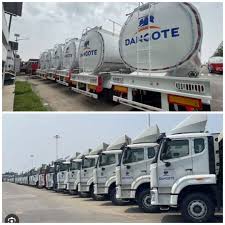
Dangote Petroleum Refinery is to begin deploying Compressed Natural Gas (CNG)-powered trucks on 15 September as part of a sweeping logistics-free fuel distribution programme aimed at reducing fuel retail prices and easing inflation.
The initiative, which is a ₦720 billion investment, will see 4,000 CNG‑powered trucks distributed nationwide to deliver refined petroleum products directly to filling stations, large‑scale consumers, manufacturers, telecoms firms, and other high‑volume users — bypassing many of the traditional logistics cost layers.
READ ALSO: Dangote Begins Direct Fuel Supply, Cuts Petrol Pump Price To ₦841/litre
Key Benefits & Economic Impact
Savings: The refinery expects the scheme to save the Nigerian economy over ₦1.7 trillion annually by absorbing approximately ₦1.07 trillion in fuel distribution/logistics costs that would otherwise be passed on to consumers.
MSMEs: More than 42 million micro, small and medium enterprises are projected to benefit through lower energy costs, which could improve profitability and reduce operating pressure.
Daily Fuel Volumes: The programme aims to distribute about 65 million litres of refined products daily: 45 million litres of Premium Motor Spirit (PMS), 15 million litres of diesel, and 5 million litres of aviation fuel.
Jobs & Infrastructure: Over 15,000 direct jobs are expected to be created, spanning roles such as truck drivers, station attendants, filling station managers, and personnel for newly established CNG refuelling stations (“mother and daughter” stations) across the country. Dormant filling stations may also be revitalised.
READ ALSO: FG Denies CNG Price Hike, Blames Private Operators
Pricing & Geographic Detail
The price will be reduced to ₦820 per litre, with lower pump prices in several states. In Lagos and other South‑West states, pumps will sell at about ₦841 per litre, while in Abuja, Rivers, Delta, Edo, and Kwara, it will be ₦851 per litre.
The first phase covers the Federal Capital Territory, Lagos, Kwara, Delta, Edo, Rivers, and the entire South‑West region, with plans for national expansion as more trucks are delivered.
READ ALSO: FG Boosts Abuja Transit with Hybrid CNG Buses
Context & Challenges
This move fits into broader policy shifts in Nigeria’s downstream petroleum sector, especially in the wake of subsidy removal and efforts to make the energy supply chain more efficient and less costly.
Possible challenges include:
Coordinating with states and filling station operators to ensure consistent pricing and avoid local mark‑ups.
Building sufficient CNG refuelling infrastructure, especially in remote or underserved areas.
Monitoring compliance and preventing leakage or misuse of the system.