

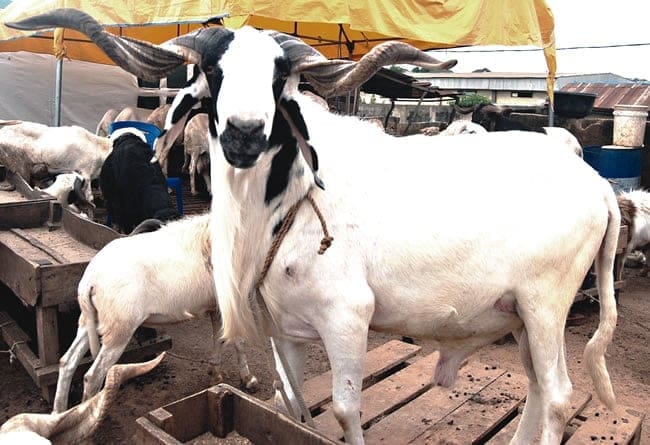
With less than 24 hours to Eid-el-Kabir, Abuja’s major livestock markets are gripped not by the usual festive rush, but by hesitation, anxiety and dwindling buying power as soaring ram prices force many families to scale back long-held Sallah traditions.
Across major markets in Apo, Gudu and Kugbo, traders sit beside rows of unsold rams under the scorching afternoon heat, anxiously waiting for buyers who now arrive with more questions than cash.
The atmosphere, once characterised by aggressive bargaining, crowded parking lots and last-minute purchases, has become visibly subdued.
At several points visited by Pinnacle Daily, many residents were seen walking through the markets in disbelief after hearing current prices.
For many Muslim faithful in the Federal Capital Territory, this year’s Eid celebration is coming at a time of Nigeria’s harsh economic realities, when inflation, high transportation costs and declining purchasing power are making the symbolic act of sacrifice increasingly difficult.
While some wealthy buyers still purchase premium livestock, middle- and low-income earners said buying even a single ram has become a struggle.
“Transportation Costs Have Destroyed the Market”
At Kugbo livestock market, one of Abuja’s busiest animal trading hubs, traders blamed the sharp increase in prices on rising transportation costs and the escalating cost of feeding livestock.
In an exclusive interview with Pinnacle Daily, a ram seller Aliyu Husseini said the cost of moving livestock from the far north to Abuja has more than doubled within one year. “Last year, we hired trailers for between ₦600,000 and ₦750,000, but this year it costs between ₦1.5 million and ₦2.5 million,” he revealed. “For each ram, we are paying between “15,000 and ₦20,000 just for transportation. That alone affects the final selling price.”
According to him, the rising cost of animal feed has further worsened the situation, leaving traders with little choice but to increase prices. “Something we bought for ₦5,000 last year is now ₦12,000 or ₦15,000. Feed is now very expensive,” he explained.
Husseini said while all categories of livestock have recorded price increases, the biggest jump is seen among larger rams usually preferred during Sallah celebrations. “The cheapest ram this year is around ₦200,000. Last year, people could get one for ₦120,000 or ₦150,000,” he said.
“Last year, the biggest ram was around ₦1 million, but this year some are selling for ₦1.5 million or even ₦2 million.” Despite the higher prices, he said traders are not necessarily making more profit because many customers no longer have enough disposable income.
“The way people bought rams last year is not the same this year,” Husseini lamented. “There is no money in people’s hands. Some customers pay part of the money and promise to complete payment after Sallah because of the hardship in the country.”
He also alleged that multiple checkpoints along highways continue to inflate transportation costs, as drivers transporting livestock are frequently compelled to make unofficial payments during transit.
“At many checkpoints, they ask drivers to pay ₦5,000 or ₦10,000. All these things increase costs and affect the market,” he added.
Bigger Rams Now Selling for Nearly ₦2 Million
Another livestock seller at Kugbo market, Ibrahim Yusuf, described the situation as one of the toughest business periods traders have faced in recent years.

“Before, transporting livestock cost around ₦500,000 or ₦600,000, but now it is above ₦1 million,” he said. Standing beside several massive rams tied within his section of the market, Yusuf pointed at some of the premium animals attracting elite buyers.
“This one is about ₦1.87 million,” he said. “Some others are ₦1.4 million or ₦1.43 million.”
Even with hundreds of rams available within the market, traders admitted that customer turnout remains significantly below expectations as many families adjust their spending priorities.
Buyers Forced to Reduce Sallah Plans
For residents preparing for Eid-el-Kabir, the rising prices are translating into painful compromises.
A buyer, Adebambo Ayedun, told Pinnacle Daily that the current market situation has forced many families to drastically reduce their Sallah budgets.
“The price has really gone up geometrically,” he said. “Last year, I bought a ram for around ₦250,000, but now the same size costs between ₦450,000 and ₦500,000.”
According to him, the economic pressure has forced him to reduce the number of rams he purchases annually for the celebration. “Last year, I bought about 12 rams, but this year I can only buy eight because of the rise in prices.”
Ayedun linked the development directly to Nigeria’s broader economic hardship and urged government authorities to address worsening living conditions.
“I think it is the economic problem we are facing in Nigeria. Government has to do better because this is becoming a serious challenge for citizens.” Still, amid the frustration, he expressed cautious optimism that conditions may improve in the future.
“We just hope things will get better next year,” he said.
Economists Link Rising Ram Prices to Nigeria’s Worsening Inflation Crisis
Speaking to Pinnacle Daily, investment banker and economic analyst, Sidiku Olayinka Oscars, said the sharp increase in ram prices ahead of Sallah reflects deeper structural problems within Nigeria’s economy, including persistent inflation, rising transportation costs, insecurity and weakening household purchasing power.
Oscars explained that the current livestock market situation is being driven by both seasonal demand and broader macroeconomic pressures affecting supply chains across the country.
“From a macroeconomic perspective, the core drivers behind the sharp rise in ram prices are persistent inflation, elevated transportation costs, insecurity disrupting supply chains from northern Nigeria, and rising animal feed expenses,” he said.
According to him, the cost of transporting livestock into Abuja has risen dramatically within the past year, significantly increasing final market prices.
“Premium rams now sell between ₦1 million and ₦1.5 million in Abuja markets, largely because transportation costs for trailer loads from the North have doubled to between ₦1.8 million and ₦2 million, while animal feed prices have also surged,” he explained.
The economist noted that inflationary pressures and fuel price increases are affecting virtually every stage of livestock production and distribution nationwide.
“Fuel price hikes have drastically increased transportation expenses from northern farms to urban markets,” he stated.
“General inflation has also pushed the prices of medium-sized rams from around ₦200,000 last year to between ₦350,000 and ₦400,000 this year, while premium rams now approach ₦1 million in some markets.”
Oscars further explained that the current surge in prices reflects a combination of increased festive demand ahead of Eid-el-Kabir and long-standing supply-side challenges affecting livestock production.
“The increase is partly seasonal because demand naturally rises during Sallah, but the situation is being worsened by structural issues such as insecurity, reduced livestock supply from parts of the Northwest, farmer-herder conflicts, border-related constraints and rising feeding costs,” he said.
According to him, the trend also exposes the growing cost-of-living crisis confronting many Nigerian households.
“The current ram prices reveal how badly inflation is eroding household purchasing power,” he added.
“Many families are now delaying purchases, reducing the number of animals they buy, or turning to cheaper alternatives like goats because festive spending has become increasingly difficult in this high-inflation environment.”
He warned that unless inflation and transportation challenges are addressed, festive periods may continue to place severe financial pressure on ordinary Nigerians.
READ ALSO:
-
Eid-el-Kabir: Troops on High Alert as Military Warns of Possible Terror Attacks in North-East
-
Kano APC Disowns Arewa Forum, Denies Withdrawing Support for Tinubu
-
Drums, Dance, Naira: The Power of Nigerian Festivals
-
Nigerians Mark 2026 Eid Celebration amid Food Price Surge
- Oye Proposes ‘Catalyst Model’ to Unlock Nigeria’s $74bn Livestock Frontier
Eid-el-Kabir, also known as the Festival of Sacrifice, remains one of Islam’s most significant religious celebrations, commemorating Prophet Ibrahim’s willingness to sacrifice his son in obedience to God’s command.
Traditionally, Muslims slaughter rams, cows or other livestock as an act of worship and charity, sharing the meat with relatives, neighbours and the less privileged.
But in Abuja this year, the worsening cost-of-living crisis is reshaping how many families observe the celebration.
For some households, the tradition of buying multiple rams has quietly disappeared. For others, even purchasing one ram now requires financial support, instalment payments or borrowing.
And as Sallah draws closer, Abuja’s livestock markets are becoming more than just centres of commerce, they are emerging as stark symbols of Nigeria’s deepening economic strain, where devotion remains unwavering, but purchasing power continues to fade.

Esther Ososanya is an investigative journalist with Pinnacle Daily, reporting across health, business, environment, metro, Fct and crime. Known for her bold, empathetic storytelling, she uncovers hidden truths, challenges broken systems, and gives voice to overlooked Nigerians. Her work drives national conversations and demands accountability one powerful story at a time.