

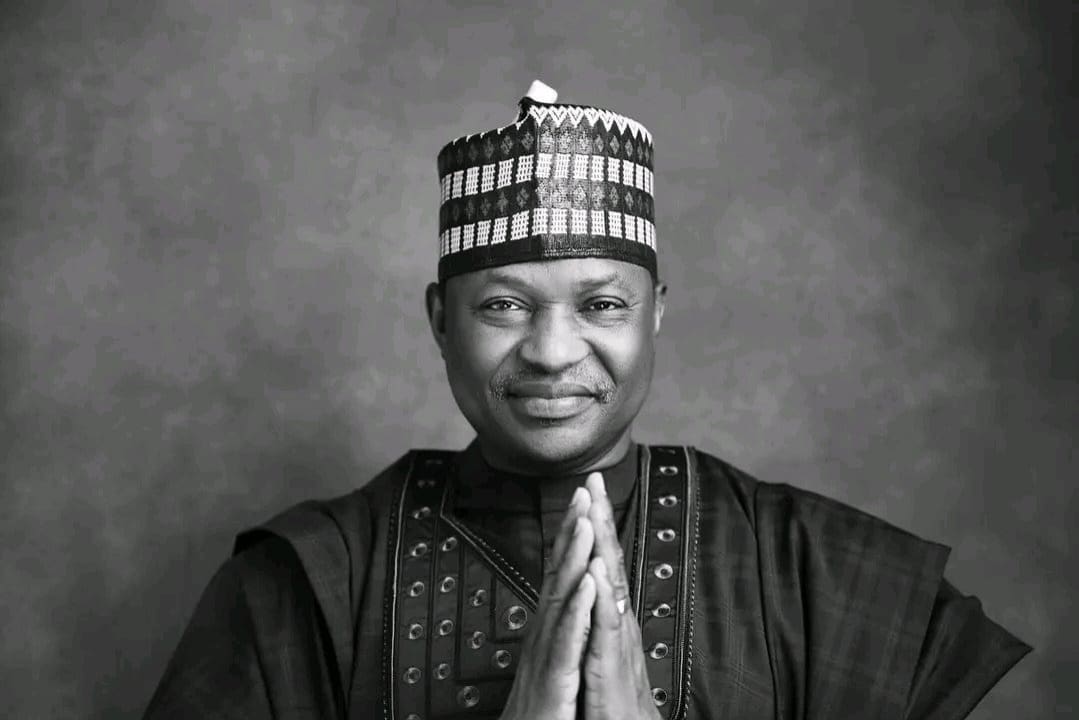
Four years ago, Abubakar Malami stood at a political crossroads. One path led to Kebbi Government House. The other kept him at the centre of federal power as Nigeria’s attorney general. He chose power over ambition. Today, as he battles asset forfeiture, corruption allegations and an uphill governorship race, that decision is once again under scrutiny.
As former Attorney General of the Federation and Minister of Justice, Abubakar Malami fights multiple legal battles capable of defining the rest of his political career; one question continues to dominate political discussions in Kebbi State and beyond.
Did Malami make the right decision in 2022 when he abandoned his governorship ambition to remain attorney general under President Muhammadu Buhari?
Would his chances of becoming Kebbi governor have been greater if he had resigned alongside other ministers and contested while his political benefactor occupied Nigeria’s highest office?
Or did remaining in Abuja ultimately cost him the opportunity he had spent years carefully building?
Four years later, the answer appears far more complicated than it did in 2022.
What once looked like a strategic political calculation has evolved into one of the biggest gambles of Malami’s career.
A Governorship Dream Years in the Making
Contrary to popular belief, Malami’s ambition to govern Kebbi State did not emerge overnight.
Long before 2022, he had quietly built one of the state’s most formidable political structures.
Across Kebbi, numerous empowerment programmes, educational support initiatives, business grants and community interventions helped establish his reputation beyond his position as attorney general.
His supporters viewed him not merely as Buhari’s minister but as a politician investing directly in local communities.
Over the years, those initiatives transformed into a formidable grassroots political network.
By the time preparations began for the 2023 elections, many within the All Progressives Congress (APC) believed Malami was among the leading contenders to succeed Governor Atiku Bagudu.
On February 25, 2022, President Muhammadu Buhari signed the Electoral Act 2022 into law.
One provision immediately sparked nationwide controversy.
Section 84(12) barred political appointees from voting or participating as delegates or aspirants in party primaries unless they resigned from office.
The law placed cabinet ministers, presidential aides and other political office holders in a difficult position.
For Malami, the implications were particularly significant.
At the time, however, the law directly affected Malami himself. Having already declared his intention to contest the 2023 Kebbi governorship election on the platform of the APC and purchased the party’s ₦50 million nomination form, he was faced with a difficult choice—resign from office or abandon his ambition.
While several ministers resigned and were given a valedictory session on May 13, 2022, Malami chose a different path. On May 14, he officially withdrew from the governorship race, describing the decision through his spokesperson as a matter of “personal conviction.”
By stepping out of the race instead of resigning, Malami was able to remain attorney-general until the econviction”.ent Buhari’s administration, preserving his position at the centre of government while putting his governorship ambition on hold.
Ironically, the man responsible for defending Nigeria’s laws now found himself caught in one of the country’s most contentious electoral reforms.
He supported Buhari’s position that Section 84(12) was unconstitutional, arguing that it unfairly barred serving political appointees from exercising their political rights. He also backed legal efforts challenging the provision and later joined Buhari in asking the Supreme Court to nullify the section.
At the time, however, the law directly affected Malami himself. Having already declared his intention to contest the 2023 Kebbi governorship election on the platform of the APC and purchased the party’s ₦50 million nomination form, he was faced with a difficult choice: resign from office or abandon his ambition.
While several ministers resigned and were given a valedictory session on May 13, 2022, Malami chose a different path. On May 14, he officially withdrew from the governorship race, describing the decision through his spokesperson as a matter of “personal conviction.”
By stepping out of the race instead of resigning, Malami was able to remain attorney-general until the econviction”.ent Buhari’s administration, preserving his position at the centre of government while putting his governorship ambition on hold.
The Alliance That Could Have Delivered Kebbi
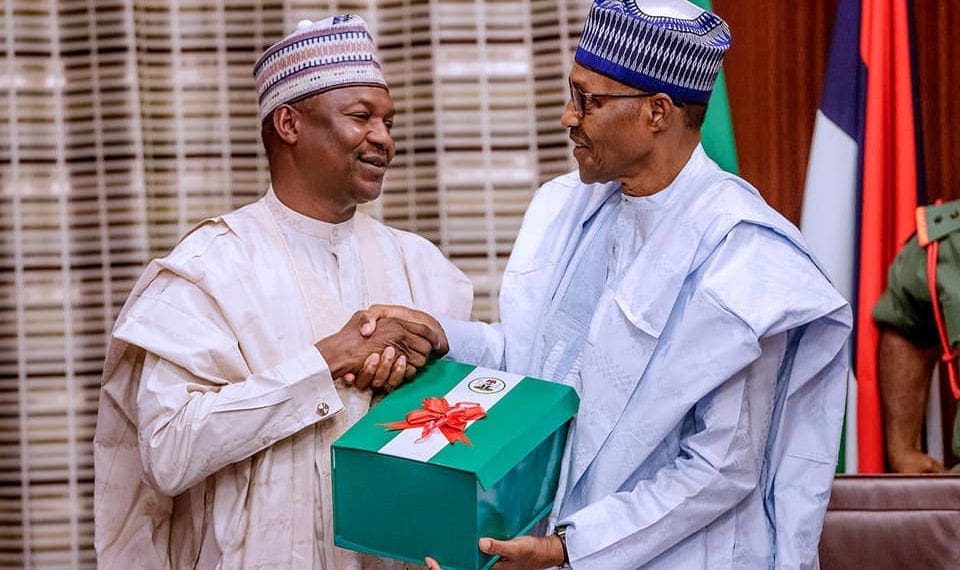
Malami’s relationship with the late former president Muhammadu Buhari extended far beyond politics. Long before joining the Federal Executive Council, he served as Buhari’s legal adviser during the Congress for Progressive Change (CPC) era, earning a reputation as one of the former president’s most trusted loyalists.
That confidence saw him remain attorney general and minister of justice throughout Buhari’s eight years in office, making him one of the administration’s most influential figures.
The bond became even closer in July 2022 when Malami married Buhari’s third daughter, Nana Hadiza, in a private Islamic ceremony at the State House Mosque, making him the former president’s son-in-law.
At a time when Buhari still commanded enormous political influence in Kebbi State and across the North-West, the combination of presidential backing, family ties and Malami’s position at the heart of government placed him in a strong position to pursue the governorship.
Many political observers believe that had he resigned early enough to contest the 2023 election while Buhari was still in office, his close relationship with the president and access to the APC political structure could have significantly strengthened his chances of winning the Kebbi governorship.
The Rise and Fall of a Political Alliance
When Abubakar Malami stepped down from the Kebbi governorship race in 2022 to remain Attorney-General of the Federation under President Muhammadu Buhari, it was widely seen as a sacrifice made in the interest of the All Progressives Congress (APC).
With Malami out of the contest, the party turned to former Nigeria Labour Congress president Nasir Idris, who was drafted into the race by APC stakeholders in Kebbi State.
Malami did not merely step aside. He handed over the extensive political structure he had built across the state to Idris, mobilised his supporters behind the APC candidate and publicly pledged that he would never contest against him.
Video recordings from that period showed Malami urging his supporters to back Idris, insisting that party unity was more important than personal ambition.
His political organisation has repeatedly maintained that he played a central role in securing Idris’ victory in the 2023 governorship election, describing him as one of the major financiers and strategists behind the APC’s success in Kebbi.
For many political observers, the arrangement appeared straightforward. Malami remained one of President Buhari’s most trusted ministers in Abuja while Idris governed Kebbi, with expectations that both men would continue working together.
That partnership, however, did not last.
From Allies to Rivals
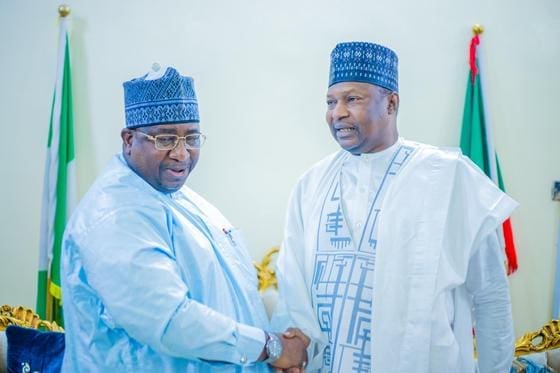
The relationship reportedly began to deteriorate only months after Governor Idris assumed office.
Sources within Kebbi APC said Malami expected to retain considerable influence in the state’s political affairs despite remaining in Abuja. Instead, Governor Idris gradually consolidated control over the party structure, appointing loyalists and reducing the influence of political figures associated with the former attorney general.
Supporters of Malami argued that he was being sidelined from the same political structure he helped build.
As his influence within the APC diminished, Malami abandoned his earlier pledge not to challenge Idris and began positioning himself for another governorship bid.
What had started as a political partnership gradually transformed into one of Kebbi’s fiercest political rivalries.
Defection That Changed Kebbi Politics
The political disagreement reached its peak on July 2, 2025, when Malami resigned from the APC and joined the African Democratic Congress (ADC).
His defection marked the official collapse of his relationship with Governor Idris and altered the political landscape ahead of the 2027 governorship election.
After joining the ADC, Malami accused the Idris administration of failing the people of Kebbi.
He alleged that insecurity had worsened, rural communities had become poorer, public resources were being mismanaged and economic policies had contributed to the decline of local rice mills.
RELATED NEWS:
- Malami Asks Court to Overturn Interim Forfeiture Order on Three Assets
- DSS Re-Arrests Ex-AGF Malami After Release from Kuje Prison
- University, Hotels, Radio Station, Petrol Stations Among Properties Malami Will Loss To FG
- Malami Meets Amaechi in Abuja as ADC Steps Up 2027 Consultations
- Kebbi 2027: Ex-AGF Malami Announces Governorship Ambition
Governor Idris’ administration dismissed the allegations and launched a strong response.
State officials described Malami as a “wolf in sheep’s clothing” and accused him of political hypocrisy, arguing that he served for eight years as Nigeria’s attorney-general under President Buhari but failed to address many of the security challenges now affecting northern Nigeria.
The exchanges quickly escalated beyond campaign rhetoric.
Both camps traded accusations over insecurity, governance, poverty, economic decline and political opportunism, setting the stage for what has become one of the most closely watched governorship contests ahead of the 2027 elections.
Legal Troubles Overshadow Political Comeback
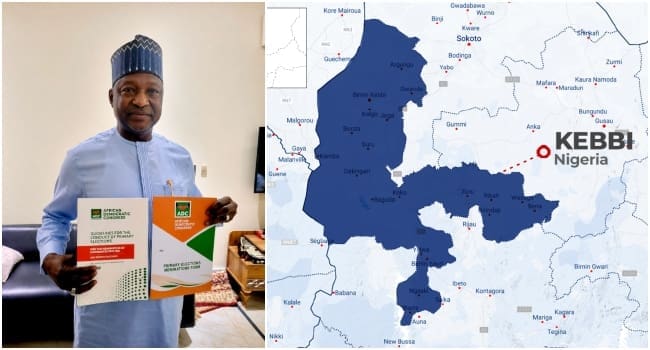
Four months after defecting from the All Progressives Congress (APC) to the African Democratic Congress (ADC) in July 2025, Malami formally declared his intention to contest the 2027 Kebbi State governorship election.
However, his political comeback was almost immediately overshadowed by legal challenges. Within days of announcing his ambition, the Economic and Financial Crimes Commission (EFCC) invited him for questioning over allegations relating to the management of recovered Abacha loot.
What initially appeared to be a single investigation later expanded into allegations of money laundering, civil forfeiture proceedings and a separate criminal trial involving an alleged N8.7 billion fraud.
Malami has consistently denied any wrongdoing.
He maintains that the investigations are politically motivated and were initiated after he defected from the APC to weaken his governorship ambition.
According to him, the anti-graft agency is being used as a political tool against opposition figures.
Similar concerns have also been expressed by some opposition politicians, including former Vice President Atiku Abubakar and Labour Party presidential candidate Peter Obi, who have questioned the impartiality of the EFCC in recent high-profile investigations.
The commission, however, has rejected those claims.
EFCC Chairman Ola Olukoyede has insisted that investigations into Malami predated his defection from the APC and were inherited by the current management of the commission.
According to the agency, every action taken against the former attorney general has been based strictly on evidence uncovered during investigations.
How the Investigation Began
Malami’s legal troubles became public on December 8, 2025, when the EFCC detained him for questioning over alleged financial crimes, despite being granted bail and being released on 19 January 2026, he was again rearrested immediately after release by the DSS over separate alleged terrorism-related offences.
On 27 February 2026, the Federal High Court again granted him and his son ₦200 million bail each in the DSS terrorism-related case.
Mid-March 2026, he perfected the bail conditions and was released from DSS custody.
Investigators claimed they had traced assets worth more than N200 billion allegedly linked to the former Attorney-General.
The commission alleged that the assets were connected to kickbacks from Paris Club refund deductions, fraudulent transactions involving the Anchor Borrowers’ Programme and duplicated legal fees paid during the repatriation of Abacha loot.
Among other allegations, investigators claimed Malami facilitated a N4 billion loan for his wife and approved duplicated legal services on the repatriation of 321 million US dollars recovered from the Abacha family.
In the face of all these challenges, Malami has constantly denied all the allegations.
The Court Orders Forfeiture of 48 Properties
The biggest setback in Malami’s legal battle came when the Federal High Court in Abuja ordered the permanent forfeiture of 48 properties linked to him.
Pinnacle Daily reported that the EFCC had asked the court to permanently confiscate 57 properties valued at about N212.8 billion, arguing that they were proceeds of unlawful activities.
Justice Joyce Abdulmalik granted the application in part.
The court ruled that the EFCC had established reasonable suspicion that the assets were acquired with proceeds of unlawful activities.
According to the judge, the central issue before the court was not ownership of the properties but whether the funds used to acquire them were legitimate.
She held that the respondents failed to disprove the allegations raised by the anti-graft agency.
Before delivering the judgement, the court dismissed several applications filed by Malami and other respondents, describing them as lacking merit.
Out of the 57 properties initially targeted, the court ordered the forfeiture of 48, while nine were excluded from the final order.
The ruling means Malami retained only nine properties, representing about 15.8 per cent of the assets originally listed by the EFCC.
The Assets Handed Over to the Federal Government
The forfeited assets span Abuja, Kano, Kaduna and Kebbi states and include some of Malami’s most valuable investments.
Among them is Rayhaan University in Kebbi State, including its campuses, vice-chancellor’s residence and radio station.
Also forfeited were Rayhaan Agro Allied Factory, Azbir Arena, Azbir Hotel, Al-Afiya Energy tanker garage, Rayhaan Security House, an uncompleted commercial plaza in Birnin Kebbi, Amasdul Oil and Gas filling station and the 131-room Zeennoor Hotel in Kano.
The order also covers hotels, commercial plazas, estates, luxury homes, warehouses, filling stations and farmlands located across several states.
Following the judgement, the EFCC confirmed that ownership of the 48 properties had been transferred to the Federal Government.
Appeal and Determination to Continue Politics
Rather than retreat from politics after the forfeiture judgement, Malami immediately vowed to challenge the decision.
Through his media aide, Bello Doka, he announced that his legal team had been instructed to file an appeal.
He said seeking a review of the judgement is part of his constitutional right and urged Nigerians not to reach conclusions while the appeal process remains ongoing.
Malami also insisted that the legal proceedings would not stop his political ambition.
According to him, he remains committed to contesting the Kebbi governorship election.
Days after the forfeiture judgement, he unveiled Dr Musa Zagi as his running mate for the 2027 governorship election.
The Kebbi State chapter of the ADC announced that Zagi’s nomination had been approved by Malami and expressed confidence that the ticket would provide an alternative to the current administration.
The Malami-Zagi ticket is expected to challenge Governor Nasir Idris and the APC in what is shaping up to be one of the most fiercely contested governorship elections in Kebbi’s recent political history.
The senior lawyer says Malami remains eligible to contest despite political and legal battles.
Senior lawyer Barrister Monday Adjeh says Malami SAN remains constitutionally qualified to contest the Kebbi State governorship election despite the legal and political challenges surrounding his ambition.
Speaking with Pinnacle Daily, Adjeh said the former justice minister is presumed innocent under Nigerian law until proven guilty by a competent court, adding that ongoing allegations or political controversies do not deprive Malami of his constitutional right to seek elective office.
“As far as I am concerned, Malami remains innocent under the Constitution until proven otherwise. He is therefore qualified to contest for any elective office in Nigeria,” Adjeh said.
The senior lawyer maintained that the outcome of the governorship race would ultimately be determined by the people of Kebbi State rather than political observers outside the state.
Responding to questions on whether Malami’s decision not to resign from office to contest the governorship while serving as attorney general may have affected his political prospects, Adjeh declined to speculate, insisting that the decisive factor remains the will of the voters.
A Gamble Still Unfolding
Abubakar Malami’s story is no longer simply about a former attorney general facing corruption allegations or a politician seeking elective office.
It has become the story of a political gamble whose full consequences are only now becoming clear.
If he had resigned in 2022 and contested while Muhammadu Buhari remained president, would he already be governor of Kebbi State today?
Would the legal battles have unfolded differently?
Would he have avoided the bitter political fallout with Governor Nasir Idris and the internal leadership disputes now confronting his new political platform, the African Democratic Congress (ADC)?
There are no definitive answers.
What is certain is that the decision Malami made in May 2022 continues to shape every chapter of his political journey.
Today, he is navigating multiple fronts at once: appealing the forfeiture of his assets, defending himself in ongoing criminal proceedings, confronting political uncertainty within the ADC, and pursuing his ambition to unseat the incumbent governor.
As the 2027 governorship election approaches, the outcome of his legal battles, the stability of the ADC, and ultimately the verdict of Kebbi voters will determine whether his 2022 decision is remembered as a calculated sacrifice or the costliest political gamble of his career.

Rafiyat Sadiq is a political, justice, and human rights reporter with Pinnacle Daily, known for fearless reporting and impactful storytelling. At Pinnacle Daily, she brings clarity and depth to issues shaping governance, democracy, and the protection of citizens’ rights.