

By Rafiyat Sadiq
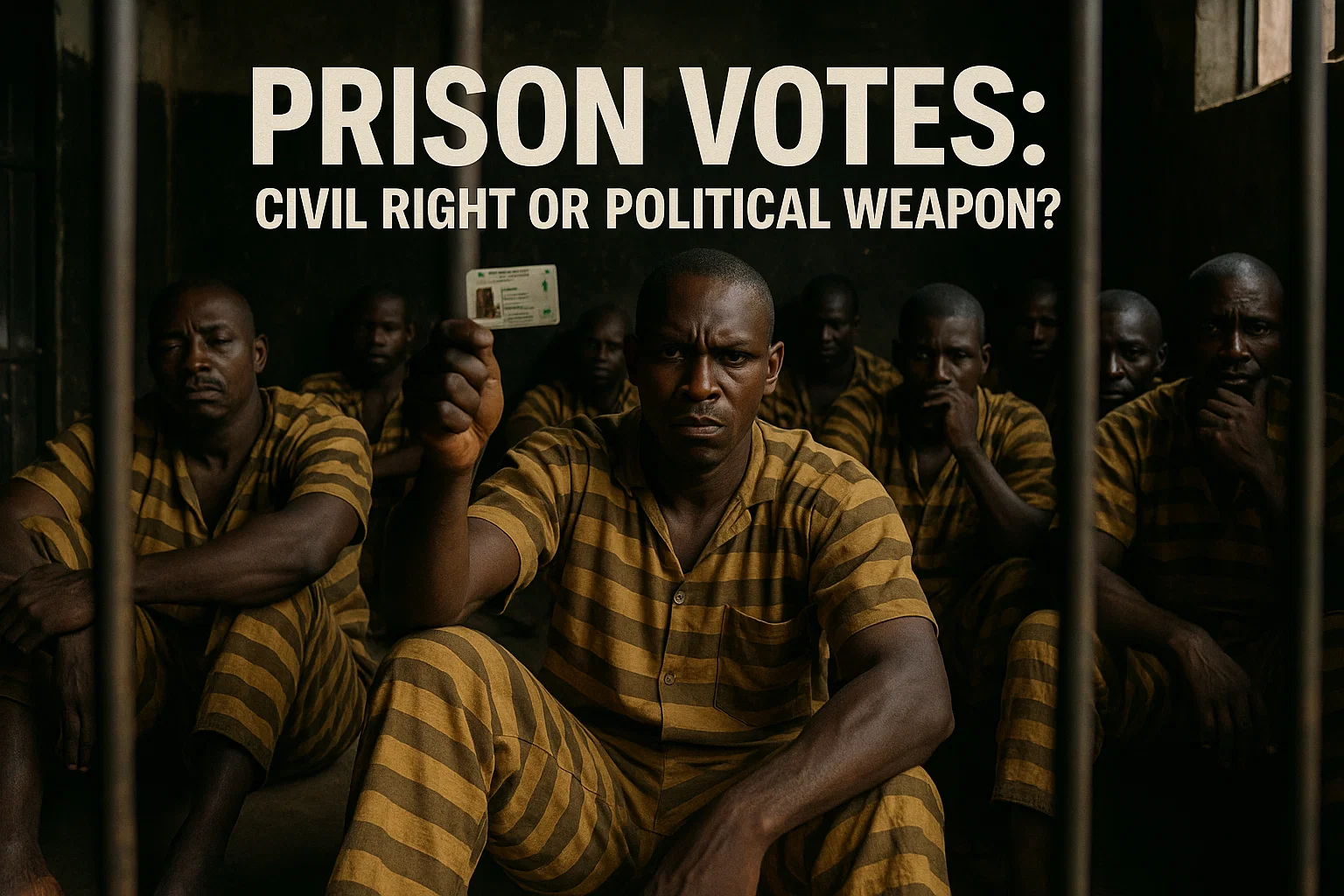
Nigeria’s debate over prisoner voting has gained new urgency, with legal experts and political commentators backing the principle of inclusion but insisting that the country must first fix deep flaws in its electoral system and guard against the risk of prison votes being exploited for political advantage.
The push for inmate voting gathered momentum after INEC Chairman Mahmood Yakubu declared that incarceration does not strip citizens of their right to vote.
He pledged that the commission will collaborate with the Nigeria Correctional Service (NCoS) and the National Assembly to establish clear legal provisions, referencing a Court of Appeal ruling that affirmed eligible prisoners cannot be denied registration or voting rights.
Mr Yakubu, however, flagged Section 12(1)(e) of the Electoral Act, which bars citizens under “legal incapacity” from voting, a clause that leaves uncertainty over the eligibility of inmates on death row, serving life sentences, or convicted of treason.
What the Law Says
Legal practitioner and former NBA Bwari branch chairman, Monday Adjeh, argues that Nigeria’s laws already permit inmates to vote under the 1999 Constitution and recent court decisions.
He cited Victor Emmanuel Nguyen & Four Others v. INEC & Another, in which the Court of Appeal affirmed that incarceration does not strip a citizen of voting rights.
Mr Adjeh said imprisonment limits certain freedoms, such as movement, but core rights remain, including dignity, worship, access to medical care, and political participation.
He pointed to Chapter Four of the Constitution as the foundation of these rights and referenced Section 77 of the Constitution and Section 12 of the Electoral Act as supporting grounds that being an inmate does not automatically disqualify a person from voting.
Benefits and Hurdles
Mr Adjeh said allowing inmates to vote would promote political awareness and civic education inside correctional facilities, helping prisoners understand the political system while exercising their rights. He warned that security and logistics pose major challenges.
“Creating safe voting units in prisons is difficult under current security conditions, and voter registration is complicated by frequent inmate transfers, which disrupt records and constituency alignment,” he said, adding that location mismatches would require heavy security for electoral staff, party agents, and observers.
He added that Nigeria lacks a clear operational framework for inmate voting.
“The Constitution and Electoral Act provide broad backing, but the absence of specific procedures creates ambiguity,” he said, noting that public resistance also persists, with some citizens opposing equal civic rights for convicted offenders.
Inmates Voting, An Avenue For Electoral Manipulation — Abati’s Caution
Dr Reuben Abati, former presidential spokesperson and a social commentator with Arise News, does not oppose inclusivity but warns that Nigeria’s flawed electoral system could turn prisoner voting into another avenue for manipulation.
“Bring in prisoners, bring in diaspora voters, but if the system is flawed, you deepen voter apathy,” he argued on Arise Morning Show. “In the UK, USA, and India, convicted prisoners can’t vote. Some countries limit voting to pre-trial detainees. Our penal system is punitive, not corrective, so we need to be careful.”
READ ALSO: 774 Local Govts Still in Chains Amid Judgment
Dr Abati noted on Arise Morning Show that debates around inclusion, such as whether prisoners and diaspora Nigerians should be allowed to vote, must be weighed against the practicality and integrity of the system.
“I am not against inclusivity,” he said. “Bring in prisoners, bring in diaspora voters. But if the system itself is flawed, it will only deepen voter apathy.”
Dr Abati compared Nigeria’s voting restrictions to other countries. He noted that nations like the UK, USA, and India prohibit convicted prisoners from voting, often arguing that offenders must “re-earn their social contract” after serving their sentence.
However, he added, some countries, including Canada, allow certain categories of prisoners to vote, especially those awaiting trial who have not yet been convicted.
He stressed that Nigeria’s penal system is largely punitive rather than corrective, suggesting that pre-trial detainees could be allowed to vote since their guilt has not been determined.
Dr Abati also raised concerns about logistics, saying, “Even people outside prison often struggle to vote successfully, not to mention the challenges of organising credible elections inside correctional facilities. This could open the door to manipulation and other irregularities.”
He added that electoral inclusivity should go hand in hand with broader penal reform and systemic improvements to ensure that the process is fair, efficient, and credible.
The Road Ahead
With the race to 2027 already taking shape and politicians sharpening their strategies, experts acknowledge that the law permits inmate voting but warn that Nigeria may not yet be equipped to implement it without irregularities or political manipulation.
A senior lawyer, Mr Adjeh views it as a constitutional right that strengthens democracy, while Dr Abati warns that a rushed rollout could damage credibility.
Implementation Path with NCoS
INEC Chairman Mahmood Yakubu, reinforcing his case for inmate voting, pointed out that countries such as Ghana, Kenya, and South Africa already grant prisoners the right to vote. He said ongoing discussions between INEC and the Nigeria Correctional Service (NCoS) focus on enabling voter registration, creating polling units within prisons, providing voter education, and setting rules on whether political parties, observers, and the media can access facilities on election day.
NCoS Comptroller General Mr Sylvester Nwakuche called for urgent action, noting that Nigeria’s prisons hold over 81,000 inmates, with about 66 per cent awaiting trial. He referenced a 2019 Court of Appeal decision that affirmed voting rights for pre-trial detainees, though the court stopped short of ordering INEC to establish registration centres in prisons.

Rafiyat Sadiq is a political, justice, and human rights reporter with Pinnacle Daily, known for fearless reporting and impactful storytelling. At Pinnacle Daily, she brings clarity and depth to issues shaping governance, democracy, and the protection of citizens’ rights.