

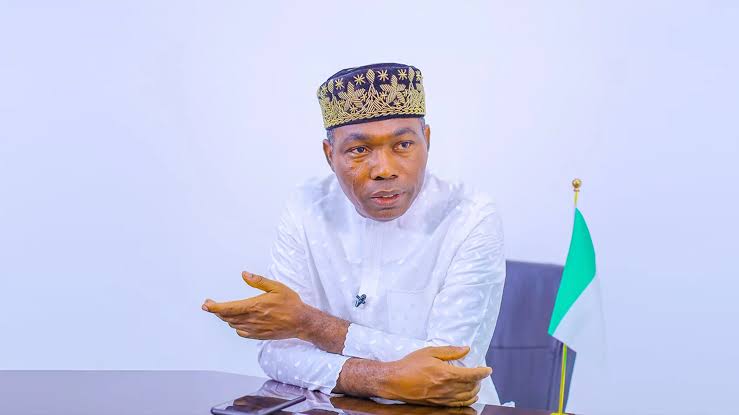
The NLC president carpets Obi, Atiku, Tinubu as ‘Far-Right’ Market Politicians
Nigeria Labour Congress (NLC) President, Comrade Joe Ajaero, has commended the policy plan of the Social Democratic Party (SDP) candidate, Prince Adewole Adebayo, describing him as an emerging political voice whose economic ideas deserve serious consideration ahead of the 2027 presidential election.
Ajaero stated this in an interview over the weekend, while assessing the economic positions of the leading presidential candidates ahead of the 2027 election.
The NLC president said Adebayo’s economic policy plan is different from three of Nigeria’s leading political figures—former Vice President Atiku Abubakar, 2023 Labour Party presidential candidate Peter Obi and President Bola Ahmed Tinubu—whom he described as broadly subscribing to the same market-oriented economic philosophy.
Ajaero also mentioned Accord Party presidential candidate, Dr. Gbenga Olawepo-Hashim, as another candidate, whose position he will consider ahead of the election.
“I have looked at Gbenga Hashim’s position and I think he’s an expert to an extent. I also looked at Adebayo. I may listen to them,” Ajaero said.
He said Atiku, Obi and Tinubu all have similar economic ideology, which he described as market-oriented, not serving social interest.
“Peter Obi, Atiku and Asiwaju, they all have the same position and they have shown that they are market people from the Far Right,” he said.
Adebayo’s Economic Alternative
Adebayo, a lawyer, businessman, farmer and philanthropist, has built his 2027 campaign around social democracy, productive enterprise and a stronger interventionist role for government in expanding economic opportunities.
His argument is that the market should serve the broader interests of society, rather than operate as an end in itself. His policy proposals therefore emphasise increased domestic production, job creation, stronger public services and measures aimed at reducing the cost of living.
The SDP candidate has been particularly critical of Nigeria’s handling of fuel pricing, electricity, education, healthcare and unemployment, arguing that economic reforms must translate into tangible improvements in citizens’ living standards.
His recently published policy blueprint, Farewell to Poverty and Insecurity: Governance & Accelerated Development — Blueprint of a New Nigeria, 2027–2031, proposes measurable performance targets for government, including baseline assessments, quarterly milestones, presidential performance monitoring and corrective mechanisms.
The framework is designed to make government programmes more accountable and focused on measurable results.
READ ALSO:
- 2027: How SDP’s Adebayo Plans to Run Governance by Stopwatch
- 2027: SDP will Offer Nigerians Credible Alternative — Adebayo
- GenCos Slam NLC Over ‘Political Settlement’ Claims, Defend ₦6trn Debt Recovery
- Nigeria @ 66: Judiciary, Legislature Losing Public Confidence — Prof. Fage
Adebayo has also advocated an economy capable of producing at scale, reducing Nigeria’s dependence on imports and limiting exposure to foreign exchange volatility.
Energy remains a major plank of Adebayo’s economic programme.
He has argued that Nigeria cannot achieve sustainable development while households and businesses continue to face high energy costs, unreliable electricity and dependence on imported petroleum products.
His proposed approach centres on expanding domestic energy production, refining capacity and electricity generation while reducing the cost of energy for consumers and businesses.
For his supporters, the approach marks a sharp departure from the economic policies of successive administrations and offers an alternative framework for tackling poverty, unemployment and declining purchasing power.
